
Start with how your dog gets out
The best fence for dogs is the one built around your own dog's habits. A dog that digs needs something different at the bottom of the fence than a dog that climbs needs at the top. Before you pick a material, watch your dog along the current fence or yard edge for a week. Worn paths and fresh holes show you where the pressure is. Scratch marks high on the boards point to a climber.
In many yards, the dog never goes over the top at all. Gates are the usual weak point, left open by a visitor or held off the latch by a sagging frame. The bottom edge is the other one, where the ground has settled or rain has cut a channel under the pickets. A good dog fence closes those two gaps first, then gets the height right.
Height for jumpers, and what they jump from
Height matters most for large, athletic dogs and for any dog that has already cleared a fence once. Small or older dogs are often fine behind a standard backyard fence. A young, strong dog that jumps from a run usually needs the tallest fence your city and HOA will allow. If you are unsure, plan for the taller option. Adding height to a finished fence is usually harder than building it tall at the start.
Look at what sits near the fence line, too. An air conditioning unit or a stacked woodpile can turn a tall fence into a short one. On a stepped fence along a hill, the ground rises toward the uphill end of each section, so the fence is shorter there from the dog's side. Our guide to fencing a sloped yard goes deeper on keeping dogs in when the ground is not flat.
Climbers need a smooth face on the inside
Some dogs climb instead of jumping. Chain link is the classic problem, because every diamond in the mesh is a toehold. A wood fence can be climbable too when the rails face the yard, since the horizontal backer rails work like rungs on a ladder.
The fix is a smooth face on the dog's side. On a single sided wood fence, that means pickets on the inside and rails on the outside. That can clash with HOA rules, since many ask for the finished side to face out. Shadowbox puts pickets on both sides of the rails, which cuts down on footholds without removing all of them. Vinyl privacy panels are smooth on both faces. For a known climber, skip the wide cap board on top, since it can give a dog a ledge to hook its paws over.
Diggers and the gap at the bottom
Wood pickets are usually set a little above the ground so they can dry out between rains. That small gap is where diggers start and where small dogs squeeze out. Around here, the gap tends to grow. Clay soil in many yards shrinks during dry spells, and heavy spring rain can wash soil out along the fence, so a line that sat tight to the ground on install day can open up over time. Many dogs also dig more in hot weather, looking for cooler dirt.
The simplest fix on a wood fence is a rot board, sometimes called a kickboard. This is a horizontal board along the bottom of the fence that closes the gap under the pickets. It also takes the ground moisture so the pickets do not have to, which means it should be lumber rated for ground contact. For a serious digger, add wire mesh along the inside of the line as well.
Rock is one reason to lay that wire flat instead of burying it straight down. Limestone sits close to the surface in much of Middle Tennessee, and a deep trench can run into it quickly. An apron of wire pinned flat under the sod on the inside does the job without the trench. A dog that digs at the fence meets wire right away, and many give up. Use galvanized or coated wire and check it each spring, since bare steel rusts in wet clay.
Small dogs have one more way out. Spaced pickets and some ornamental aluminum styles deserve a close look, and so do wire panels with wide openings. Gaps also show up where a fence ties into the house. Coyotes live all across Tennessee, urban areas included, and small dogs are among their favorite prey. A small dog is safest with someone nearby at dusk and after dark.
Solid or see through for a dog that barks
Many dogs bark at what they can see, like a neighbor walking a dog past the yard. A solid privacy fence takes most of that view away, and for many dogs the barking drops off. Some dogs bark at sounds, and a solid wall of boards will not change that. A trainer can help you figure out which kind of barker you have.
See through fences cut both ways. Chain link and aluminum let the dog watch the street, which can wind up a reactive dog all day. They also let you check on the dog from a window, and air keeps moving through the yard in summer. Shadowbox sits in between, since it shows flashes of movement at an angle that can still set off a dog that watches for motion.
A shared line with a neighbor's dog deserves its own plan. Two dogs running the same stretch of open fence can turn into daily fence fighting. One option is to go solid along that one side and keep the rest open. Our privacy fence guide compares how the solid styles block the view.
Gates that close and latch on their own
A typical gate escape goes like this. Someone cuts through the side yard, the gate swings nearly shut, and the latch never catches. Self closing hinges and a latch that catches on its own prevent most of that. A gravity latch drops into place when the gate meets the post. Test the pair from wide open and from barely open. The gate should close and latch every time without a push.
Wood gates sag with age, and a sagging gate drags on the ground and stops short of the latch. Clay makes it worse. Gate posts in wet clay can lean over time, and the gap between the gate and the latch post may change from a soggy winter to a dry August. Heavy gate posts set deep are the first defense. A diagonal brace on the gate helps, and so does a latch with room to adjust.
Some dogs learn to lift a lever latch with their nose. Mounting the latch near the top of the gate, above where the dog can reach, usually stops that. Watch the space under the gate, too. Gates need clearance to swing, and on a slope that clearance can leave room for a small dog. A level pad of pavers or gravel under the swing lets the gate hang lower.
How materials hold up to Tennessee heat and storms
No single material is the best fence for dogs in every yard. Wood is a common choice around Middle Tennessee. It can be built solid and tall, and you can replace one broken board at a time. The tradeoff is movement. Pressure treated pine and cedar both swell in humid summers and shrink in dry spells, so boards warp and fasteners loosen. A dog may find those new gaps before you do, so walk the line each spring and fall.
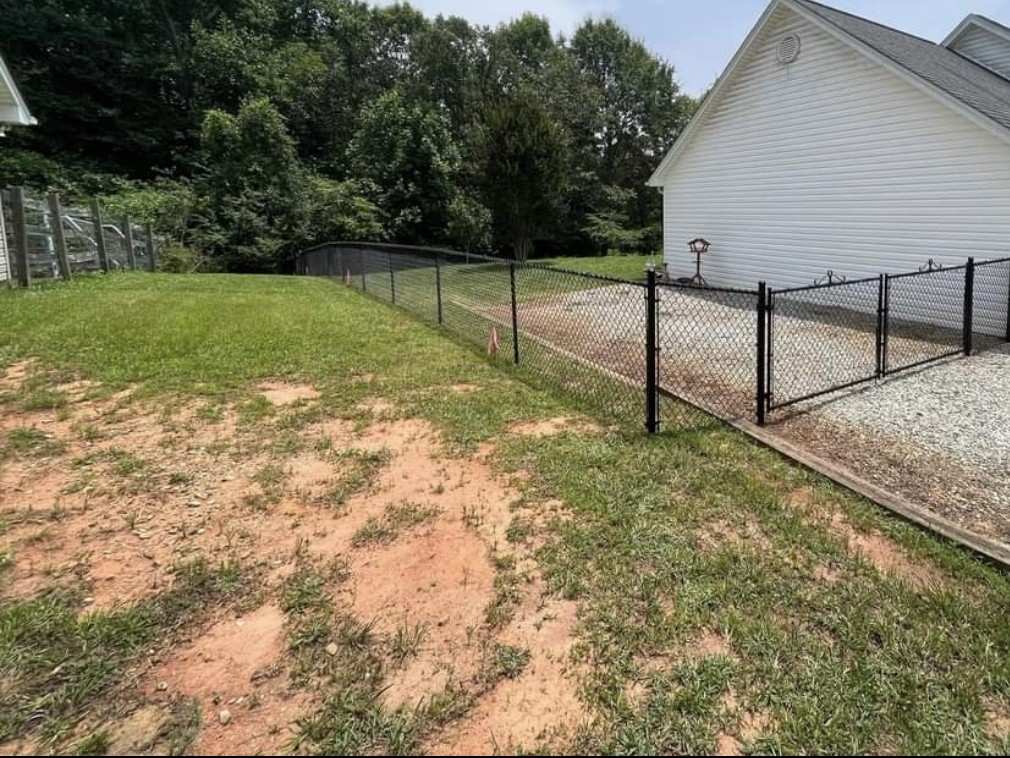
Chain link holds up well and is often one of the more affordable options. It is also one of the easiest fences for a dog to climb. A dog can push the bottom of the mesh out and crawl under unless a bottom rail or tension wire holds it tight. Vinyl is smooth and has no splinters to chew. It does get more brittle in a hard freeze, and a big dog hitting a panel on a cold morning can crack it.
Spring storms here can bring strong winds and falling limbs. A solid fence catches more wind than an open one, so set its posts deep enough for the soil and the height. After a big storm, walk the whole line before you let the dog out, since one downed section is an escape route. A tall solid fence also blocks the summer breeze, so plan a shaded spot for the dog.
HOA approval, permits, and the property line
Height limits and material rules usually come from two places. Your city or county sets some through zoning, and many Middle Tennessee subdivisions add their own through the HOA. Where both apply, you have to meet both. Many HOA boards ask for a drawing of the fence line with the height and style, and some do not allow chain link at all. Get the approval in writing before work starts. If the approved height is lower than your dog needs, lean on the fixes that do not add height: clear climbable items off the fence line and put the smooth face toward the yard. Our guide to HOA approval walks through a clean submission.
Permit rules vary from one city or county to the next, so ask the codes office what applies at your address. Call 811 before any posts go in so buried utility lines get marked. If your HOA does not allow a physical fence at all, buried electric systems are one workaround. They may keep some dogs in, but they do nothing to keep other animals out, and a dog chasing something may run right through the boundary.
When you are ready to price a dog fence, write down how your dog gets out and where the gates need to go. Send those notes through the estimate form. You can read more about our fence installation work, or check the service areas page to see if we cover your town.
Quick answers
What is the best fence for a dog that jumps or climbs?
For a jumper, height does most of the work, so go as tall as your city and HOA allow. Climbers are different, because the face on the dog's side matters more than height. A wood fence with the rails on the outside, or smooth vinyl panels, gives a climber little to grip. Chain link gives a climber a toehold in every diamond, so it is usually a poor fit for that dog.
How do I keep my dog from digging under the fence?
Close the bottom gap first, with a rot board on a wood fence or a bottom rail or tension wire on chain link. Then pin wire mesh flat under the sod along the inside of the line, so a digging dog hits wire right away. With rock close to the surface in many Middle Tennessee yards, that flat apron is often easier than a deep trench. Check the line after heavy rain.
Will a privacy fence stop my dog from barking?
It often helps with dogs that bark at what they see, such as people and other dogs passing the yard. Dogs that bark at sounds or out of boredom usually get less out of it. If the barking is aimed at a neighbor's dog on one side, a solid section along that line may be enough.