
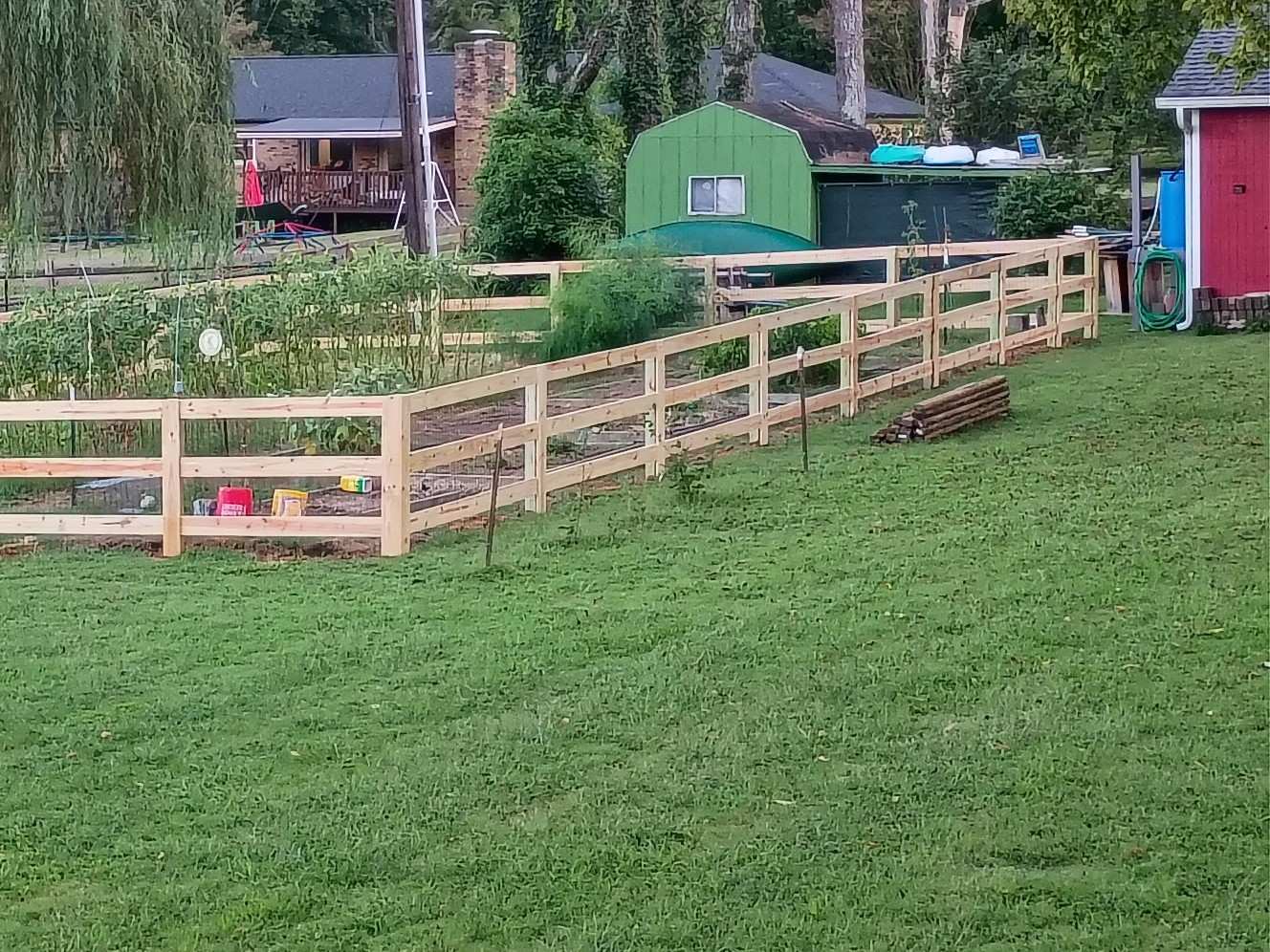
The short answer for most Tennessee fences
Whether you need a fence permit depends on the city or county that covers your address, not on the state. Even where no permit is required, local zoning almost always limits how tall a fence can be, where it can sit on the lot, and what it can block. A fence that breaks those rules can be ordered changed or removed, permit or not.
So the real question is not only "Do I need a permit?" It is "What are the fence rules at my address?" One phone call to the right office answers both.
Find out which office covers your address
A home inside city limits follows that city's rules. A home outside city limits follows the county. Your mailing address can be misleading here, since plenty of homes with a city name on the mailbox sit in the unincorporated county. Your county property records show which side of the line you are on.
This works the same way it does for decks, which we cover in our guide to deck permits in Tennessee. The difference is that fence rules usually live in the zoning code, so the planning or zoning staff may be the ones with the answer, even when the building codes office takes the application.
Three nearby places, three different answers
Looking at three places side by side shows how much the rules can change from one line on the map to the next. These summaries reflect what each office published as of October 2026. Rules change, so confirm with the office before you build.
City of Murfreesboro: a permit is required
Murfreesboro treats a fence as an accessory structure, and the city says a permit is required to build, alter, enlarge, move or demolish one. Homeowners can pull their own fence permit for work at their primary residence. The city also lists a few placement rules worth knowing:
- There is no property line setback for fences, but a fence cannot cross onto a neighbor's land.
- Fences are not allowed in drainage or utility easements or in the public right of way, except that the City Engineer may approve a fence in a drainage easement in some cases with a written agreement.
- Keep the fence 3 feet away from mechanical equipment, and do not fence in meters.
Applications go through the Murfreesboro Building and Codes Department at City Hall. The fee is based on the value of the work. If you live in the city, see our page on fence installation in Murfreesboro.
Unincorporated Rutherford County: a form instead of a permit
Outside city limits in Rutherford County, the county says a building permit is not required for a fence up to 7 feet tall. It does require homeowners to fill out a Fence Design Guideline Affidavit with the Rutherford County Planning Department before installation starts. That makes it easy to skip by accident, so put it on the list early.
Metro Nashville: a permit for solid fences, firm height rules
In February 2026, Metro Council passed an ordinance that requires a permit from Metro Codes before you build a new opaque fence in Nashville and most of Davidson County. That means a fence that blocks more than half the view, such as a solid wood privacy fence. Open styles such as chain link are not covered, and neither are lots zoned AR, AG, R80 or RS80. Metro's fence web page has not been updated yet, so call Metro Codes before you build to confirm the current permit steps and fee. The rules on where a fence can go are specific:
| Where the fence sits | Maximum height listed by Metro Codes |
|---|---|
| Solid fence within 10 feet of the street right of way | 30 inches |
| Open fence, such as chain link or wrought iron, within 10 feet of the street right of way | 72 inches |
| Rest of the required front setback | 6 feet |
| Required side or rear setback | 8 feet |
On most lots, the street right of way starts at the front property line. Metro measures height from the finished grade on the side of the fence with the most exposed height. Metro also requires that cross beams and bracing face the inside of the property, not the street. Corner lots have an added restriction, with no fences allowed in a 35 foot visibility zone. Wood must be painted, stained or preserved, and metal must be made or treated to resist rust. Homes in special overlay districts, such as historic overlays, can have extra steps, including a preservation permit, so ask the Metro Historic Zoning Commission staff, part of the Metro Planning Department, if your home sits in one. If you are in Nashville, our Nashville fence page covers how we plan around these rules.
Height limits and the front yard
Nearly every set of local rules treats the front yard differently from the back. Tall privacy fences are usually fine behind the house and along the sides, while front yard fences are kept lower or more open so the street stays visible. If you want privacy close to the street, ask about the exact cutoff before you pick a style. A 6 foot privacy fence that is perfect for the backyard can be out of bounds a few feet forward.
Height is usually measured from the ground at the fence line. On a sloped lot, a stepped fence can run taller at the low end of each section, so ask how your office measures. Our guide on fencing a sloped yard explains stepped and racked styles.
Corner lots and sight lines
If your house sits on a corner, expect extra limits near the intersection. Cities keep a triangle of open space at the corner so drivers can see oncoming traffic, and a solid fence or tall hedge inside that area is usually not allowed. Nashville's 35 foot visibility zone is one example. Other places use different distances, so get the number for your address before you lay out the fence line.
Easements, utilities, and meters
Many lots in newer Middle Tennessee subdivisions have drainage or utility easements along the back or side lines. Murfreesboro, for example, does not allow fences in drainage or utility easements or the public right of way. The one exception the city lists is a drainage easement, where the City Engineer may approve a fence in some cases with a written agreement. Where a fence is allowed in an easement, the utility or city may still have the right to remove it to reach their lines, and you may be the one paying to put it back.
Your plat or survey shows where easements run. Our guide to fences and property lines in Tennessee walks through finding corner pins, reading a survey, and deciding how close to the line to build.
Before any digging, Tennessee law calls for a locate request through Tennessee 811. The service asks for at least three working days' notice, and the request stays valid for fifteen calendar days after the start date on the ticket. A fence line can cross gas, water, electric, and cable lines, so this step matters on every job.
Pool fences follow stricter rules
A fence that serves as the barrier around a swimming pool is held to a much tighter standard than a yard fence, because it exists to keep small children out. As one local example, Rutherford County's posted pool barrier requirements, based on the International Swimming Pool and Spa Code the county has adopted, include:
- A barrier at least 48 inches tall, measured from the ground.
- No more than 2 inches of clearance under the barrier over grass or mulch, or 4 inches over a hard surface.
- Limits on gaps between boards and pickets that depend on the style of fence.
- Pedestrian gates that open outward away from the pool, close on their own, and latch on their own.
- If the latch release sits lower than 54 inches above the ground, it goes on the pool side of the gate, at least 3 inches below the top.
Pool barriers often need their own permit or inspection even where a regular fence does not. If a pool is in the plans now or later, tell your fence builder before the design is set. A privacy fence can usually be built to meet pool rules from the start, which costs far less than changing it afterward.
HOA approval is a separate step
A city or county answer does not speak for your homeowners association, and HOA approval does not replace a permit. Many neighborhoods around Murfreesboro, Smyrna, and Spring Hill have their own rules on fence height, style, color, and which side faces out. Some only allow certain materials. Our guide to getting HOA approval for a fence or deck covers how to put together a submission that gets approved the first time.
What to ask when you call the codes office
Keep the call short and specific. Describe the fence in plain words, give your address, and ask:
- Do I need a permit or any form for this fence, and who can apply for it?
- What is the maximum height in the front, side, and rear yards?
- Are there limits near the street, a corner, or a driveway?
- Can the fence go in a drainage or utility easement on my lot?
- Are there rules about which side faces out, or what materials I can use?
- Does a pool barrier need its own permit or inspection?
Write down the name of the person you spoke with and the date. If a permit is required, ask how long review usually takes so you can plan the start date.
Quick answers
Do I need a permit to replace an old fence?
Often yes, where permits are required at all. Murfreesboro, for example, requires a permit to alter, move, or demolish a fence, not only to build a new one. Replacing a fence is also a good time to check that the old one met the current height and placement rules, since a replacement may have to follow today's rules.
How tall can a backyard fence be in Middle Tennessee?
It depends on your city or county. Metro Nashville allows up to 8 feet in side and rear setbacks, but other places set different limits, and many HOAs set their own lower limits. Ask your codes office and your HOA for the numbers that apply to your lot.
Can I build a fence without a permit if my neighbor agrees?
A neighbor's approval does not replace a permit or the zoning rules. It is still smart to talk with your neighbors before the crew arrives, especially when the fence runs near a shared line.