
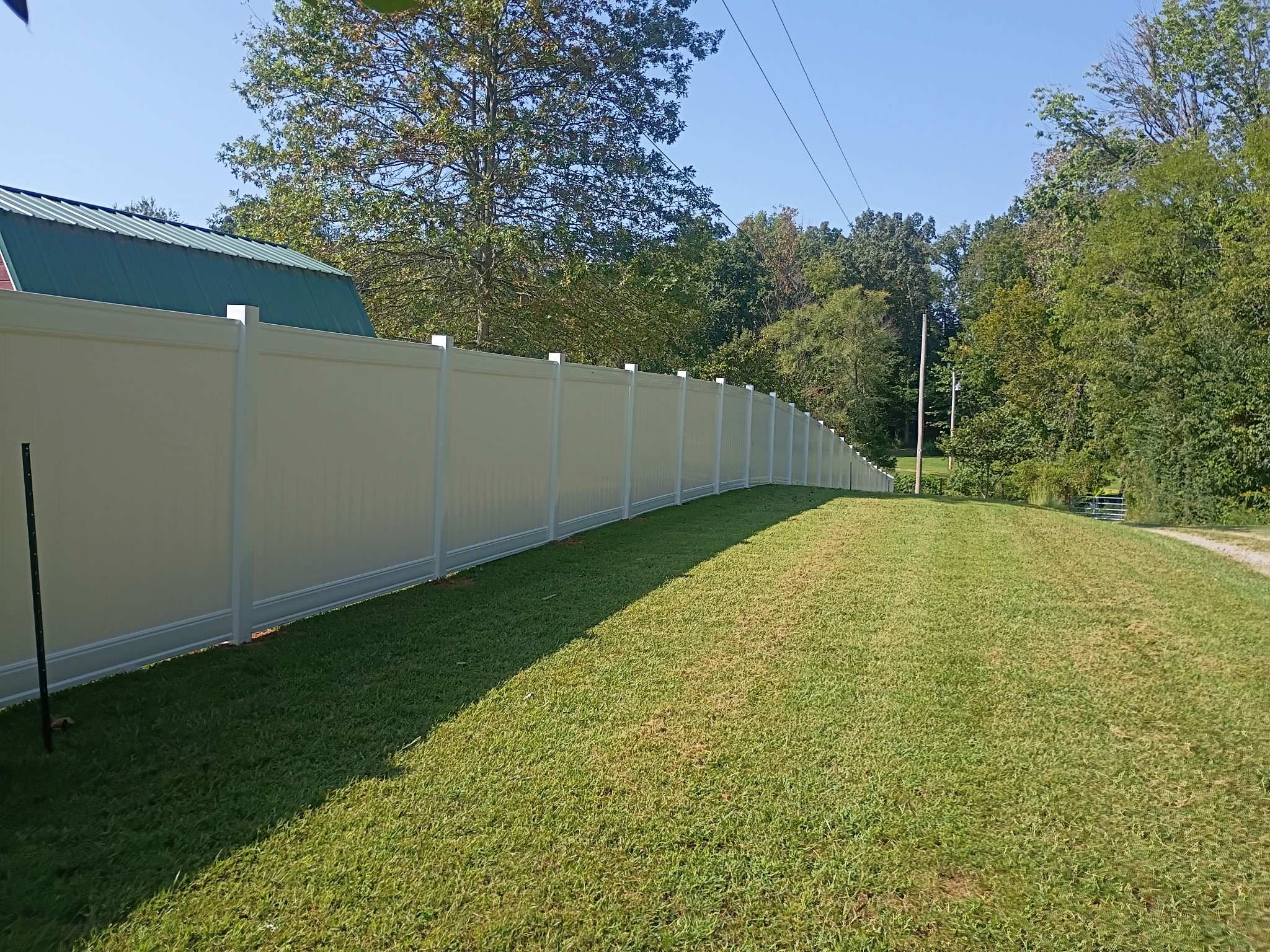
Start with where the line really is
Many Tennessee homeowners place a fence along a property line by going off an old fence or the spot where the neighbor stops mowing. Neither one proves anything. Old fences were often set by eye, and mowing lines drift over the years. If a new fence ends up on the neighbor's side, you may have to take it down and pay for the job twice.
The steps below go in order: mark the line, decide how close to build, check easements and drainage, call 811, then talk with neighbors and check local rules. This is general guidance, not legal advice. If a boundary is disputed or a deed does not match what you see on the ground, a land surveyor and a real estate attorney are the right people to ask.
Find your corner pins or order a survey
Many lots in Tennessee subdivisions have metal pins at the corners, often iron rods or pipes. State rules call for newly set ones to carry a cap or mark identifying the surveyor. Pins often hide just under the sod or mulch, and a basic metal detector helps you find them. If you find one, leave it where it is. Your closing papers may include a survey drawing, and the county Register of Deeds keeps the recorded plat for your subdivision.
Online county parcel maps are handy for a rough look, but they are not surveys. Only a surveyor can tell you exactly where your lines are. Pins also go missing. In new construction neighborhoods, grading and landscaping crews can knock them out or bury them deep. Rural tracts, like the acreage around Eagleville or Shelbyville, often have older deeds that describe the boundary by distances and landmarks, and some of those landmarks are long gone.
If you cannot find every corner, or the pins do not match the plat, hire a land surveyor. Ask them to locate or reset the corners and flag the line along the side you plan to fence. A survey costs money and can take a while to schedule in busy seasons, but it usually costs less than moving a finished fence. Keep the drawing, since HOA forms and future buyers may ask for it.
Decide how close to the line to build
Once the line is marked, you have a choice. Building right on the line uses every bit of your yard, but part of each post and its concrete then sits on the neighbor's land. That usually only works with the neighbor's agreement in writing. Many homeowners set the fence a little inside their own line instead. The whole fence stays on their property, and ownership is clear to anyone who buys either house later.
A strip outside the fence also helps with upkeep in our climate. Wood fences here usually need cleaning and fresh stain every few years. Summer sun grays the side that faces it, and the shaded face of a privacy fence tends to grow mildew in humid weather. That strip lets you reach the outside face without stepping into the neighbor's yard. The tradeoff is that you still own and mow ground that sits outside your fence. Some cities and HOAs also require a set distance from the line, which may decide it for you.
Look for easements and drainage paths
Your plat or survey may show easements, which are strips where a utility or the local government has rights to ground you own. They often run along the back and side lines of subdivision lots. You can sometimes fence across one, but the utility can usually remove the fence to reach its lines and may not pay to put it back. Green transformer boxes need clear space too. Your electric utility can tell you how much room to leave.
Drainage deserves the same attention. Plenty of lots here drain toward a shallow swale that carries storm water from the houses above it to a creek or inlet. In a heavy thunderstorm, a solid fence built tight to the ground across that path can hold water back and push it toward a house. Some cities limit fences in drainage easements or review them first. Murfreesboro, for example, says a fence should never cross the flow line of a ditch. The best time to see where water goes is during or right after a hard rain.
Lake lots add one more boundary. On Corps of Engineers lakes such as Old Hickory and Percy Priest, the Corps manages public land around the lake, and a private lot may end at a government property line short of the water. A fence usually cannot just run down to the lake. If your lot backs up to one of these lakes, check with the Corps before planning a fence toward the shoreline.
Call Tennessee 811 before the first post hole
Tennessee law expects anyone who digs, homeowners included, to contact Tennessee 811 before breaking ground. You can call 811 or file a request online at no charge. Member utilities then send locators to mark their buried lines with paint or small flags, and Tennessee 811 explains how long to wait before digging. If you hire a fence company, ask who is placing the request and whether it covers the whole fence line.
Locators follow a standard color code. Red is for electric power and yellow is for gas. Orange marks communication lines like cable and phone, while blue means drinking water and green means sewer. Rain and mowing wear the marks away, and if they fade before every post is set, you may need a new request.
811 does not mark everything. Utilities generally mark only the lines they own, which usually stop at the meter. Irrigation pipes are a common surprise, and so is the buried wire for an invisible dog fence. On rural lots, lines to a well or septic tank may run near the fence line, as can power carried out to a barn. A private locating service can find those for a fee, or you can ask whoever installed them where they run.
Digging near the line in rock and clay
In many Middle Tennessee yards, post holes hit rock. Limestone sits close to the surface in much of Rutherford and Wilson counties. When a post hole stops short, it is tempting to shift the post a little. Move it along the fence line, never toward the neighbor, and stay clear of utility marks. Roots call for the same care, since a tree on the neighbor's side is not yours to damage.
Clay brings a different problem. It holds water after storms and shrinks as it dries in late summer, and that movement can loosen posts over time. Posts set deep, with the top of the concrete sloped so water runs off, tend to stay plumb longer. A leaning post on the line is more than a looks problem, because it can tip boards over onto the neighbor's side. Check the fence after big storms and fix a lean early.
Talk with your neighbors before the crew arrives
A short conversation up front heads off a lot of fence arguments. Walk the flagged line with your neighbor and show them the style you picked. Mention when the work should happen and whether anyone will need to step onto their side. If an old fence is coming out, agree first on who owns it. It may belong to them, and tearing out a neighbor's fence without asking can leave you paying to replace it.
Put what you agree on in writing, even as a friendly email or text. Houses change hands, and the next owner will not remember a handshake. Some neighbors offer to share the cost of a fence between two yards. If you go that way, also agree on who handles upkeep after a storm. On farm ground, talk before you change any line fence that keeps a neighbor's cattle or horses in, and plan so no animals get loose during the work.
Which side of the fence faces out
The usual custom is to put the finished side toward the neighbor or the street, with posts and rails on your side. Many HOAs require it, and some cities write it into their fence rules. Even where nothing says so, most people see it as the polite choice, since the neighbor looks at that face every day. It also keeps the framing inside your yard, where you can check it for rot and loose fasteners.
The downside is that you look at the framing from your own patio. A board on board or shadowbox fence avoids most of that, because it looks nearly the same from both sides, and we compare those styles in privacy fence options. Dog owners have one more thing to weigh. A dog that climbs can use the rails like a ladder, so read our guide to the best fence for dogs before you decide.
Local rules and HOA covenants vary
Fence rules in Tennessee are mostly set locally. Cities write their own, and homes outside city limits usually follow county rules. Some places want a permit. Front yard limits are common, along with rules near street corners where a tall fence can block a driver's view. Parts of Franklin and Nashville sit inside historic districts or zoning overlays that review exterior changes, which may include fences. Call the city or county codes office with your address and ask what applies before you sign a contract.
HOA covenants often go further than the city. They may control fence style and color and how far forward of the house a fence can go. Many ask for written approval from an architectural review committee, and building first can mean taking the fence down. The steps are laid out in our guide to HOA approval for decks and fences. When you are ready for a price on fence installation, have your survey or pin locations handy and check our service areas for your town.
Quick answers
Can I put a fence right on the property line in Tennessee?
Sometimes, but it usually takes your neighbor's agreement, since part of each post and footing would sit on their land. Some cities and HOAs also have their own rules about distance from the line, and those vary from place to place. The simplest path is often to build a little inside your line so the whole fence is yours. Either way, confirm the line with pins or a survey first, then check with your codes office and HOA.
Do I need a survey before I put up a fence?
Not always. If you can find every corner pin and they match your plat, you may be able to stretch a string between them and work from that. A survey makes sense when pins are missing or disturbed, when you plan to build tight to the line, or when a neighbor questions where it is. Some cities and HOAs ask for a survey or site plan with the application, so check before you schedule the work.
Do I need my neighbor's permission to build a fence?
In most cases, a fence that sits entirely on your property and meets city and HOA rules does not need a neighbor's permission. You do need their agreement to build on the line itself or to work from their yard. Even when permission is not required, a heads up and a look at the survey help keep things friendly. Some HOAs ask for neighbor signatures on the application, so read yours before you apply.