
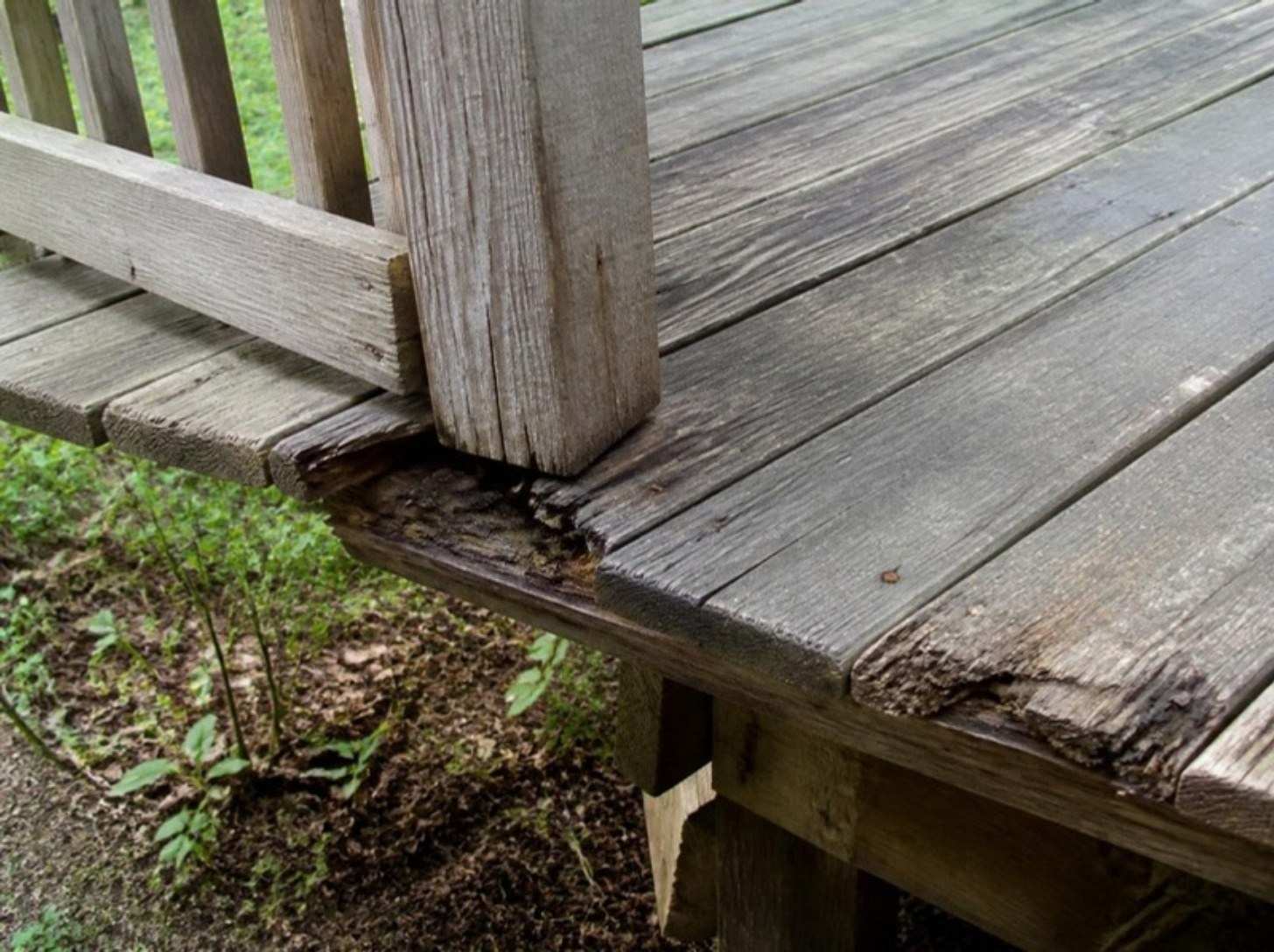
Surface wear or structural trouble
Most people start thinking about deck replacement when the deck looks bad. Looks are a poor guide. A gray, splintery deck can sit on a sound frame, and a freshly stained one can hide rot where nobody looks. The real question is whether the problem is on the surface or in the structure. Surface wear shows up in the boards you walk on and the top of the railing. Structural trouble lives underneath, in the parts that hold the deck up. The first costs you comfort and looks, while the second can put people at risk.
You can learn a lot in an hour on a dry afternoon. Bring a flashlight and a flat screwdriver, and look from underneath as well as from above, since most of what matters is hidden from the top. Keep people off any section that sags or moves. Take photos as you go, so you can show a builder or home inspector what you found and see later whether it has spread.
Weathered boards are usually a maintenance job
Middle Tennessee is hard on wood. Summers are long and humid, so boards stay damp while strong sun bakes their top faces. Winter often swings above and below freezing. Boards fade to gray and open small cracks along the grain, and some cup or twist a little. Shaded decks often pick up green mildew or algae, especially under trees or on the north side of a house.
Most of this is cosmetic. Checking, the fine cracking along the grain as wood dries and weathers, is common in outdoor lumber, and a few shallow checks are not a reason to replace a board. Graying is sunlight breaking down the surface of the wood. A good cleaning and a fresh coat of stain can bring a tired deck back, and a few cracked or cupped boards can be swapped out one at a time. Our guide to deck care in Tennessee weather covers the routine that slows this down.
Soft spots and what they say about the frame
Rot is more serious. Walk the deck slowly and feel for boards that give more than their neighbors, then press the screwdriver tip into anything suspicious. Sound wood resists and leaves a small dent. Decayed wood lets the tip sink in with light pressure and comes out in short, soft fibers instead of a long splinter. Pay close attention to board ends, and to the spot outside the door where water drips off shoes and umbrellas.
One soft board is usually a repair. Several soft boards in the same area mean something more. Water that gets between the boards runs onto the tops of the joists underneath and sits there, and rot often starts on those joist tops long before it shows on the surface. Before anyone replaces boards, look up at the joists from below and probe them too. New boards laid over rotten joists leave the real problem in place.
The ledger board deserves the closest look
The ledger is the board that fastens the deck to the house, and it carries a large share of the weight. Many serious deck failures start right here. Look for metal or membrane flashing over the top of the ledger that sheds water away from the house. Without it, rain can run behind the ledger and rot both the ledger and the house framing it is fastened to. That damage is easy to miss because the siding covers it.
Next, check how the ledger is attached. Current practice is bolts or lag screws sized for the job, driven into the house framing. Some older decks were hung with nails alone, and nails can work loose as the wood swells and shrinks. Probe along the bottom edge of the ledger and around each fastener. A soft ledger or a gap opening between the deck and the house is a reason to stop using the deck until someone qualified looks at it. Because so much depends on the ledger, rot there is often the point where patching stops making sense.
Posts, footings, and Middle Tennessee clay
Posts come next, and the ground around them matters as much as the wood. Many Middle Tennessee yards sit on clay that holds water and drains slowly. A post buried straight in that clay stays wet for long stretches after every rain, and so does one set in concrete that has cracked into a cup. Rot usually starts at the soil line, so scrape back a little dirt and probe just below the surface. Check where your downspouts empty, too. One that empties beside a post during spring storms can keep that corner soaked for days.
Clay can also move. It swells when soaked and shrinks in a dry spell, and footings that were too shallow or too small can heave or settle. Watch for a deck that has gone out of level or stairs pulling away from the landing. In many parts of the region, limestone sits close to the surface. That can slow down digging new footings, but it is never a reason to skip them.
Loose railings and rusted hardware
Grab each railing post and push outward hard, the way a person would lean on it. A good railing barely moves. One that rocks is a safety problem even when the rest of the deck is solid, because people trust it without thinking. Posts bolted to the outside of the frame tend to loosen as the wood shrinks and swells. New hardware and blocking can sometimes fix that, but if the rim board behind them is soft, the fix gets bigger.
Check the metal next. Joist hangers are the brackets that hold joists to the ledger and beams. Heavy rust or missing nails need attention, and so do hangers held on with drywall screws. Treated lumber sold today uses copper based preservatives that tend to corrode plain steel faster than the older treatment did, which is why hardware rated for treated wood matters. Rust stains running down the wood below bolts point to the same slow corrosion. Nails backing out of boards are a different sign, usually of wood that has swelled and shrunk around them for years.
Bouncy framing and sagging beams
Some flex underfoot is normal. A deck that bounces when one person walks across it, or makes dishes rattle on the table, usually has a framing problem. The joists may be undersized or spaced too far apart, or missing the blocking that keeps them from twisting. Rot can also weaken a frame that was fine when it was built, so bounce that has gotten worse over the years deserves a closer look.
Bounce alone is not always dangerous, and added blocking or an extra beam can sometimes firm up a frame whose lumber is sound. Sag is more serious. Sight along the beam and the outer rim from one end. A visible dip, a beam split along its length, or a beam that has slid on its post means the frame is not carrying the load the way it should. When sag and rot show up together, replacement is usually the safer call.
When a repair makes sense and when to replace
A repair makes sense when the damage is isolated and the frame is sound. Good candidates include a few bad boards or a loose railing on a solid rim. One rotten post near a downspout can often be handled the same way, and so can rusted hangers on joists that probe clean. In those cases, fixing the problem and improving the drainage can keep the deck in service for a good while.
Deck replacement is usually the better call when the trouble is spread through the structure. A rotten or poorly attached ledger points that way. So do posts decayed at the soil line, soft joists in more than one area, and sagging beams. A long string of patches is another sign. Age alone is not a reason to tear a deck out, but an old frame with several of these signs rarely justifies more patching.
Resurfacing means keeping the existing frame and putting on new boards and railings. On a sound, well built frame it can work well. The risk is new material that outlasts the frame under it. If you are thinking about composite, read the board maker's installation guide and compare its joist spacing with the spacing under your current deck before you commit.
Permits, HOA review, and next steps
In many places, replacing a deck is handled like building a new one, and a permit is often required. Smaller repairs may or may not need one. Rules vary, so call your city or county codes office with your address and describe the work. Our guide to deck permits in Tennessee explains what to ask. If new footings will be dug, have the utility lines marked first through Tennessee 811.
If you live in a neighborhood with an HOA, read the covenants before you order materials. Many associations review any change to the outside of a home, and some want an application even for a like for like rebuild. A switch from wood to composite or a new railing style often needs approval, and some associations care about stain color too. Our guide to getting HOA approval walks through the usual steps.
Keep people off the deck if your walkaround turned up a soft ledger or a railing that moves. When you are ready to talk about a new one, our deck building page covers how a new deck comes together, and the service areas page lists the towns we cover. Tell us about your yard and your current deck through the estimate form.
Quick answers
Can I put new boards on my old deck frame?
Sometimes. Resurfacing can be a sensible way to get a new deck surface for less than a full rebuild, but only on a frame in good shape. The ledger should be properly attached and flashed. Posts and joists should probe solid, with no bounce or sag. Check the joist tops closely, since hidden rot tends to sit there, and confirm the joist spacing matches what the board maker calls for. If the frame is already showing its age, new boards will likely outlast it.
How long does a wood deck last in Tennessee?
There is no honest single answer. Lifespan depends on how the deck was built and whether the posts sit in soil or on footings above grade. Drainage matters a great deal, as do shade and how often the deck has been cleaned and sealed. A well built deck in a sunny, well drained yard can last a long time, while a poorly flashed deck in a damp, shady spot can fail early. Judge yours by the signs in this guide rather than by its age.
What should I check on my deck after a bad storm?
Start with a look from the yard before you walk on it. Check for limbs that hit the railing or the boards, and look for any section that has dropped or pulled away from the house. Then push on the railings and look for soil washed out around the bases of the posts. Heavy rain can leave clay soft around footings for days afterward. If anything moved, stay off that part of the deck and have it looked at before you use it again.