
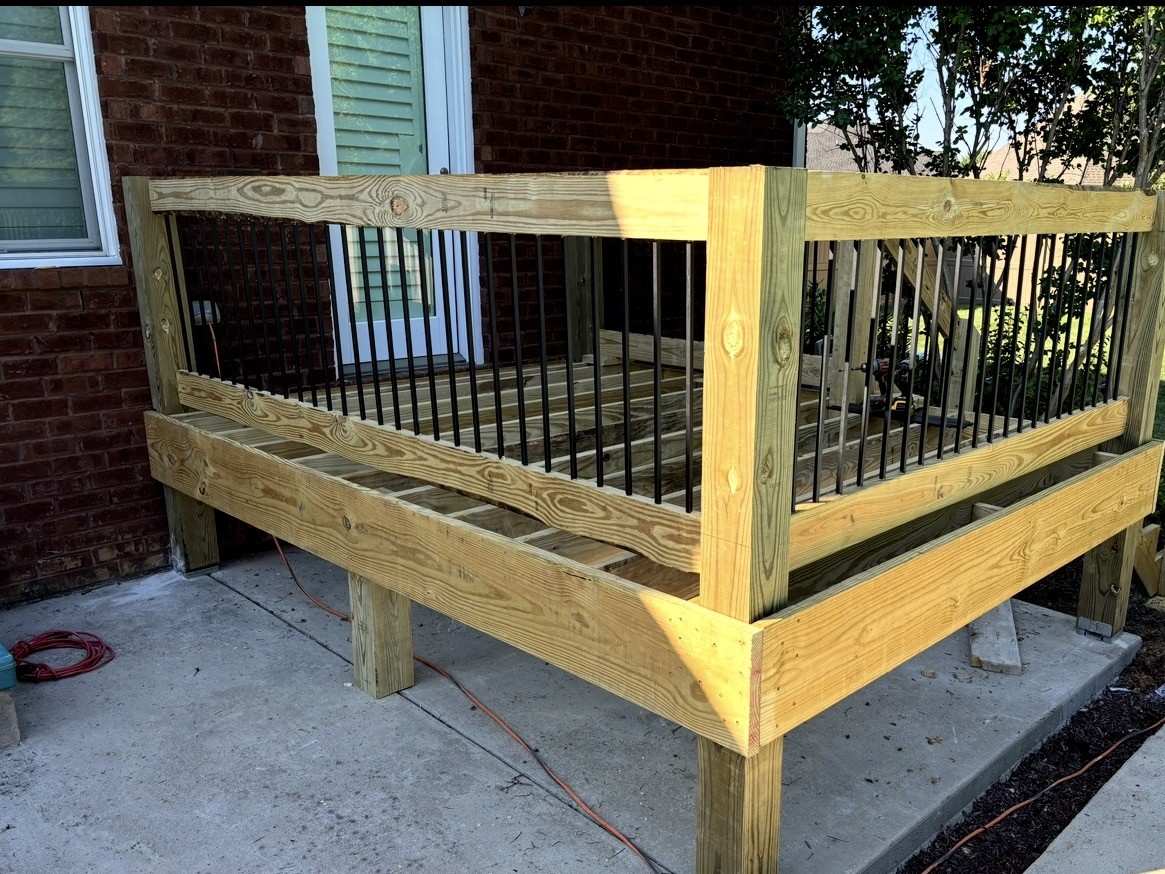
The short answer
Fall is often the easiest season to build. The ground is usually workable, the heat has broken, and many crews have more room on the schedule than in spring. Spring is the most popular time, which means longer waits and more rain delays. Summer works but brings heat and storms. Winter is a fine time to plan, pull permits, and get HOA approval, and many jobs can be built then too.
If you want a deck ready for Memorial Day or a fence up before a new puppy comes home in May, the real deadline is a few months earlier, when the planning should start.
What each season brings
Spring
Spring is when most people decide they want a new deck or fence, so schedules fill fast. Middle Tennessee also gets strong spring thunderstorms, and heavy rain is hard on a job that depends on open holes in the ground. Footing and post holes fill with water, the clay turns to mud, and concrete waits until the holes drain. Inspections can back up too.
None of that makes spring a bad time to build. It just means padding the schedule and booking early.
Summer
Long days help crews get more done, and the ground is usually firmer. Heat is the tradeoff. Afternoon storms can stop work quickly, and crews often start early to beat the worst of the heat. New lumber also dries and moves more in hot weather, which is part of why boards can shrink or cup in the first few months.
Summer is also yard season. Plan for where materials and equipment will sit, and for a few days when part of the yard is off limits.
Fall
Fall often brings mild temperatures and fewer of the heavy storms that slow spring jobs. Many homeowners are thinking about the holidays instead of the backyard, so crews may have shorter wait times. A deck or fence built in fall is ready the first warm weekend of spring.
Falling leaves are the main nuisance. They hide the ground, and wet leaves left on new boards can stain them, so ask the crew to keep the work area clear.
Winter
Our winters are usually mild enough to keep building through most of the season. Cold snaps and frozen ground do happen, and fresh concrete should not freeze while it cures, so a crew may pause or protect the footings during a hard freeze. Short days mean fewer working hours.
Winter shines as a planning season. You can get estimates, settle on materials, submit to your HOA, and pull permits while everyone else waits for spring, then be first on the schedule when the weather turns.
Work backward from the date you want
The build itself is often the shortest part of the timeline. Here is what usually comes before it.
- Estimates and design. Allow time to meet with builders, compare bids, and choose materials. Our guides to what drives the cost of a deck and what drives the cost of a fence break down the numbers.
- HOA approval. Many review committees meet only on a set schedule, and some want changes before they approve. Our guide to getting HOA approval for a fence or deck covers how to get it right the first time.
- Permits. Review time varies by city and county and by season. Ask your codes office for a typical turnaround. See our guides to deck permits in Tennessee and fence permits in Tennessee.
- Materials. Common lumber is usually easy to get. Specific composite colors, railing systems, or custom gates can take longer to arrive.
- Utility locates. Tennessee 811 asks for at least three working days' notice before digging, and the request is valid for fifteen calendar days after the start date on the ticket.
- Inspections. A deck usually has a footing inspection, a framing inspection, and a final inspection. Weather and inspector schedules can add a few days between them.
Add those up and a spring deck can easily start in winter. A fence is often simpler, but HOA review alone can add weeks.
When to stain or seal new wood
Many people plan to stain right after the build, but new pressure treated lumber is often too wet to take stain well. It usually needs time to dry first, and the right wait depends on the lumber, the weather, and the product, so read the stain maker's directions. Most stains also list a temperature range on the can and need a dry stretch after application.
That makes a fall build convenient. The wood can dry over the winter and be stained in spring. A spring build can often be stained in late summer or fall. Our guide to deck care in Tennessee weather covers sealing, staining, and mildew.
Composite decking does not need stain, which makes timing simpler for that part of the job.
Decks and fences time differently
A fence is usually faster to build than a deck, and some places that require a deck permit do not require a building permit for a fence. Goodlettsville is one example. The biggest timing factors for a fence are HOA approval, the property line, and how much rock is under the fence line. A deck takes more planning and inspections, so it benefits most from starting early.
If you are doing both, building the deck first can make sense, since the fence layout may change around new stairs or a gate. Talk it through with your builder.
Quick answers
Can you build a deck in the winter in Tennessee?
Usually, yes. Middle Tennessee winters are mild enough for most of the season. A crew may pause during a hard freeze, since fresh concrete in the footings should not freeze while it cures, and staining waits for warmer weather.
When should I start planning a deck for summer?
Start in winter. Estimates, design choices, HOA review, and permits can take weeks before any digging starts, and spring schedules fill quickly.
Is fall a good time to put up a fence?
Yes. Fall often brings mild weather and fewer heavy storms than spring, and crews may have shorter waits. A fence built in fall can dry over the winter and be stained in spring.