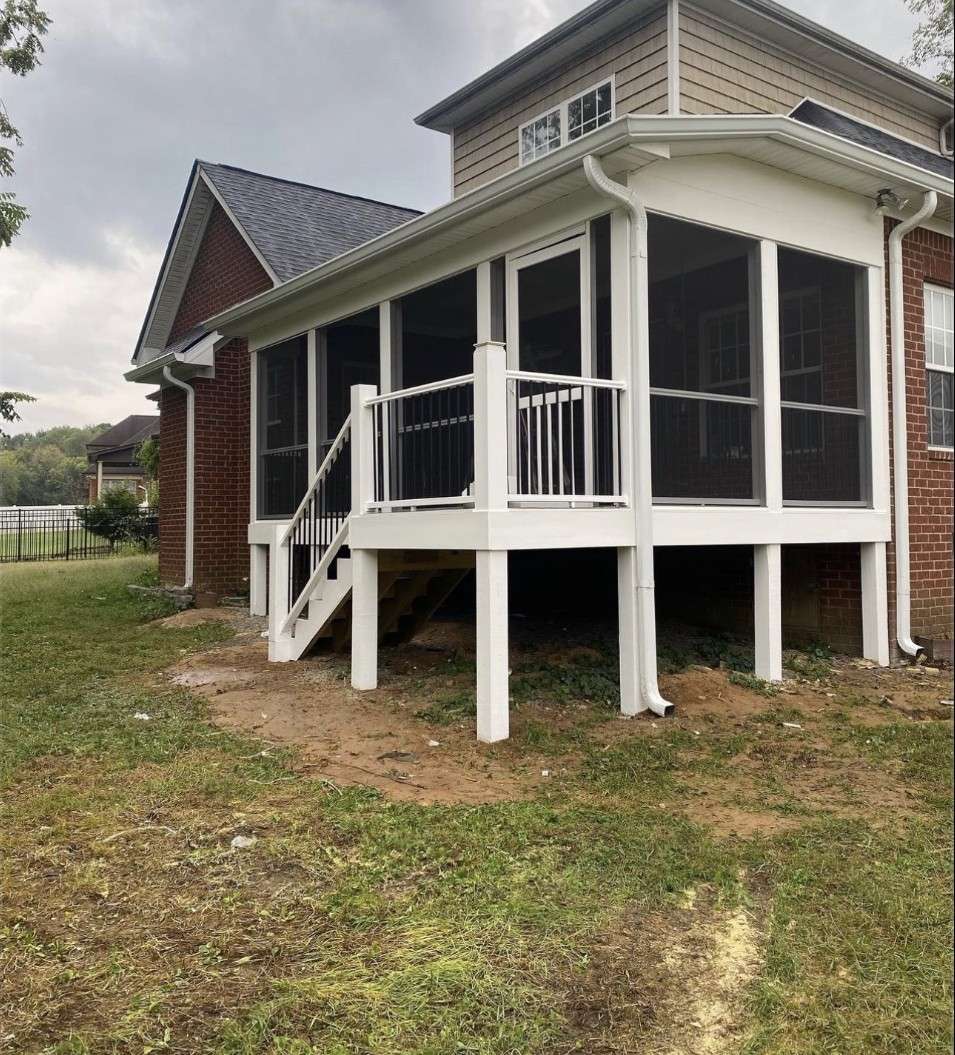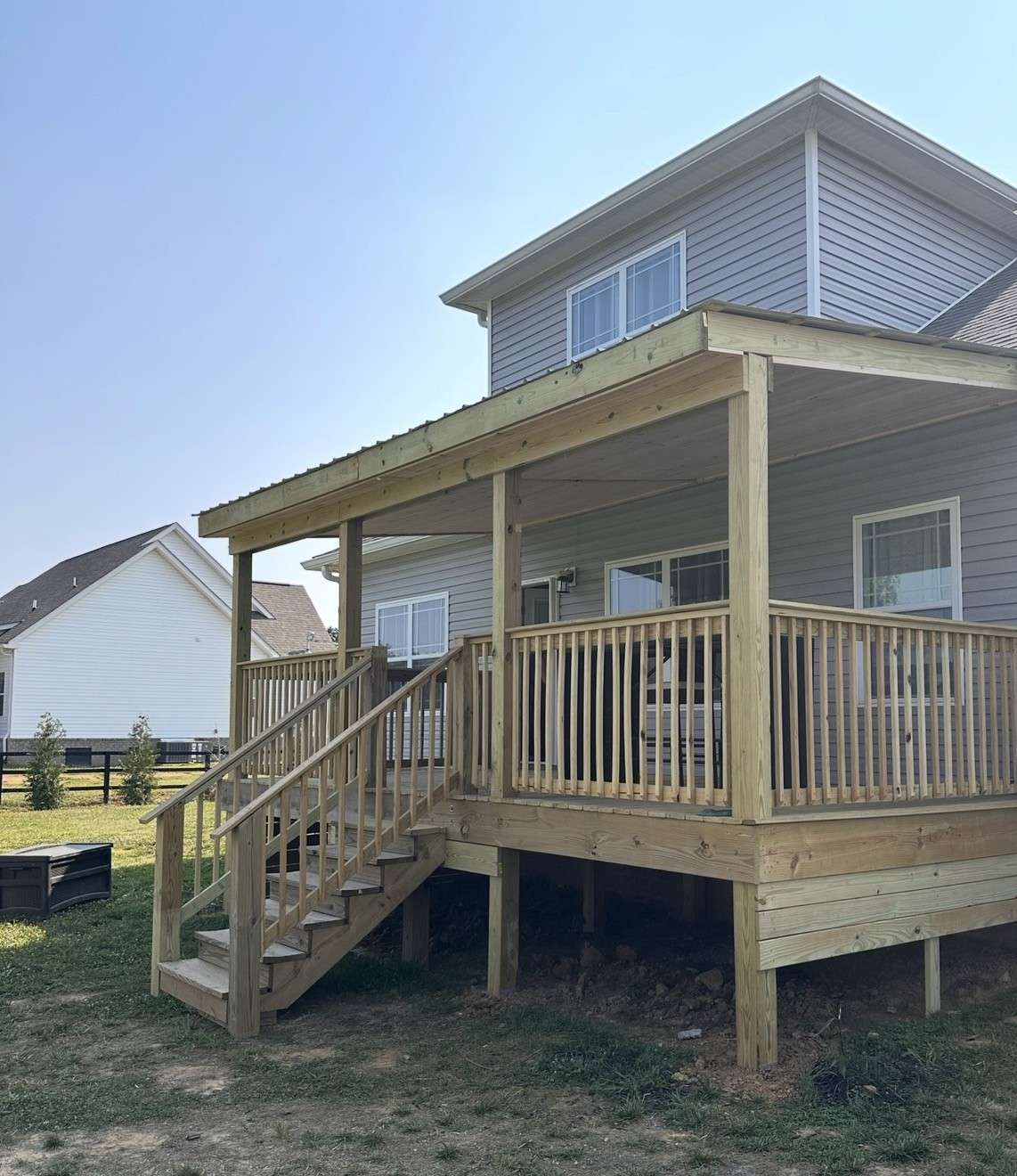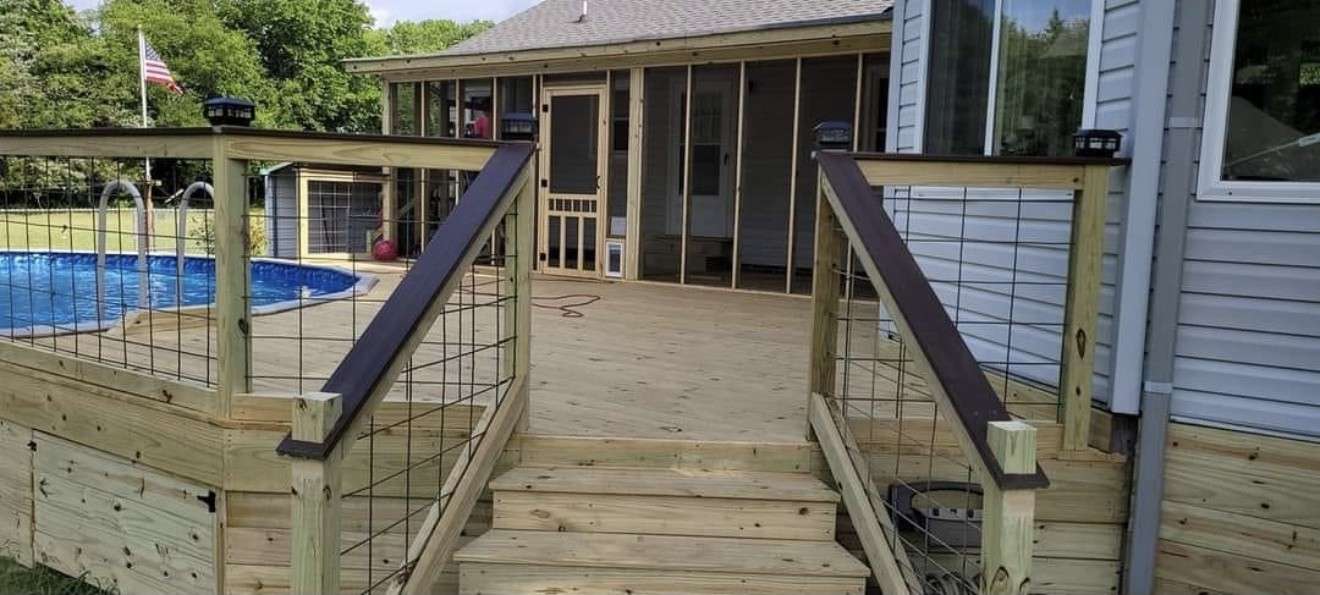
Getting the most deck for a La Vergne starter home
On a modest budget, the shape and height of a deck matter more than almost anything else. A low rectangle close to the ground uses less framing and fewer steps, and depending on its height and your codes office, it may not need a railing. Each extra corner or change in level adds labor. Pressure treated pine is usually the least expensive board and holds up well when kept clean and sealed. If you may want composite someday, the frame can be built with that in mind.
Size is where many La Vergne budgets get stretched. For a lot of households, a deck that fits a grill and a table for four is plenty. It is fine to build a solid first stage now and add on later, as long as the footings and the house connection are planned for it. Our guide on what drives the cost of a deck shows how to compare bids line by line, so a low number does not hide a missing stair or railing.
Decks on La Vergne rental houses
Some La Vergne houses are rentals, and a deck on a rental needs to forgive some neglect. Tenants may not sweep off wet leaves or mention it when a board starts to feel soft. That makes what is under the surface matter most: framing rated for ground contact where it sits low, and fasteners made for treated lumber so they do not rust through. Railings and stair treads take the hardest use, so they are worth checking first.
With an older deck on a rental, the question is usually repair or replace. Gray boards and a few loose screws are a small fix. Rot at the ledger, where the deck meets the house, is not, and neither are posts standing in soil that stays wet. Our guide on signs your deck is done covers what to look for. For La Vergne landlords, the gap between tenants is the easiest time to check.
Footings in La Vergne clay and limestone
Many La Vergne yards have clay on top and limestone below it. How far down the rock sits changes from one yard to the next, and sometimes from one corner of a deck to the other. A footing hole that hits rock early has to be handled on purpose, not filled in and forgotten. Depending on what the codes office accepts, that may mean bearing on the rock or shifting the footing a little. Any deck builder should explain how they handle it and how it shows up in the price.
The clay holds water after a heavy spring rain and shrinks back as it dries in late summer. A footing set too shallow in that soil can move over a few seasons, which shows up as stairs pulling away or a deck that no longer sits level. Footing depth is set by code, and the right depth is the one your codes office signs off on. Keeping water moving away from the posts helps the whole frame last.
Decks on sloped lots near the lake in La Vergne
Lots that fall toward Percy Priest Lake can be steep. A house that sits close to the ground out front can have its back door a full story above the yard once the ground drops toward the water. The view from up there can be worth it, but a taller deck is a bigger job. Posts run longer and need bracing, and a stair down to the yard takes real space. Expect the permit review to look more closely at a deck that high.
Before you plan a deck reaching toward the water, find out where your lot ends. The U.S. Army Corps of Engineers manages Percy Priest, and much of the land along the shore is public even where it looks like part of your yard. The Corps treats anything built on that land without its written permission as an encroachment. A deck kept inside your line goes through the same La Vergne permit process as any other.
Replacing the builder's landing on a newer home
In a newer La Vergne subdivision, the back door often opens onto a small landing and a short set of stairs, enough to get out of the house and not much more. A real deck starts with a ledger fastened to the house framing correctly and flashed so water cannot get behind it. Footings near the house should reach past the loose fill pushed against the foundation, since that fill can keep settling for a while. Also look at how rain leaves the yard. Many newer lots carry water around the house in a shallow channel in the grass, and skirting that runs to the ground can dam it. If you have an HOA, get its rules on placement and color before the design is final.
Permits and questions to ask a La Vergne deck builder
Attached and raised decks usually need a permit, and the review tends to look hard at the footings and at how the deck connects to the house. When you sell, a buyer's inspector may ask whether the deck was permitted. Our guide to deck permits in Tennessee explains how inspections usually work. An HOA review, if you have one, is a separate approval.
When you talk to a deck builder, start with who pulls the permit and who meets the inspector. Then find out what happens if a footing hole hits rock. Tearing out an old deck is easy to leave off a bid, so check whether it is included. Board and fastener choices should come with a reason. For owners in Lake Forest, Stones River Estates, or anywhere else in La Vergne, a bid that skips those points can grow once work starts.
La Vergne deck questions
Do I need a permit for a deck in La Vergne?
In most cases an attached or raised deck needs one, but the details depend on where your property sits and what you are building. Inside city limits, check with the city of La Vergne. Outside them, Rutherford County is usually the office to call, and a mailing address alone will not tell you which applies. Ask before any work starts.
What deck material makes sense for a La Vergne rental house?
Pressure treated pine is the usual choice for rentals because it costs less and a damaged board is easy to swap. It does need cleaning and sealing on a schedule, and tenants rarely do that, so plan it into your own upkeep. Composite costs more up front and skips the staining, which some landlords prefer. Either way the framing underneath is treated lumber, so the fasteners and footings matter as much as the boards.
My back door is several steps above the yard. Does that mean a big deck?
Not necessarily. A deck at that height usually needs stairs and a railing, but it does not have to be large. Often the most budget friendly fix for a tall back door is a modest deck at door level with a straight run of stairs. On lots that fall toward the lake, the height grows quickly, so measure before settling on a design.
My La Vergne lot backs toward Percy Priest Lake. How far can the deck go?
Only as far as your property line, and near the lake that line can stop well short of the shore. Much of the shoreline is public land managed by the Corps of Engineers. Check your survey or plat, and contact the Corps before planning anything that reaches toward the water. A deck on your side of the line can still be laid out to face the view.
Is composite decking worth it for a La Vergne deck in full sun?
It can be. Composite does not need staining and will not splinter, which suits busy owners and some landlords. The tradeoff is cost and heat. In full afternoon sun, composite gets hotter underfoot than wood, and darker colors get hotter still. For a west facing deck with no shade, a lighter color or pressure treated pine may be more comfortable. Our comparison of wood vs composite decking covers how each one ages in Tennessee weather.