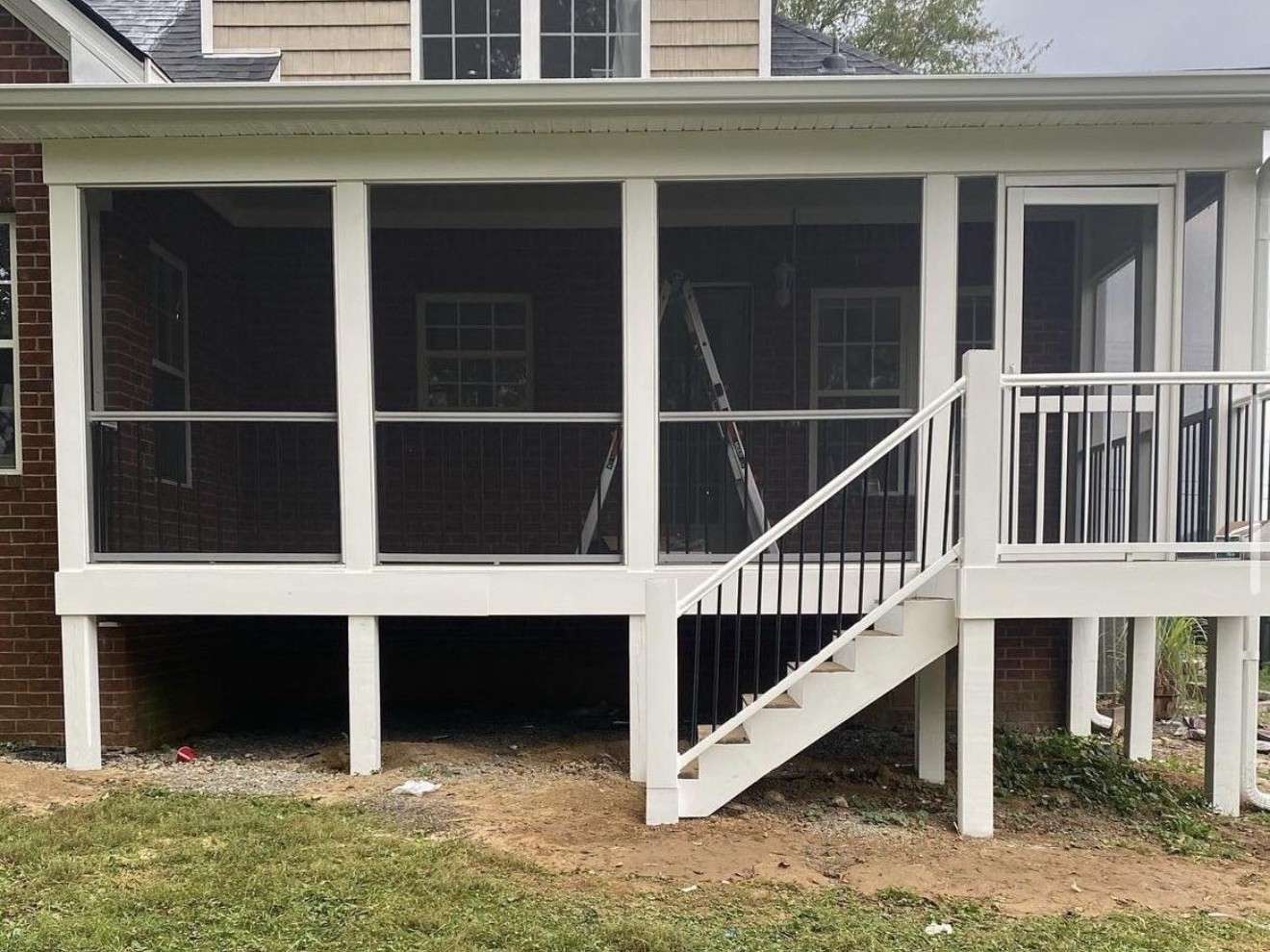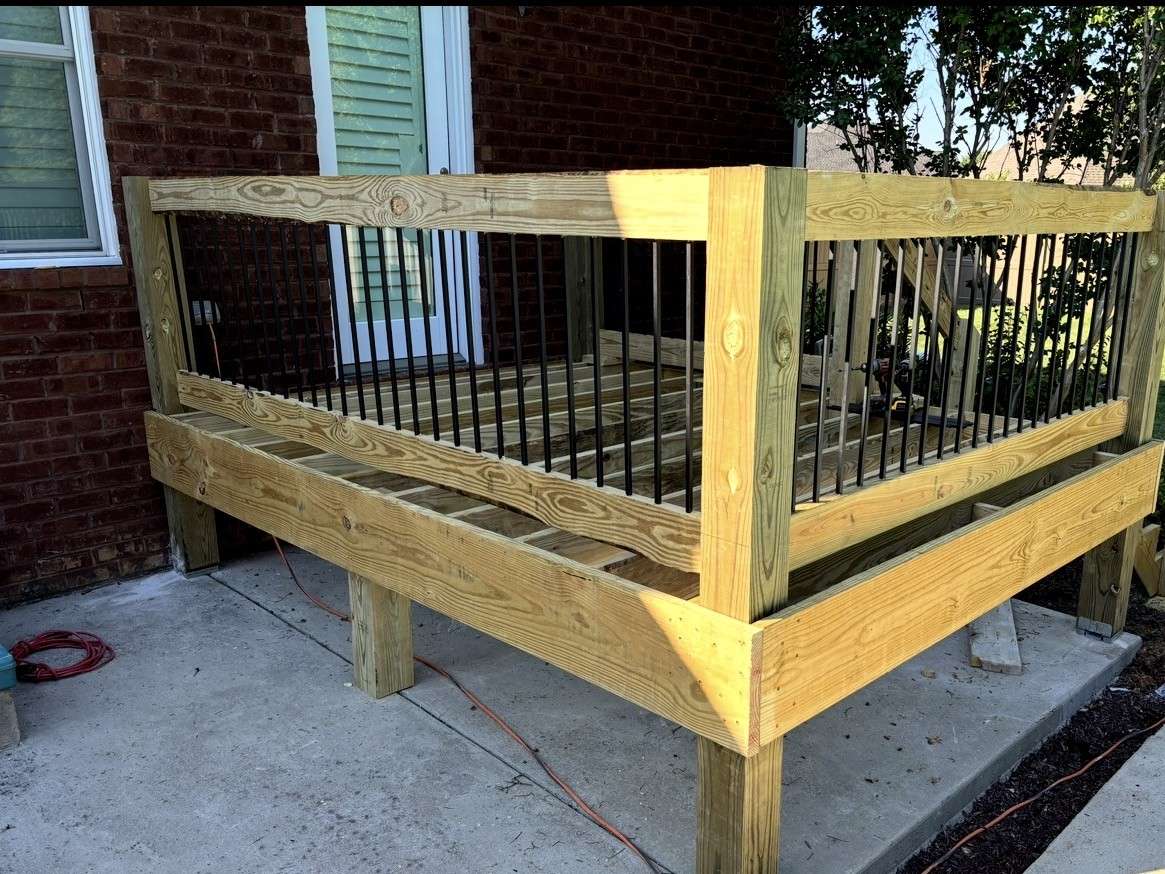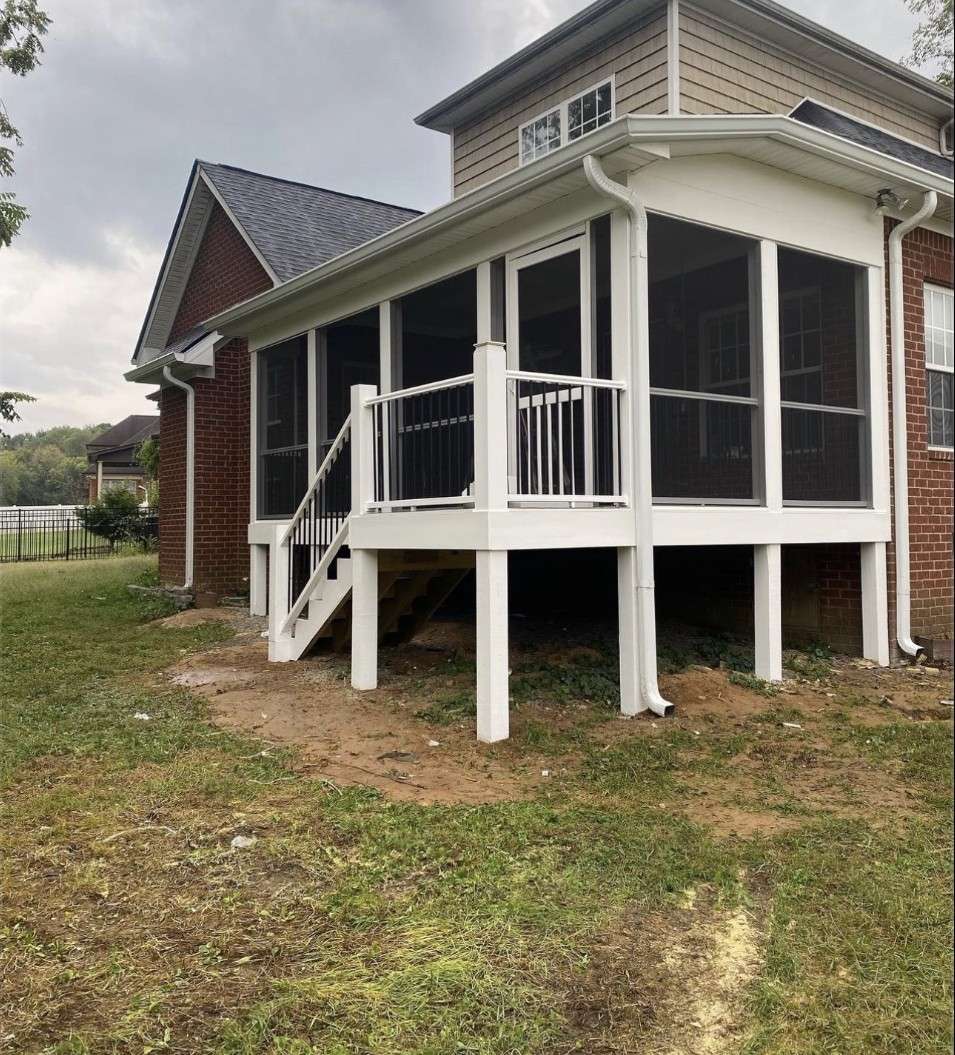
Sizing a deck for a small Nashville backyard
Many lots in Sylvan Park and 12 South leave little open ground once the house and a parking pad are in. A deck that fills the whole yard can look good on paper, then the dog has no grass and there is no spot for a garden bed. Before choosing a size, mark the outline on the ground with string or spray paint and walk around inside it. Picture the grill and the table in place, with room to pull the chairs out.
Setbacks from the side and rear lines matter more on a narrow Nashville lot. Metro zoning limits how close a deck can sit to the property line, and those limits change with the zoning of your lot, so ask the codes office before the design is final. A low deck close to the ground is often the easiest fit. It needs only a short stair and keeps you below the top of a privacy fence.
Privacy when the house next door is taller
When a two story infill house goes up beside your Nashville home, its upstairs windows may look straight down at your deck. A fence helps at ground level but does little for a raised deck. Screening built into the deck frame does more. That might be a run of solid boards on the side facing the neighbor, a slatted wall that lets the breeze through, or a pergola with partial cover overhead. Screens catch wind, so their posts need to tie firmly into the framing. A tall screen can also raise zoning or overlay questions, so check before you commit.
Placement can solve part of the problem before any screen is built. Moving the deck to the side of the house away from the neighbor's windows, or keeping it low and close to the back wall, often cuts the view more than adding height to a railing. Some lots have only one or two workable spots, and it helps to stand in each of them at different times of day before deciding.
Older houses in East Nashville and Germantown
Houses in the older parts of East Nashville and Germantown were not built with a deck in mind. Many sit over a crawl space, and the wood a deck would bolt to may be old or softened by years of water from a leaky gutter. When an old deck comes off, it is common to find rot behind it where water was trapped against the house. If the house framing is sound, a new deck can attach to it with proper flashing. Where it is not, a freestanding deck on its own posts, set just off the wall, is often the safer choice.
Siding matters as well. Older houses may have wood lap siding or brick, and some have vinyl laid over the original boards. Each calls for a different way of attaching and sealing the ledger. Opening up a small patch of siding where the deck will meet the house, before the plan is final, can head off a surprise on the first day of work.
Historic review for a Nashville deck
If your Nashville house sits inside a historic or conservation overlay, Metro Codes tells deck applicants to contact the historic zoning staff about any rules that apply. Ask early, before the design is final. Where review applies, it may look at where the deck sits, how large it is next to the house, and whether it covers original features of the house. Our guide to deck permits in Tennessee explains the permit side in general terms.
Permits and inspections through Metro Codes
Building a new deck or replacing an old one in Nashville takes a permit from the Metro Codes office, and the work is inspected along the way, often starting with the footing holes before concrete goes in. A deck built without a permit can cause trouble later, because buyers' inspectors and lenders tend to ask about it when you sell. Belle Meade handles its own permits, as do some other small cities inside Davidson County. Ask any deck builder you talk to who pulls the permit and whether the fee is included in the bid.
Digging footings in the Nashville Basin
Nashville sits in a basin where limestone lies close to the surface in many yards. A footing hole can go down easily at one corner and hit a ledge of rock at the next. The fix is to drill or break the rock, or shift the post layout so the footings land where digging works. Between the ledges there is often dense clay that stays wet after a rain and cracks during a dry summer. Footings need to bear on firm, undisturbed soil or rock, never on loose fill.
Hillier parts of Nashville bring slope into the picture. In Bellevue, a lot can fall away from the house fast enough to turn a simple deck into one standing well above the grade, with taller posts and a longer stair. Near the Harpeth River, or along creeks elsewhere in the county, check the flood map for your lot first, since building in a floodplain can bring extra rules. Mention the slope when you ask for an estimate.
Nashville deck questions
Can a real deck replace the small landing on my Nashville infill house?
Usually, yes. Many newer infill homes come with a back landing just big enough to open the door, sitting well above the yard. A deck can replace it or grow out from it, but that height means taller posts and a longer stair. It helps to know how the landing was attached to the house, so ask the builder or check the plans if you have them. If your house shares a lot with a second home, read the shared agreement before planning anything in the yard.
Do I need historic approval for a deck behind my house in Germantown?
It depends on whether your lot is inside an overlay and what that overlay covers. Look up your parcel on the Metro Nashville property maps, or call the historic zoning staff and give them your address. If review applies, do not assume a rear deck is exempt just because it sits behind the house. Get a clear answer before the permit application goes in, since starting over later costs time.
What decking holds up under the big shade trees in older Nashville neighborhoods?
Heavy shade keeps a deck cooler, but it also keeps it damp. Wood under old trees tends to grow mildew and collect leaves in the gaps between boards, so it needs regular cleaning and a sealer suited to shade. Composite resists rot better than wood but can still get slick with mildew. In a sunny infill yard with no trees, surface heat on the boards becomes the bigger question. Our guide to wood and composite decking compares them in more detail.
I rent out my Nashville house or a back cottage. What kind of deck makes sense for guests?
Guests tend to be rougher on a deck than owners are, and nobody sweeps the leaves off between stays. Simple layouts hold up best, with sturdy railings and a stair that is easy to see at night. Choose boards that clean up quickly between bookings. A hot tub on the deck is a much heavier load and a bigger project, so raise it at the start and ask Metro Codes what the permit will need.
What should I ask a Nashville deck builder before signing?
Start with who pulls the Metro permit and whether handling historic review, if your street needs it, is part of the job. Rock is another good topic, since a footing that hits limestone can change the price. Get the board type and railing style in writing. On a lot with no alley, find out how materials will reach the backyard and what happens to the old deck when it comes off. A clear bid makes it easier to compare deck builders side by side.