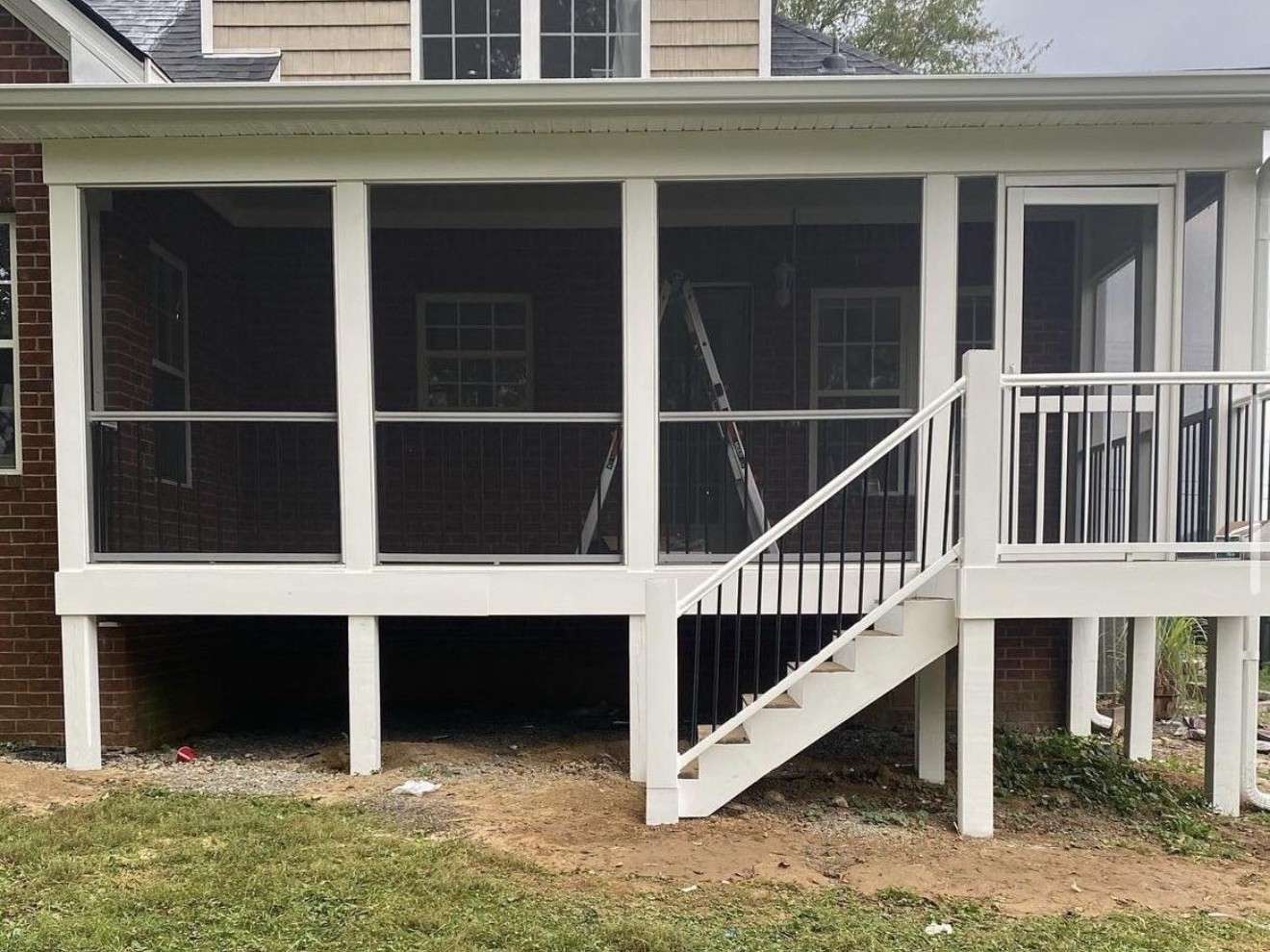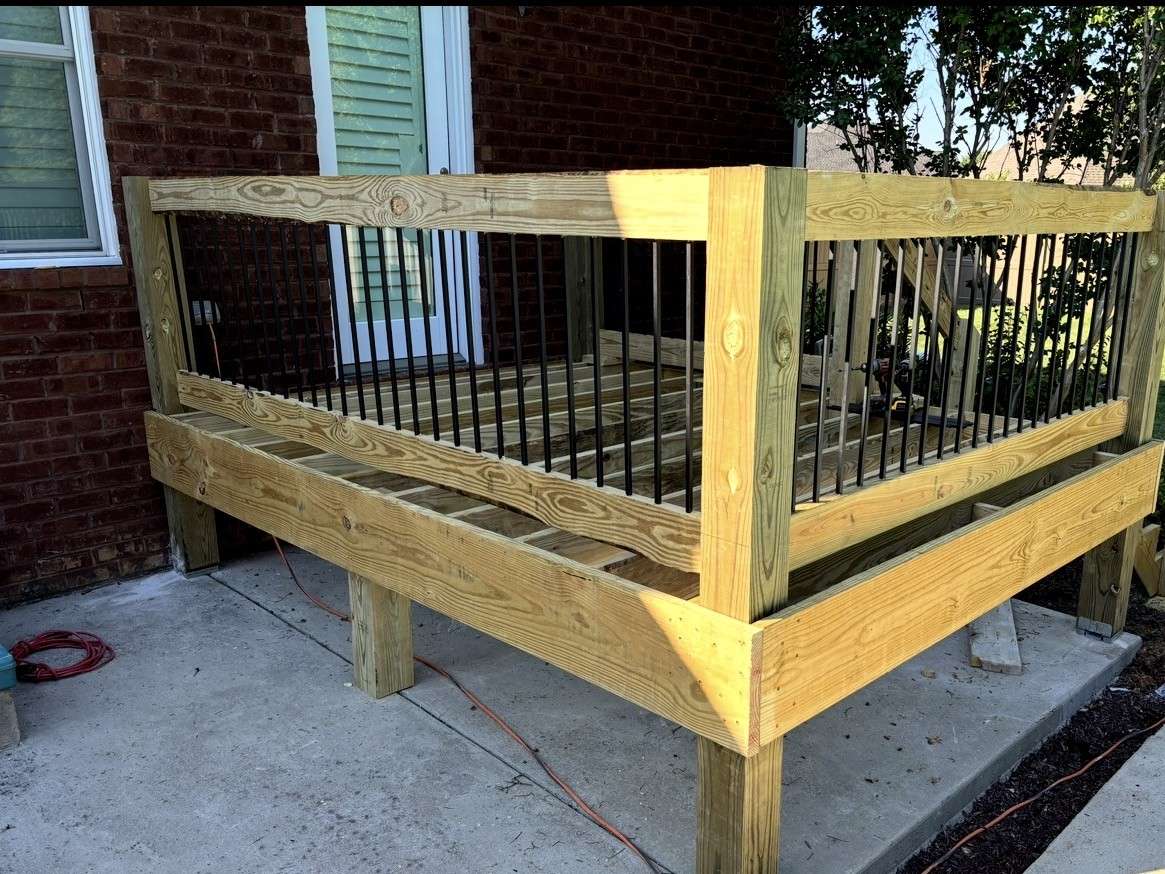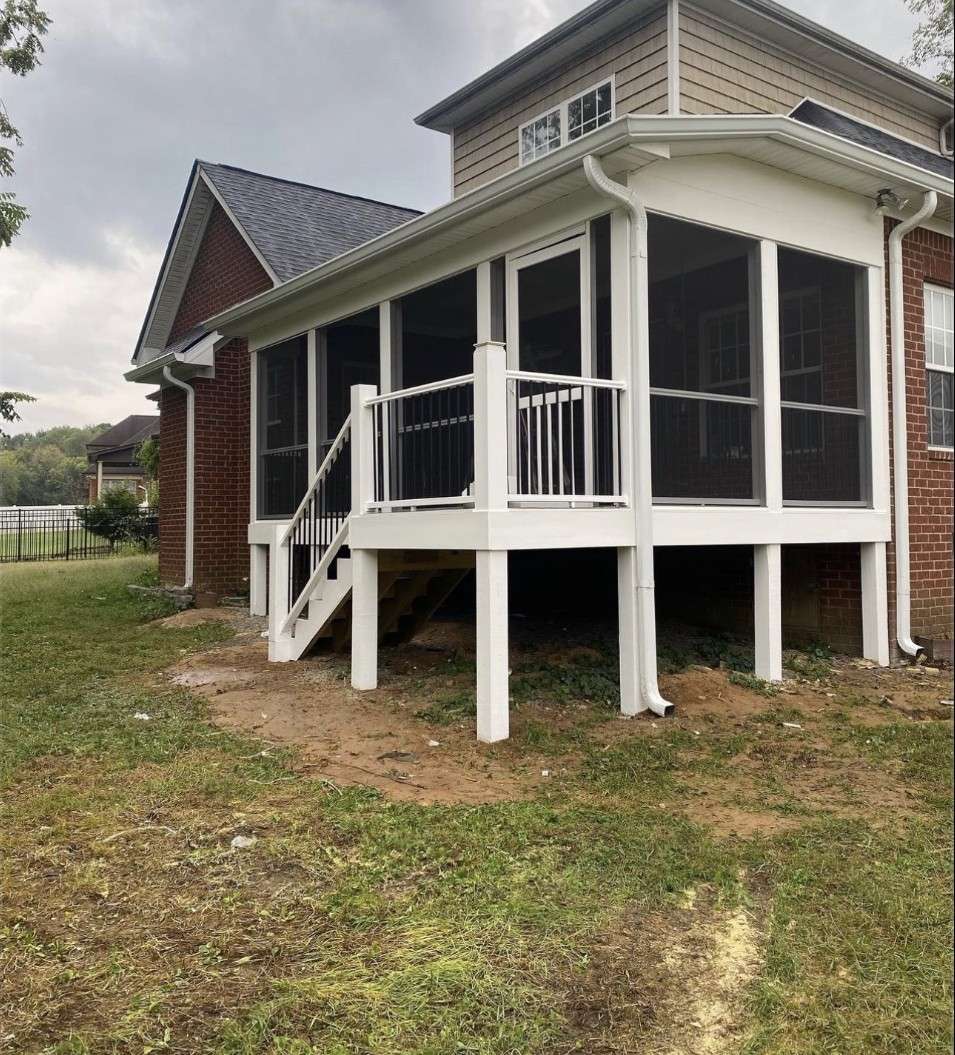
Deck footings on Lebanon limestone
A deck is only as solid as its footings, and footings in Lebanon often meet rock before they reach the depth a plan calls for. Sometimes the rock is sound enough to bear on, and the footing sits right on it. Other times the hole needs more drilling, or a post has to shift to find better ground. The inspector makes the final call, so a good deck builder plans for these choices before the first hole is dug.
Water is the other issue. Glade ground often stays wet through the rainy months because the rock underneath keeps it from draining, then bakes hard in summer. A footing that sits in a puddle for weeks is a problem, so look at where water collects before locking in post locations. Limestone can also form sinkholes, and if a spot in your Lebanon yard keeps settling, show it to us before the deck gets laid out.
Older homes near Lebanon Square and out on farms
Older houses in town, including many around Lebanon Square, bring their own questions. If your house has brick on the back wall, codes generally do not allow a deck ledger to be fastened to the veneer, so the deck is built freestanding on its own row of posts. On older frame houses, the rim board behind the siding has to be solid and dry before anything gets bolted to it. A rotten rim is a repair that has to happen first.
Farmhouses outside Lebanon are a different job. Many were added onto over the years, so the back wall may join sections built at different times. The deck has to tie in to whichever part can carry it, or stand on its own. Some sit higher off the ground at the back, which means taller posts and longer stairs. Plan where those stairs land so they come down on firm ground, away from water running off the roof.
First decks on newer Lebanon houses
Lebanon has added a lot of new homes in recent years, and many came with a back door that opens onto a small landing or a patch of grass. On those lots, the soil right next to the foundation is backfill, looser than the ground farther out. Footings have to go through it to firm soil or rock rather than sit in it. The yard may also have been graded with fill that is still settling, which affects where the stairs meet the ground.
New subdivisions also tend to have few trees. A deck that faces west takes the full afternoon sun, and on those open lots nothing breaks it. Boards get hot underfoot and wood stain fades sooner. That affects which material you pick and whether you plan for shade later. If you live in a Lebanon subdivision such as Five Oaks or one of the newer developments, check whether covenants cover deck color or railing style. Read them before the design is final, since HOA approval is separate from the permit.
Decks that look out over open land
On acreage outside Lebanon, a deck is often about the view of the pasture or the tree line, and that can pull the design toward a bigger footprint. A larger deck over sloping or rocky ground may need more posts and bracing than one on a flat lot. Think about what the deck overlooks up close, too. If animals come up near the house, or the barn lot sits downhill, that shapes where the stairs go and whether you want a gate at the top.
Access is the other practical question. Lumber has to reach the back of the house, and on a long gravel drive or across a soft yard that takes some planning. After a wet stretch, both glade ground and clay can get too soft for a loaded trailer. Let us know how far the house sits from where a truck can park and whether a gate or pasture fence is in the way. None of that stops a project, but it belongs in the estimate from the start.
Deck permits and inspections in Lebanon
Most attached decks and most raised decks need a permit. Inside the city limits, that goes through the City of Lebanon. Outside, it usually goes through Wilson County, and the two offices can have different forms and inspection steps. Inspectors commonly want to see footing holes before concrete is poured, then the framing before the boards cover it. On rock, the footing inspection is where the question of bearing on stone gets settled. Our guide on deck permits in Tennessee walks through the general process.
An unpermitted deck can cause trouble when you sell, because a buyer's home inspector may flag a deck with no permit on file. If you are replacing an older deck that was never permitted, the new one is a chance to get it on record. Ask any deck builder you talk with whether the price includes pulling the permit and scheduling inspections. It is also fair to ask who needs to be home when the inspector comes out.
Choosing materials for full sun and damp ground
Pressure treated pine is the common choice for framing. Posts and any framing close to the ground should be rated for ground contact, especially over glade soil that stays damp for part of the year. For the surface boards, the choice comes down to upkeep and heat. Wood needs cleaning and a fresh coat of stain every so often, more so on an open lot in full sun. On a lot shaded by cedars, mildew is usually the bigger fight. Our comparison of wood and composite decking lays out the tradeoffs for Tennessee summers.
Lebanon deck questions
Will hitting rock make my Lebanon deck cost more?
It can. Drilling into limestone takes more time and different equipment than digging in clay. How much it adds depends on how many footings hit rock and how hard the stone is. A fair estimate should explain how rock will be handled instead of leaving it as a surprise. If you know where the ledges are, tell us when you request an estimate so the price reflects your yard.
Can a deck be built over a rock ledge that sticks out of the yard?
Usually, yes. The framing can span over an outcrop, and posts can go around it or on it, depending on what the inspector allows. Leave room under the deck for air to move and water to drain off the stone, because a low deck sitting tight against rock stays damp. Some homeowners like leaving a bit of the ledge showing at the edge. It is part of how the ground around Lebanon looks.
Can you reuse the footings from my old deck?
Sometimes, but it is rarely the first choice. Many older decks were built before current rules, and their footings may be undersized or sitting on loose fill. Reusing them only makes sense if they are sound and sit where the new design needs posts, and the inspector still has to accept them. Most replacements get new footings. Our guide to the signs you need a new deck covers what to look for first.
Does my Lebanon HOA need to approve a new deck?
It depends on your neighborhood. Some Lebanon subdivisions have covenants and an architectural review process, and others have none. Where review exists, it may cover where the deck sits, the stain color, and the railing style. Read your covenants or ask the HOA before you commit to a design. Approval is separate from the building permit, and starting before the HOA signs off can lead to a request to change or remove the deck.
What time of year is best for building a deck in Lebanon?
Decks can go in for most of the year here. The wet months are harder on glade ground, because footing holes can fill with water and soft yards rut under equipment. Late spring through fall is usually easier, and summer heat slows the work without stopping it. Paperwork often decides the timing, since permits and HOA approval take time. Start those early so you can build when the ground and your schedule cooperate.