Decks on sloped lake lots in Gallatin
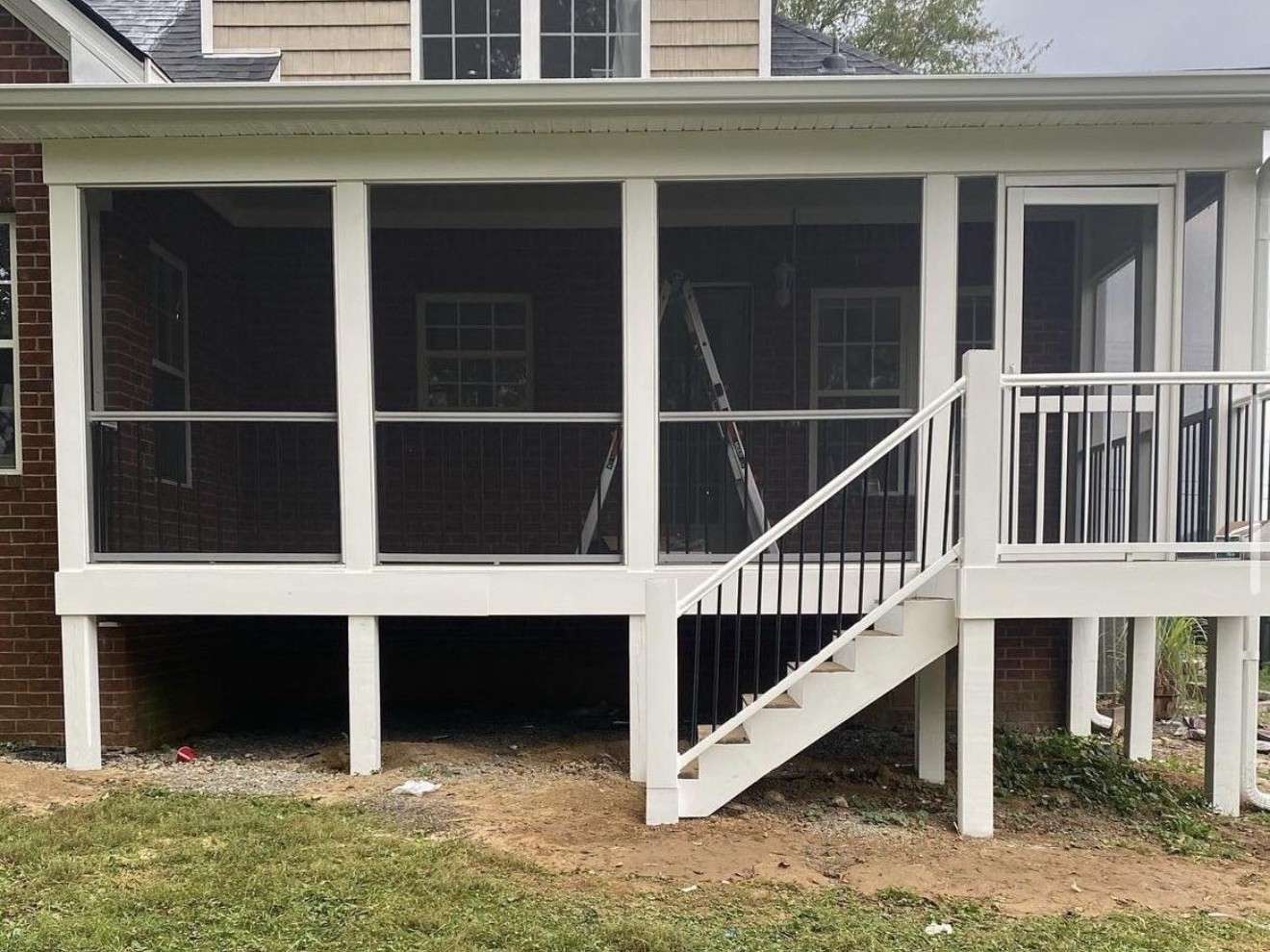
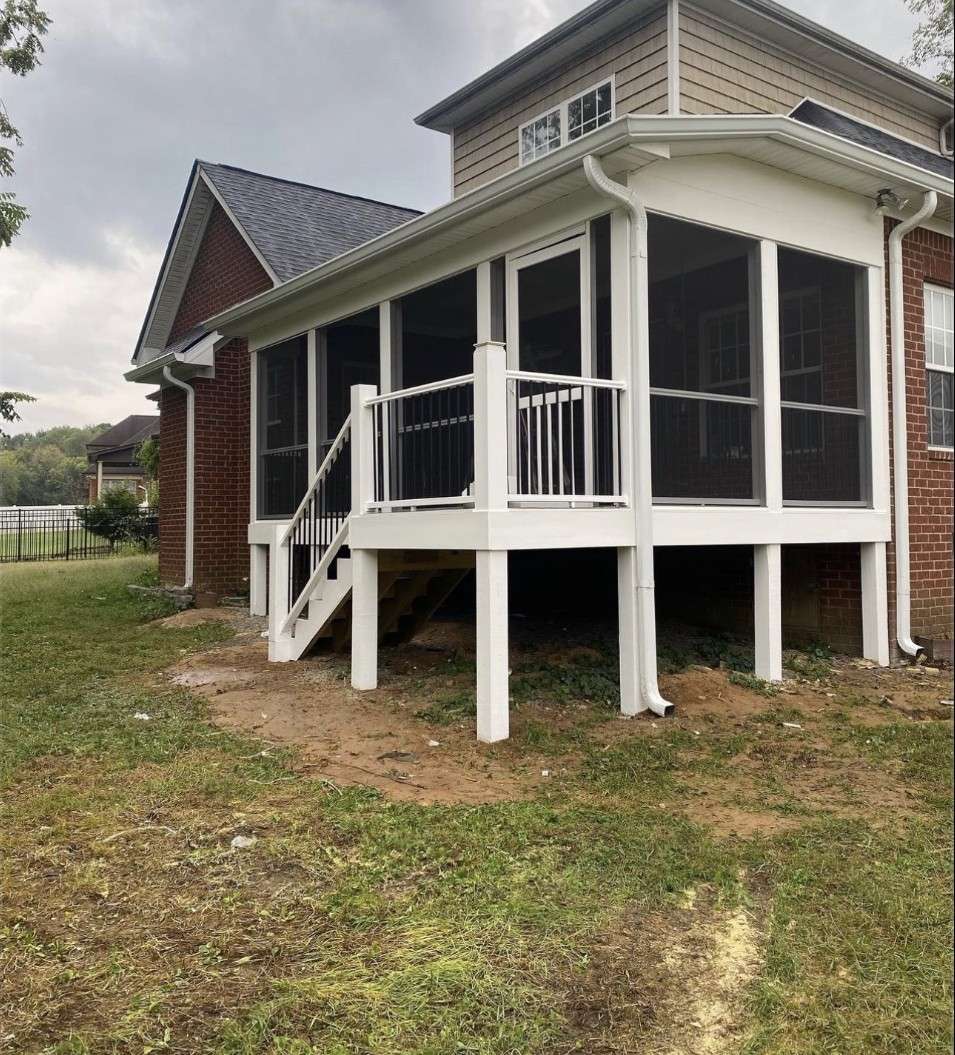
On a lot that drops toward Old Hickory Lake, height is the main design decision. A taller deck needs heavier posts and bracing, plus a guardrail along every open edge. Stairs have to land somewhere sensible, which on a steep yard can mean a landing partway down. Some owners like the extra height because it frames the lake from inside the house. Others would rather step the deck down in two levels so it sits closer to the yard. Either choice can work, and the slope usually settles it.
The space under a tall lake deck deserves a plan too. Rain coming off the roof and down the hill will pass right through it, so gutter outlets need to be sorted out before footings are set. If you want to store kayaks or a mower under there, that changes post spacing. A Gallatin lake deck that faces west takes hard afternoon sun, which matters when you pick boards and a color.
Knowing where your lake lot ends
Before a deck plan grows toward the water, find your property line. Around Gallatin, much of the Old Hickory shoreline is Corps of Engineers land, and a private deck generally cannot sit on it. The boundary may be well back from where the grass meets the lake. Your survey or plat should show it, and if it does not, a surveyor can mark the corners. A deck built across that line can cause trouble when you sell, and the Corps can require an owner to remove a structure built on its land.
Footings in Gallatin clay and limestone
Many Gallatin yards have clay soil with limestone underneath, and in places the rock sits close to the surface. A footing hole may hit a ledge before it reaches the depth your codes office requires. When that happens, the fix depends on the rock and on what the inspector will accept, so it is better to learn about it before a big deck is priced than halfway through the build. Probing a few of the planned footing spots is the simple way to find out.
The clay itself is the other concern. It swells when wet and shrinks in a dry spell, and footings need to sit deep enough that this movement does not lift or drop the deck. Water drains through clay slowly, so a footing in a low corner of the yard can stay wet long after a storm. On new construction lots in Gallatin, the top layer is often fill spread during grading, and it may not be as firm as it looks. Footings belong in firm, undisturbed soil.
Deck rules in Gallatin golf course neighborhoods
In Foxland Harbor or Fairvue Plantation, as in other Gallatin neighborhoods with covenants, the review board sees your deck before the inspector does. Boards often look at railing style and board color. They may also ask whether the space under a raised deck will be skirted or left open. A deck that can be seen from a fairway or the lake may get a closer look. Ask for the written standards early, since some neighborhoods keep a list of approved colors or railing types. Designing to that list from the start saves you from redrawing plans after a rejection.
Wood or composite in Tennessee sun and lake humidity
Pressure treated pine is the common starting point for Gallatin decks. It costs less up front and takes stain well, but it needs cleaning and sealing on a regular schedule, and it will check and turn gray if ignored. Composite boards skip the staining, though they can get hot underfoot in full afternoon sun, especially in darker colors. Near the lake, shade and moisture can grow mildew on either one. If you are weighing the two, our wood vs composite decking guide lays out the tradeoffs.
Tying a deck into a newer house
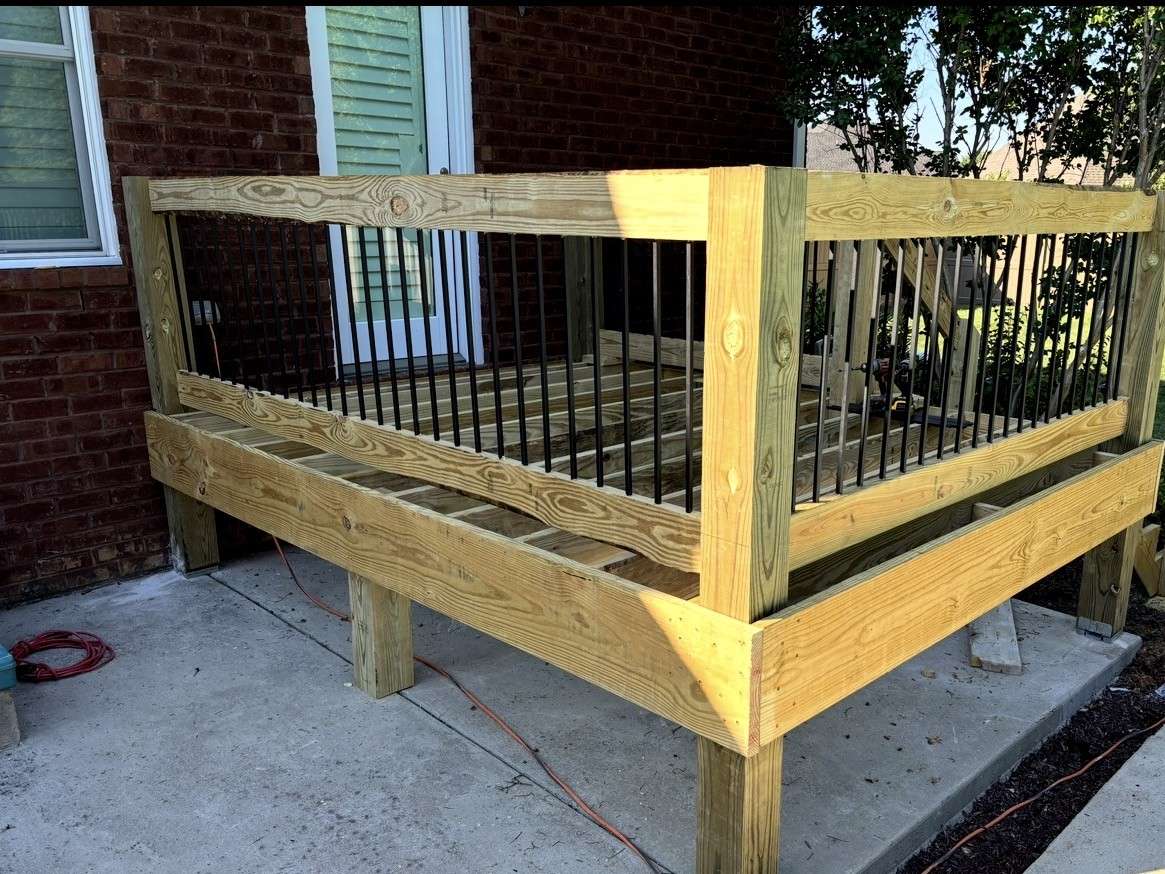
Newer homes in Gallatin subdivisions often have a back door with just a small builder landing under it. Attaching a deck there means taking the siding off where the ledger board goes and bolting that board to the house framing. Flashing over the ledger keeps water out of the wall. Where the back wall is brick veneer, a ledger cannot hang on the brick, so the deck usually stands on its own posts instead. On older houses near downtown Gallatin, the framing behind the siding can hold surprises, so it should be checked before anyone counts on it to carry weight. Mention the age of the house when you request a deck estimate.
Deck permits in Gallatin and Sumner County
An attached deck, or one raised well off the ground, usually needs a building permit. Which office issues it depends on whether your address is inside Gallatin city limits or out in the county, and your mailing address alone will not tell you. Expect inspections along the way, often at the footing stage and again at the end. Rules change, so confirm the details with the codes office that covers your address. Our guide on deck permits in Tennessee explains the process in general terms.
Replacing an old deck counts too. Older decks were sometimes built with the ledger nailed to the house or with posts buried straight in the dirt, and a rebuilt deck has to meet the code in force today. An unpermitted deck can also slow down a sale, because buyers and their inspectors tend to ask about it. If you have an HOA, its approval is a separate step from the permit.
Gallatin deck questions
How tall can a deck be on a Gallatin lake lot?
There is no single number. The real limits come from what your codes office and HOA will approve. A taller deck is still buildable, but it needs heavier posts and bracing on careful footings, and some HOAs limit how far a deck can stand out from the house. A deck builder should draw the elevation to scale so you can see the real height before anything is framed.
What happens if you hit rock while digging deck footings?
In some Gallatin yards, limestone shows up before the hole is as deep as planned. The first step is to stop and see what is down there. Sometimes a footing can move a short way to miss a ledge, if the framing plan allows it. Other times the hole is drilled into the rock or the footing design changes. Either way, the inspector has to agree before concrete goes in. Expect rock to add some time and cost to the job.
Will my Gallatin HOA allow composite decking?
Many do, but some limit the colors or ask that railings match a set style. The only reliable answer is in your covenants and the review board's written standards. Send the board a sample or product sheet with your application, along with a drawing that shows where the deck sits on the lot. If your neighborhood has no HOA, the choice is yours, and the codes office will focus on the structure.
Do I need a permit to replace an old deck in Gallatin?
Usually, yes, when the new deck is attached to the house or raised off the ground. Swapping boards on a sound frame may not need one, but rebuilding the frame or the ledger usually does. The answer depends on whether you are in city limits or the county, so call the codes office that covers your address. Keep the permit and inspection records, since buyers often ask for them later.
What should I have ready before calling a deck builder?
A copy of your survey or plat helps most, especially on a lake lot or a new subdivision lot with easements. Add your HOA rules if you have them, and a few photos of the back of the house that show doors and windows. Then think about how you want to use the space. A grill and a dining table need a different shape than a couple of chairs facing the lake.