Fencing a new build yard in Mount Juliet
On a new Mount Juliet street, you are often the first house to fence or one of the last. If you go first, you set the line, and neighbors may tie into your fence later. Going last can mean two or three different fences already standing along your sides and back. Some HOAs want a new fence to match or meet the existing ones cleanly, so look at what is already there before you settle on a style.
New yards also come with fresh grading. Builders shape each lot so water runs toward a swale, often along the back or side line, which is exactly where most people want a fence. Sod laid over new fill can hide soft ground. A careful fence company looks at where water collects after a rain before choosing post locations. In Providence, Nichols Vale or anywhere else, start with the plat or survey in your closing papers.
What HOAs in Mount Juliet usually review
Many subdivisions in Mount Juliet have covenants that cover fences in some detail. Common points are which styles and colors are allowed and how tall a fence may be. Many also say how far back from the front corner of the house a side fence has to start. Some require the finished side to face neighbors and the street. The details differ between neighborhoods, so read your own covenants instead of going by what a friend across town was allowed to build.
Mark the fence line on a copy of your plat and note the style and height. Most committees also want a photo or drawing of the design. Wait for written approval before anyone digs. A fence built without approval can draw a letter asking you to change it or take it down, which costs far more than the wait. Plan the approval time into your schedule if you want the yard closed in by a certain date.
Finding your pins and easements before digging
Before any fence installation, you need to know where the lot lines are. In newer Mount Juliet subdivisions, the metal pins at the corners are often still in place, though they may be buried under sod or mulch. A metal detector often finds them. If they cannot be found, a surveyor can locate or reset them. That costs something, but far less than moving a fence after a neighbor disputes the line.
The plat also shows easements. Drainage and utility easements commonly run along back and side lines. A fence can often be built in one, but the utility may have the right to take it down for access, and replacing it may fall to you. Where a fence crosses a swale, leave room at the bottom so water can pass instead of backing up. Call Tennessee 811 before digging so buried lines are marked. Our guide to fences and property lines in Tennessee goes into more detail.
Fences on lake lots in Mount Juliet
Mount Juliet yards near Old Hickory Lake bring two questions that lots in the middle of town do not. The first is where your property stops. Along much of the lake, the ground nearest the water belongs to the federal government and is overseen by the U.S. Army Corps of Engineers. A private fence generally cannot run across it. Check your survey for the boundary, and treat anything beyond it as a question for the Corps.
The second question is the view. A solid privacy fence on the water side can block the lake view. Some lake homeowners keep solid panels along the sides for privacy from neighbors and use a lower or more open style facing the lake. These yards also tend to slope toward the water. Panels can step down the hill or follow the grade, and each method leaves a different gap at the bottom. Our guide on how to fence a sloped yard compares the two.
Setting posts in Mount Juliet clay and rock
A fence stays straight only as long as its posts do. Much of the ground in Wilson County is heavy clay, and limestone often sits close enough to the surface that a post hole hits rock partway down. Clay holds water after a storm and can shrink away from posts in a dry summer. Over time that movement is a common reason fences lean. Posts need enough depth, and the concrete at the top should slope so water runs away from the wood.
When a hole hits rock, the answer depends on the rock. Broken or layered rock can often be dug through. Solid limestone may need a rock bit, which takes longer and adds to the cost. A fence company should tell you up front how it handles rock so it does not show up as a surprise on the final bill. Near the house on a new Mount Juliet build, loose backfill can mean some posts need extra depth to hold.
Privacy fences for close subdivision lots
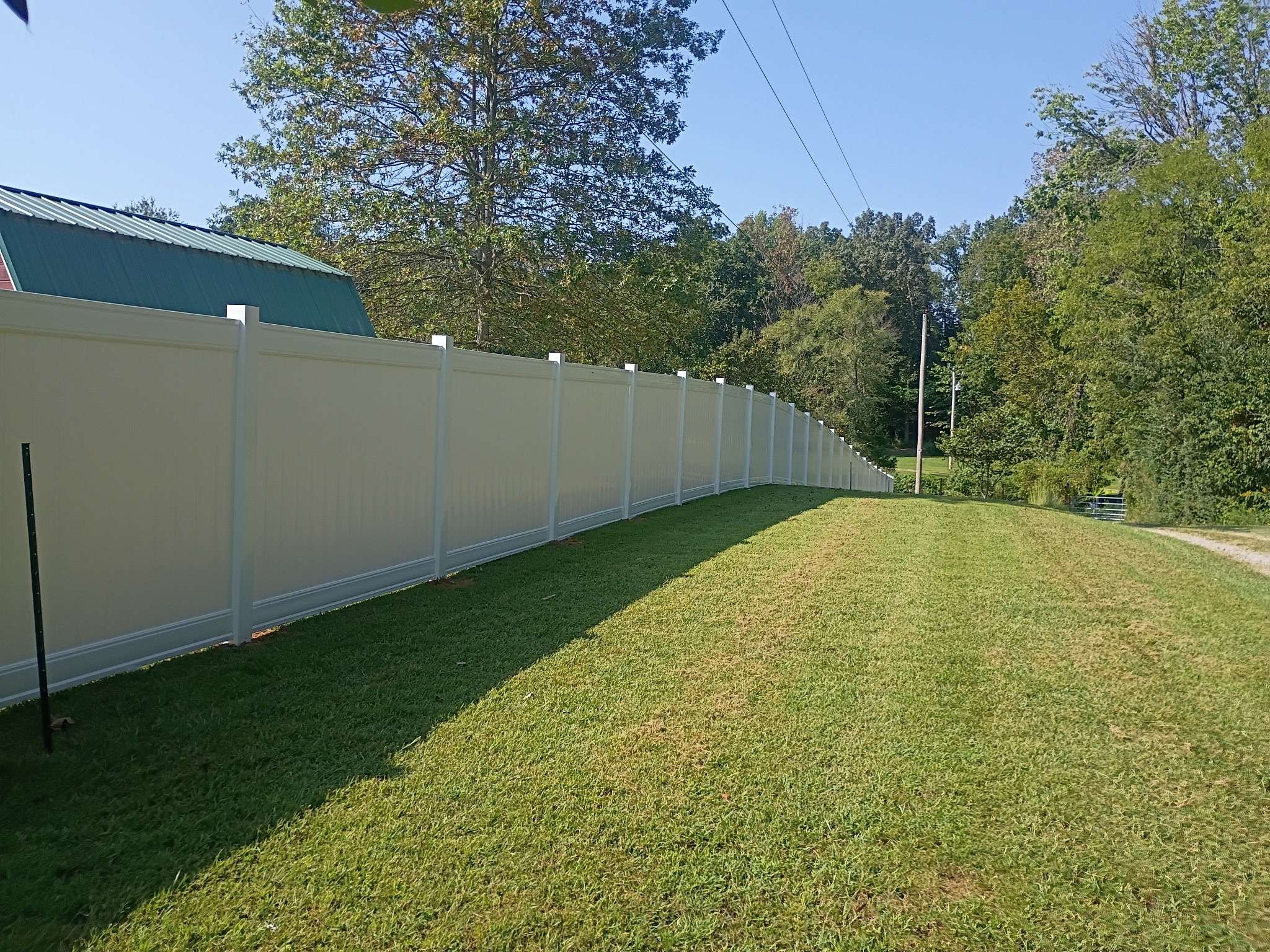
In many Mount Juliet subdivisions the houses sit close together, and a privacy fence along the back and sides is what most people want first. A solid wood privacy fence blocks the view at ground level, which covers the patio and the lawn. A neighbor at a second story window will still see over it, and a taller fence may not be allowed by your HOA anyway.
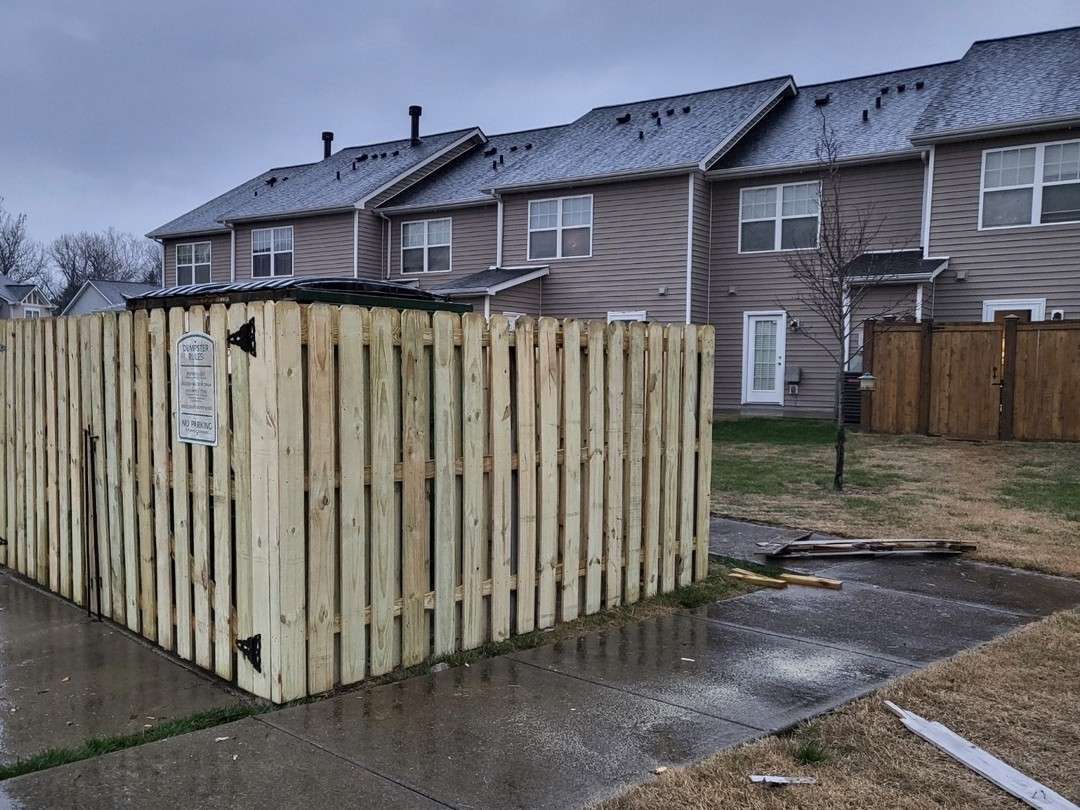
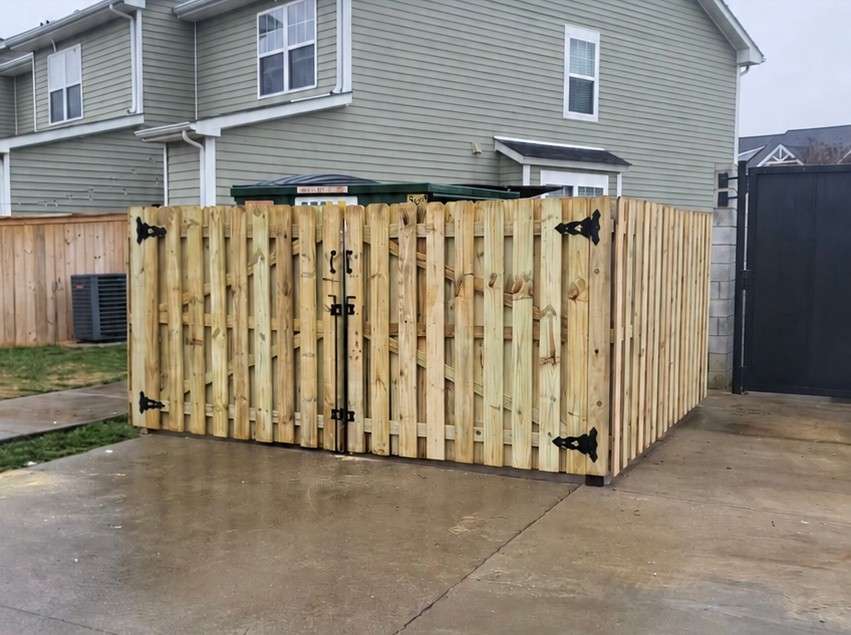
Board on board gives full coverage because the boards overlap, so no gaps open as the wood dries and shrinks. Shadowbox looks the same from both sides and lets some air through, with a little less privacy at an angle. If a dog is part of the plan, keep the bottom close to the ground and make sure gates close and latch on their own. Our look at privacy fence options compares the common styles.
Mount Juliet fence questions
Does a fence in Mount Juliet need a permit or just HOA approval?
Treat them as two separate questions. The HOA reviews style and placement under your covenants. Whether a building permit is needed depends on where you live and what you plan to build, and the answer can differ between the city of Mount Juliet and unincorporated Wilson County. Call the codes office for your address before scheduling the work, and keep the HOA approval letter somewhere you can find it.
Can my new fence tie into my neighbor's fence?
Often, yes, with your neighbor's agreement. Tying in means your end post sits against theirs or connects to it, so there is no gap for a dog to squeeze through. Ask before the work starts, since the fence you are connecting to belongs to them. Some Mount Juliet HOAs want the two fences to match where they meet. If the existing fence sits off the property line, sort that out before you connect to it.
What happens if my fence goes in a utility easement?
Many Mount Juliet subdivision plats show utility or drainage easements along the back and sides of each lot. A fence can often be built there, but the utility may be able to remove sections if it needs access, and putting them back may be your cost. Some plats and HOAs restrict fences in drainage easements altogether. Read the notes on your plat and ask the HOA before you settle on a line, and put a gate where a crew would need to get in.
How soon after closing on a new Mount Juliet house can I get a fence?
There is usually no need to wait for the yard to settle before fencing. The real wait is paperwork. HOA review can take a while, and a permit may be needed depending on your address. Tennessee 811 also has to mark buried lines before anyone digs. Send your HOA submission soon after closing if you want the yard closed in quickly. Finding your lot corners early helps too.
How should I compare bids from fence companies in Mount Juliet?
Put them side by side, line by line. Look at the post material, how deep the posts go, and how they are set. Then compare the board style and gate hardware, and check whether hauling off an old fence is included. Ask each fence company how it handles rock, since Wilson County ground can surprise you. A bid that is much lower usually leaves something out, often the HOA paperwork or the rock.