
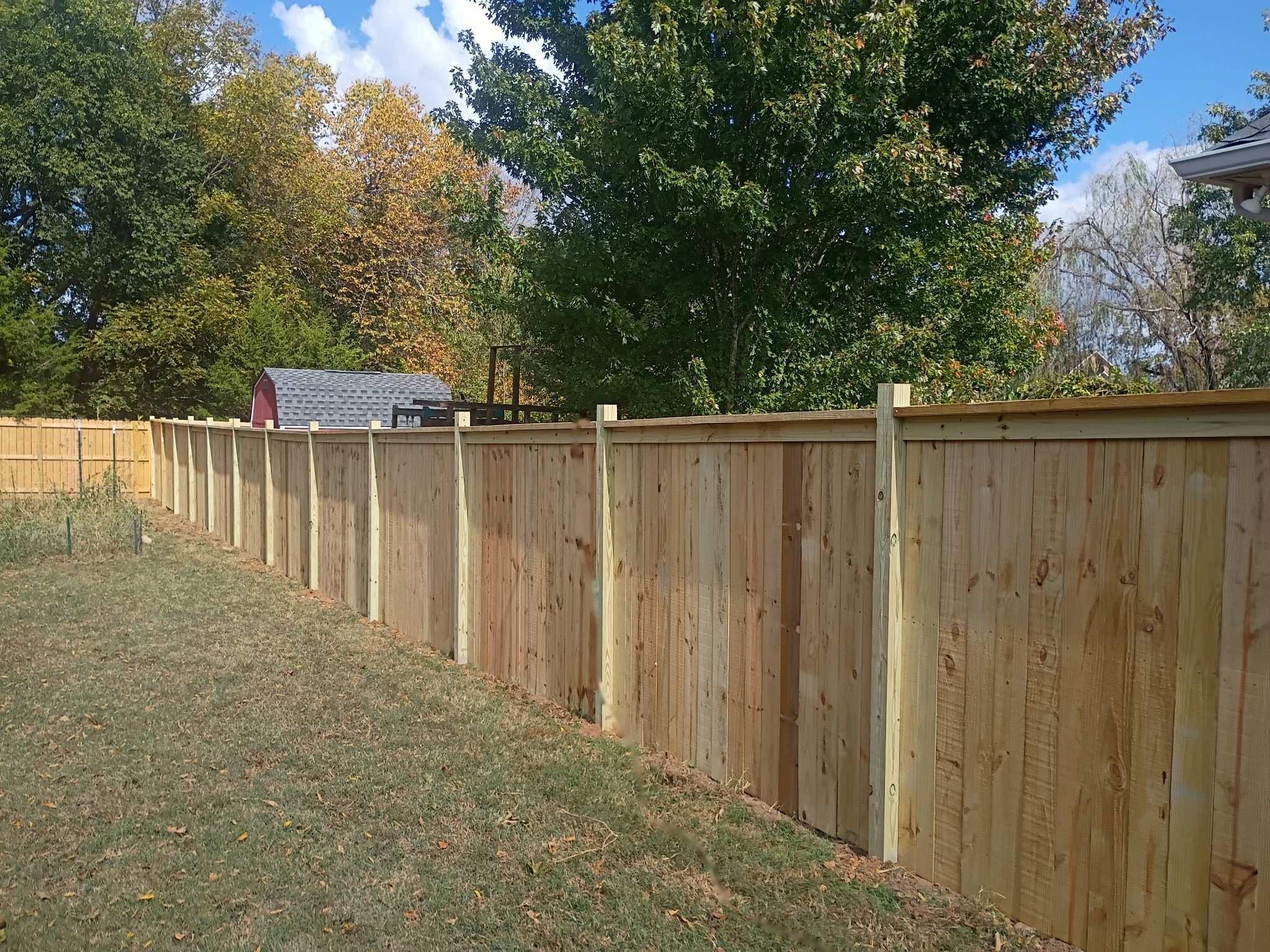
Start with the posts
The posts decide whether a wood fence is worth saving. Pickets and rails are cheap and easy to replace. Posts carry the whole fence, they sit in wet ground, and replacing them means digging. If the posts are sound, most other problems are repairs. If many posts are failing, new boards on old posts will not last.
Walk the fence line and push firmly on each post near the top. A solid post barely moves. A post that rocks, leans, or feels soft is a problem. Then look at the base, right where the post meets the dirt or concrete. That narrow band stays wet longer than any other part of the fence, and it is where rot almost always starts.
Poke the wood at the ground line with a screwdriver. If the tip sinks in easily or the wood crumbles, the post is rotting from the inside, even if it looks fine above.
Why posts fail in Middle Tennessee ground
Much of our area sits on clay that holds water after a rain and shrinks as it dries in the summer. That cycle keeps the bottom of a post damp for long stretches and can loosen it in the ground over time. Concrete footings help hold a post in place, but water can collect where the wood meets the concrete, which speeds up rot at exactly the spot you cannot see.
Lumber choice matters too. Fence posts set in the ground need lumber rated for ground contact. The end tag on pressure treated lumber shows its rating, and a post made from lumber meant only for use above ground can rot early. Our guide on cedar vs pressure treated pine explains why the posts matter more than the pickets.
Leaning sections and what causes them
A fence that leans is telling you something about what is underneath. Common causes include:
- A rotted post. The post breaks or bends at the ground line and the section tips.
- A shallow post. Posts that were not set deep enough work loose over time, especially in soft clay.
- Wind load. Solid privacy fences catch a lot of wind, and strong spring storms push hard on them.
- Water and erosion. Runoff along the fence line can wash soil away from the posts on a slope.
- Tree roots and trunks. A growing tree can push a fence over a few inches at a time.
One or two leaning posts can often be replaced or reset, and the sections rehung. When a whole run leans the same way, look for a shared cause, like a slope that drains along the fence or posts that were all set too shallow. Fixing one post at a time may not hold.
Loose or broken pickets are usually a repair
Pickets crack, warp, and pop loose, especially on the sunny side of the fence. Swapping out a handful of pickets or refastening loose ones with exterior rated screws is a simple repair. The same goes for a rail that has split in one section.
Look at why the boards are failing, though. If pickets are rotting at the bottom, they may be sitting on the ground or buried in mulch. Boards that touch the soil stay wet and rot quickly. A small gap between the bottom of the pickets and the ground helps them last much longer, and a rot board along the bottom can take the abuse instead of the pickets.
Sagging gates
A gate that drags on the ground or will not latch is one of the most common fence complaints, and it is often fixable. Gates sag for a few reasons:
- The hinge post is leaning. A gate pulls hard on its post. If that post was not set deep enough or is rotting, the whole gate drops. This calls for a new or stronger post.
- The gate frame is racking. A wood gate frame can slowly fold into a parallelogram. A diagonal brace running from the bottom hinge corner up to the top latch corner, or a cable and turnbuckle kit, can square it up.
- The hinges are too light or loose. Heavier hinges and longer screws, or through bolts, often solve this.
If you replace the gate, consider a metal gate frame for wide openings. Our guide on choosing the best fence for dogs also covers gates that close and latch on their own.
Storm and tree damage
Middle Tennessee gets strong spring thunderstorms and the occasional tornado, and fallen limbs are a common cause of sudden fence damage. After a storm, check for snapped posts, sections pushed out of line, and gates that no longer close.
Some homeowners insurance policies cover fence damage from wind or falling trees, and some do not, or have limits. Take photos before anything is moved or cleaned up, then check your policy or call your agent before you schedule work. If a neighbor's tree caused the damage, the insurance questions can get more involved, so talk with your agent first.
Termites, carpenter bees, and other pests
Termites are active in Tennessee and can hollow out posts from the inside. Mud tubes on a post or soft, layered wood at the base are warning signs. Carpenter bees leave round holes in exposed wood, often in the top rail, and woodpeckers sometimes follow them. A few holes can be filled, but heavy damage in the rails can weaken the fence.
Matching new wood to an old fence
New boards will not match weathered ones right away. Fresh pressure treated pine often has a green or tan color and takes time to gray, while cedar starts a warmer color. If you are repairing a highly visible section, plan to stain the whole run once the new wood has dried, or expect the patch to stand out for a while. Our guide to privacy fence options covers styles if you are thinking about a change.
When replacing makes more sense
There is no single number that decides it, but replacement usually wins when several of these are true:
- Many posts are rotting or loose, not just one or two.
- Long runs lean or wave instead of a single section.
- The fence no longer keeps a dog or kids in, or fails pool barrier rules.
- You are fixing something new every season.
- The fence no longer meets your HOA rules, or you want a different height or style.
- You are selling the house and the fence is one of the first things buyers see.
A useful test is to compare the repair estimate with the cost of a new fence. If the repair costs a large share of a replacement and still leaves old posts in the ground, replacement is usually the better value. Our guide to what drives the cost of a fence explains how fence bids are put together.
Permits, HOA rules, and the property line
Repairing a few pickets rarely involves anyone else. Replacing a fence often does. Some cities require a permit to alter or rebuild a fence, and many HOAs want to approve the new design even if it matches the old one. A replacement is also the right time to confirm the property line, since an old fence is not always in the right place. Start with our guides on fence permits in Tennessee and fences and property lines in Tennessee.
Quick answers
How long does a wood fence last in Tennessee?
It depends on the lumber, how the posts were set, drainage along the fence line, and upkeep. Posts usually decide the lifespan. A fence with ground contact rated posts set deep in well drained soil will outlast one with shallow posts sitting in wet clay.
Can I replace just the posts and keep my pickets?
Sometimes. If the pickets and rails are in good shape, a crew can replace failing posts and rehang the sections. If most of the posts are going, the labor often comes close to building new, and the old boards may not survive being taken down.
Should I repair or replace a fence before selling my house?
A leaning or broken fence is one of the first things buyers notice. Small repairs are usually worth doing. If the fence is near the end of its life, get a repair price and a replacement price and weigh them against your timeline.