Choosing a spot for a deck on an Eagleville lot
On a small lot the deck goes off the back door and that is the end of it. Out here you often have options. Think about when you will use it. A deck on the west side takes the full heat of a summer afternoon, and many cleared lots have no big trees near the house to soften it. An east or north exposure stays cooler in the evening. If the best view is a pasture or a tree line, it may be worth angling the deck or setting it off the side of the house to face that way.
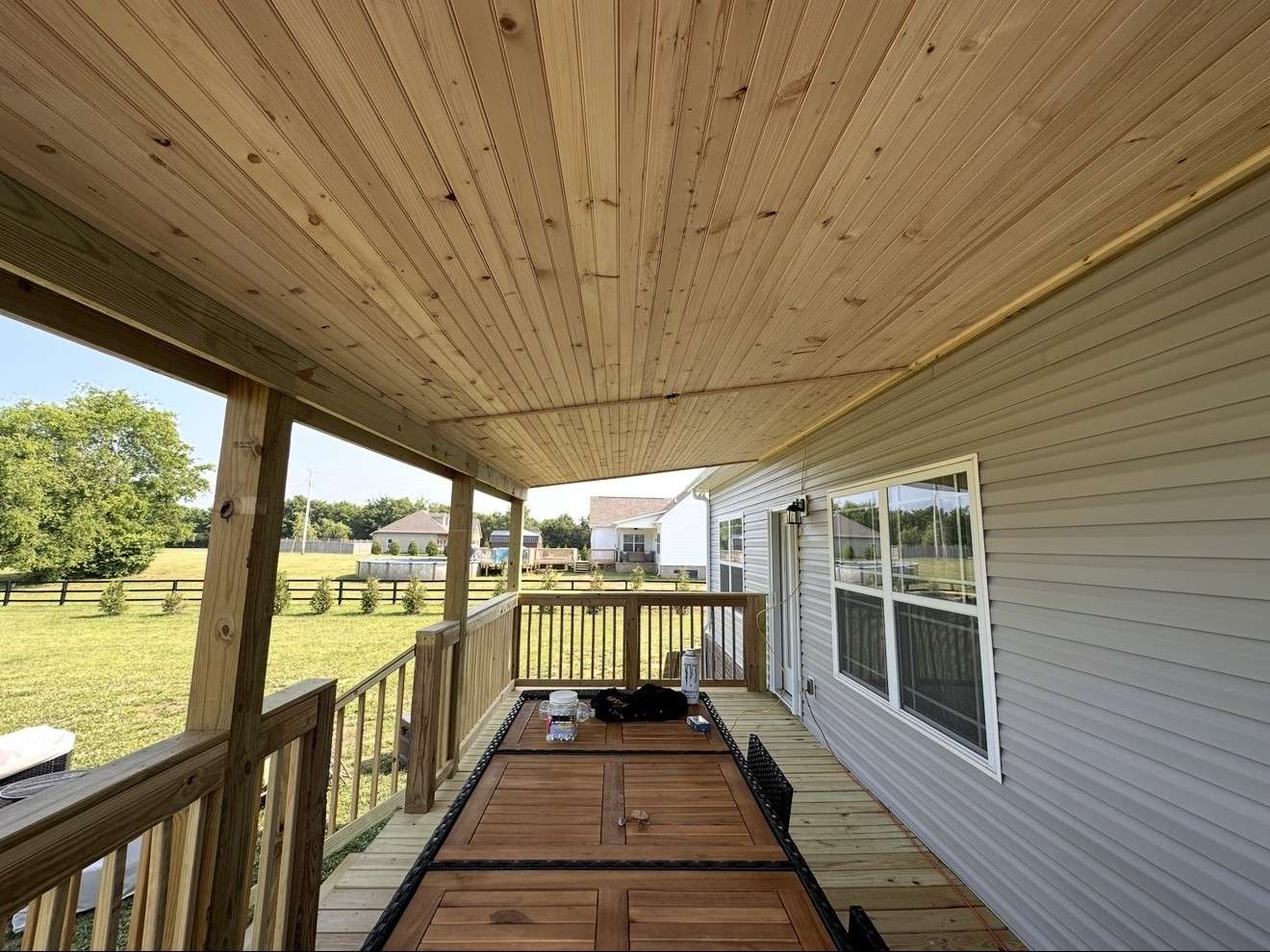
Wind is easy to overlook. Open fields let a breeze build across the property, and that breeze pushes on umbrellas and shade structures. If you plan a pergola or a roof over part of the deck, tell your Eagleville deck builder early so the posts and footings can be sized for it from the start rather than added later.
Footings when you hit Rutherford County rock
Limestone sits close to the surface across much of Rutherford County, and many Eagleville lots have it only a short way down. A footing hole that starts in clay can stop hard on rock well before it reaches the depth the plan calls for. When that happens there are a few ways to handle it. Sometimes a rock bit gets through. Other times the footing shifts a short distance to softer ground, and some codes offices will allow a footing that bears directly on solid rock. The inspector for your address has the final word, so the footing plan should be settled with them before the concrete goes in.
Septic fields, wells, and buried lines
Many rural homes around Eagleville rely on a septic system rather than a sewer line, so the first question on a rural lot is where the tank and drain field sit. A deck should not go on top of either one. Footings can crack pipes and the weight can compact the drain field. The tank lid also needs to stay reachable for pumping. If you are not sure where yours is, the original septic permit or a septic service company can often help you find it.
Wells and private lines matter too. Tennessee 811 notifies the utilities so they can mark their own lines, but that usually does not cover lines you own, such as a water line to a barn or a power line run out to a shop. Before any footings go in, point out everything you know is buried, and keep the well head clear of the deck footprint so it can still be serviced.
Farmhouses and newer builds in Eagleville
Older farmhouses around Eagleville can be a good fit for a deck, but they deserve a careful look first. The band board where a deck would attach may be soft with age or framed in a way that does not match modern connections. When that is the case, a freestanding deck on its own posts, set just off the house, is often the safer choice. It also avoids opening up old siding and trim to bolt a ledger in place.
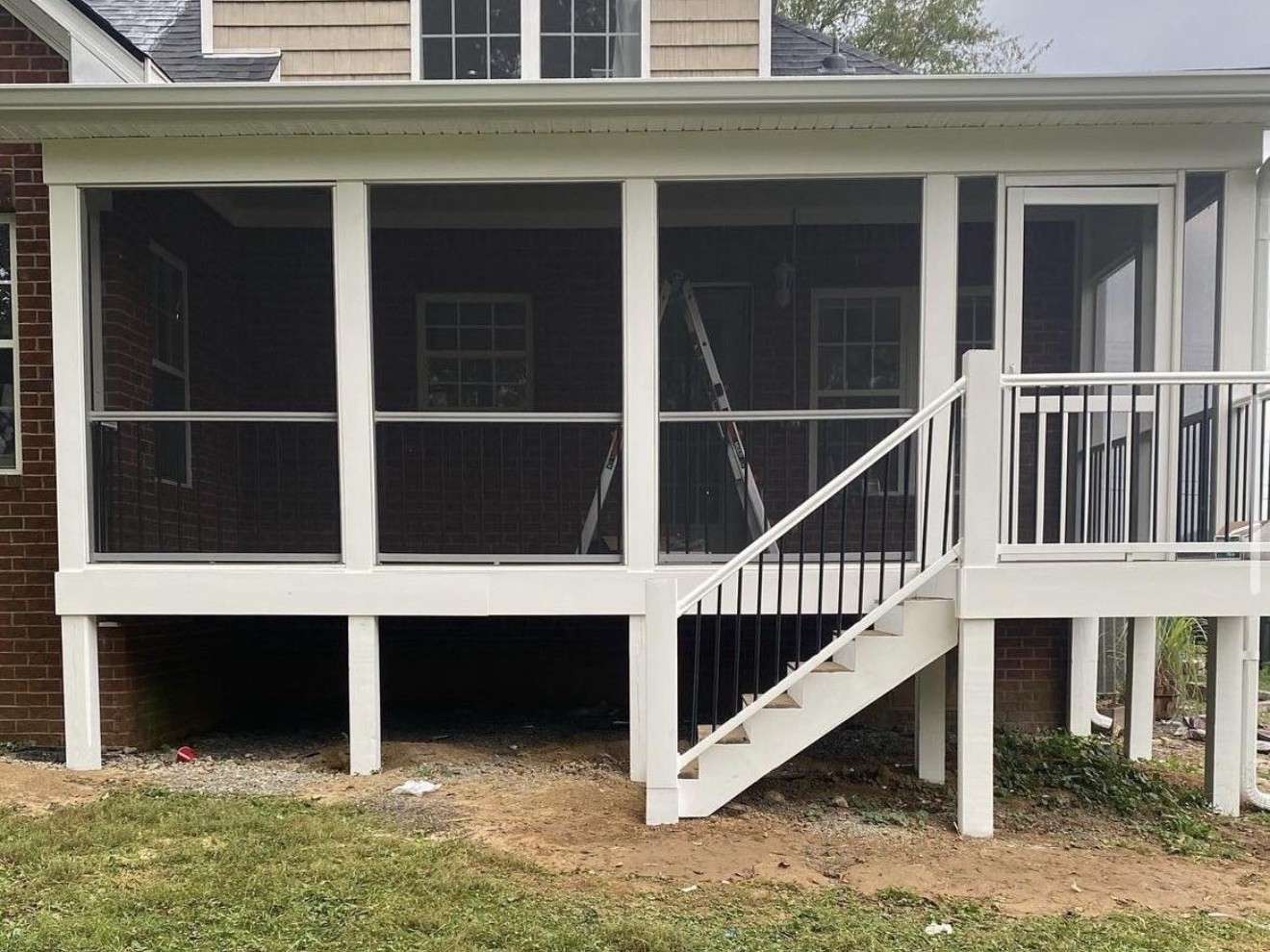
Newer homes bring different questions. On a sloped lot the back door may sit high off the yard, so a deck needs tall posts with good bracing and a long run of stairs. The soil around new construction is often disturbed fill, which can keep settling for a few seasons. Footings need to reach firm ground below it, and the yard grade should carry rainwater away from the posts instead of toward them.
Deck boards that can take open sun
Pressure treated pine is one of the most common deck materials in Middle Tennessee, and it holds up well when it is sealed and kept clean. In full sun it tends to check and gray faster, so plan on regular upkeep. Composite boards skip the staining but can get hot underfoot on a bright afternoon, especially darker colors on a deck with no shade. If your Eagleville deck will face west across an open yard, set a sample board in the sun and touch it at midday before you choose. Our comparison of wood vs composite decking goes through the tradeoffs.
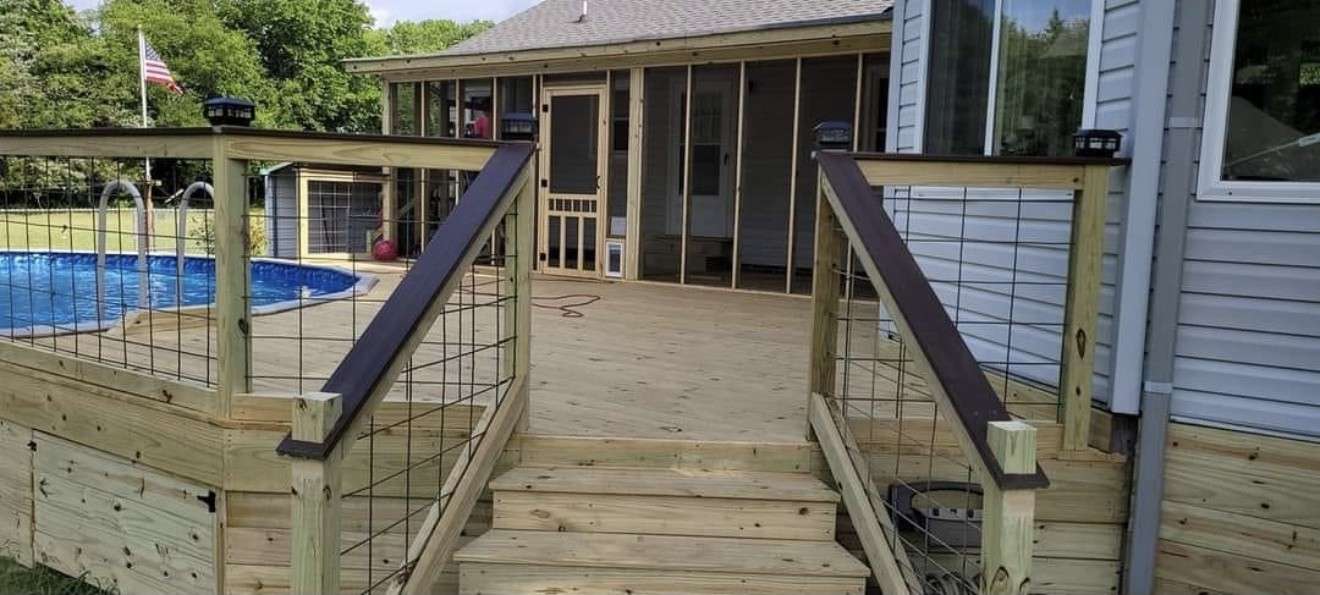
Railings deserve the same thought on an open lot. Wide wood balusters block more of the view than people expect once they sit down. Thin metal balusters or cable keep the sightline to the field clearer, though they usually cost more and have their own upkeep. If you can, look at a finished railing of each type in person before you decide.
Getting materials to the back of the property
Access is a real question on rural Eagleville lots. Lumber and concrete may need to travel across a yard or pasture to reach the build site, and wet ground after a few days of rain can turn a truck path into ruts. Point out soft spots and low places that hold water, and mark where the septic field is so no one drives over it. On some properties it makes sense to wait for the ground to firm up. If a fence is part of your plans too, build the deck first or leave a wide gate, and see our Eagleville fence page for gate planning.
Eagleville deck questions
Do I need a permit to build a deck in Eagleville?
In most places, attached decks and raised decks need a permit, and some low decks do too. The office that handles it depends on whether your home is inside Eagleville city limits or out in the county, and the rules differ. Call the right codes office before work starts, and check your HOA covenants if you have them. Our guide to deck permits in Tennessee explains how the process usually works.
Can a deck be built away from the house?
Yes. A freestanding deck sits on its own posts and footings and does not attach to the house at all. On a big Eagleville lot that opens up options, like a deck out by a pond or under a big shade tree. It still needs solid footings, and a permit may still apply, so check before you plan it. You will also want a path to it that stays dry after rain.
How should I compare quotes from deck builders?
Line the quotes up item by item. Check that each one covers the same size and height and uses the same decking and railing. Then ask how each builder handles rock. One may assume clean digging and adjust later, while another prices some rock work in from the start. Also ask whether the permit and removal of an old deck are included. Two numbers only mean something once the scope matches.
What should I have ready before asking a deck builder for a price?
A rough idea of size and where the deck should go is enough to start. Photos of the back of the house help, along with a note on how high the door sits off the ground. On a rural lot, know where the septic tank and drain field are, and mention any buried lines to a barn or shop. If your home is in a subdivision, have your HOA rules handy.
Can a new deck tie into an older addition on my farmhouse?
Sometimes. Many older additions sit on piers, and some have been patched more than once over the years. Joining a new deck to it only works if that framing is sound and the heights line up. If that addition is out of level or the piers have shifted, it is often better to build the deck as its own structure beside it and connect the two with a step.