Replacing a builder deck or patio in Spring Hill
Many new homes in Spring Hill came with a small builder deck or a bare slab outside the back door. Some builder decks were framed with little margin, and after a few summers they can show loose railings or boards that cup and split. Adding onto framing like that is often more trouble than it is worth. Taking the old deck off and starting with a fresh layout is often the cleaner path, and it lets you pick the size and shape you actually need.
Think about how you will use the space before you think about boards. A table that seats the whole family takes more room than most builder decks give you. The grill should sit where smoke drifts away from the kitchen door. Consider where the kids will come up from the yard and where a gate to a future fence might go, because those paths decide where the stairs belong.
Footings in Spring Hill clay and graded fill
Much of the ground around Spring Hill is heavy clay, and limestone often sits not far below it, as it does in many parts of Middle Tennessee. New construction lots add another layer: fill that was pushed around when the subdivision was graded. Fill can keep settling for a while after the house goes up. Footings need to bear on firm soil that has not been disturbed, so the depth of each hole depends on local code and on what the digging turns up.
Clay tends to swell when wet and shrink as it dries in late summer. Posts in poorly drained clay can shift, and water pooling at the base of a post speeds up rot. Before laying out post locations, check where your gutters empty and which way the yard sheds water after a hard rain. Sometimes moving a downspout does more for the life of a deck than any upgrade to the boards.
Sun and heat on open Spring Hill lots
In many Spring Hill subdivisions the trees are still small, so a new deck may sit in direct sun for most of the day. Afternoon sun on a west facing deck is the hardest on people and on boards. Dark boards can get uncomfortably hot under bare feet, and that is true of many composite products as well as stained wood. Lighter colors help. Planning for shade from the start helps more, whether that comes from an umbrella or from trees you plant now.
Wood and composite both have a place here. Pressure treated pine costs less up front and takes stain well once it has dried, but it needs cleaning and a fresh coat of sealer every so often to slow graying and cracking in strong sun. Composite asks for less upkeep and does not splinter, though it costs more and darker colors hold heat. Our guide comparing wood vs composite decking lays out the tradeoffs plainly.
Attaching a deck to a newer house
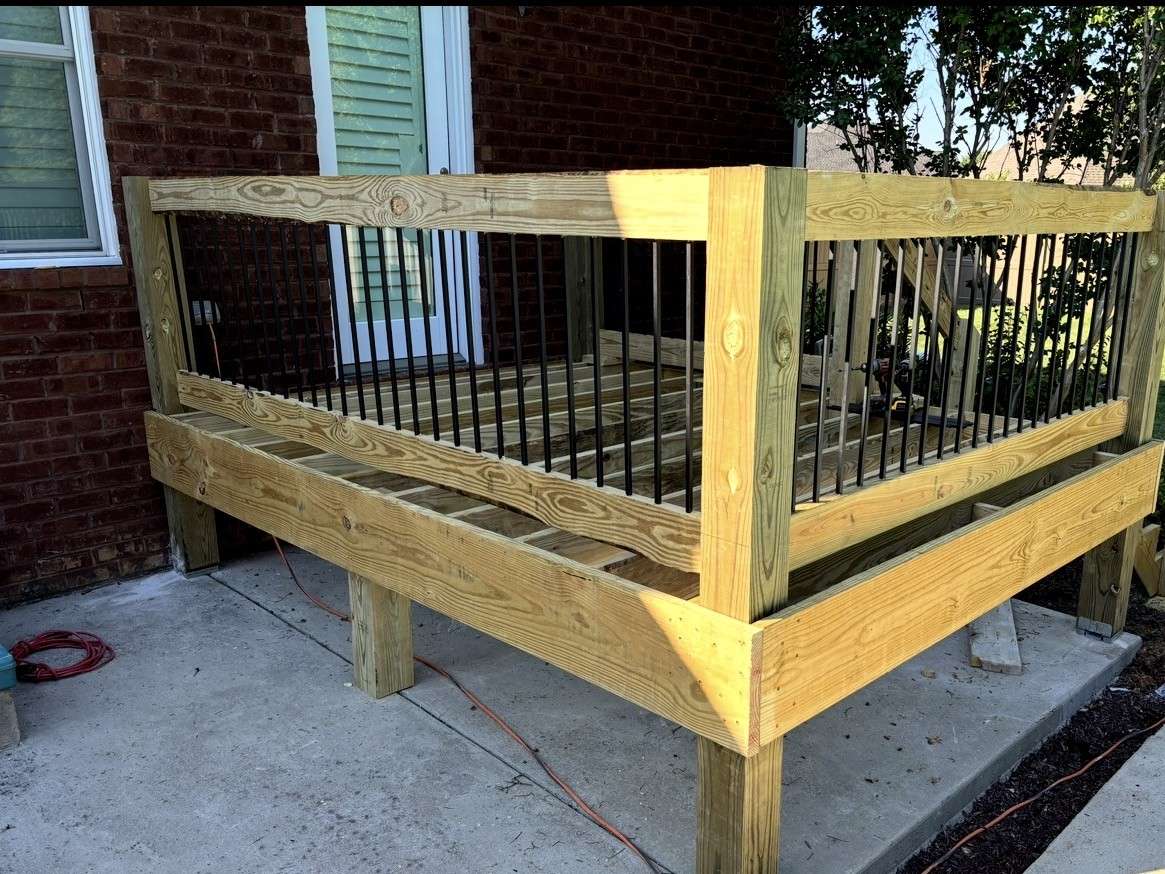
Many decks are tied to the house with a ledger board bolted to the floor framing. How that ledger is flashed decides whether water stays out of the wall and the rim joist. Vinyl siding and brick call for different details. On brick veneer, a deck usually cannot hang from the wall at all, so it stands on its own row of posts next to the house instead.
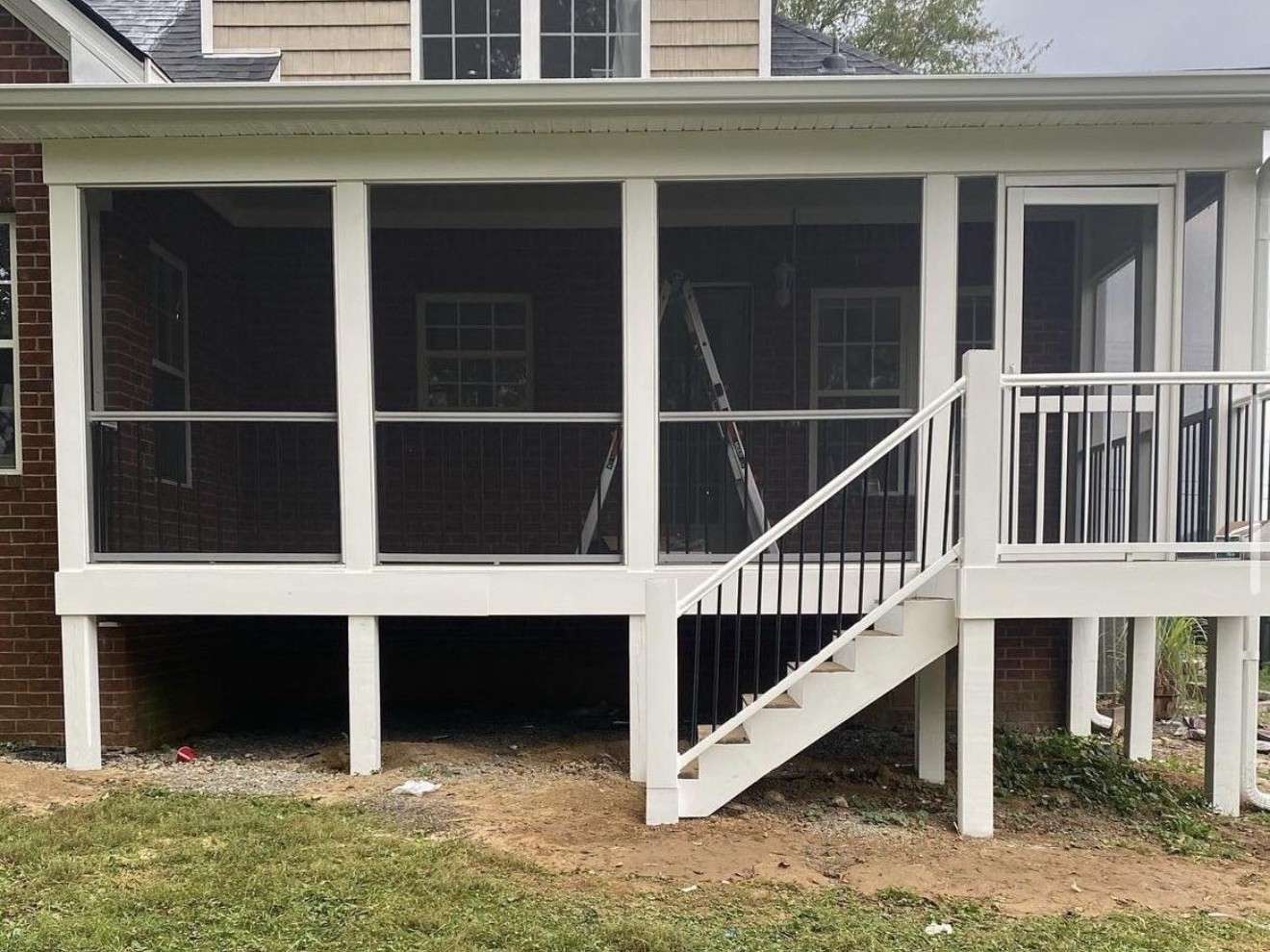
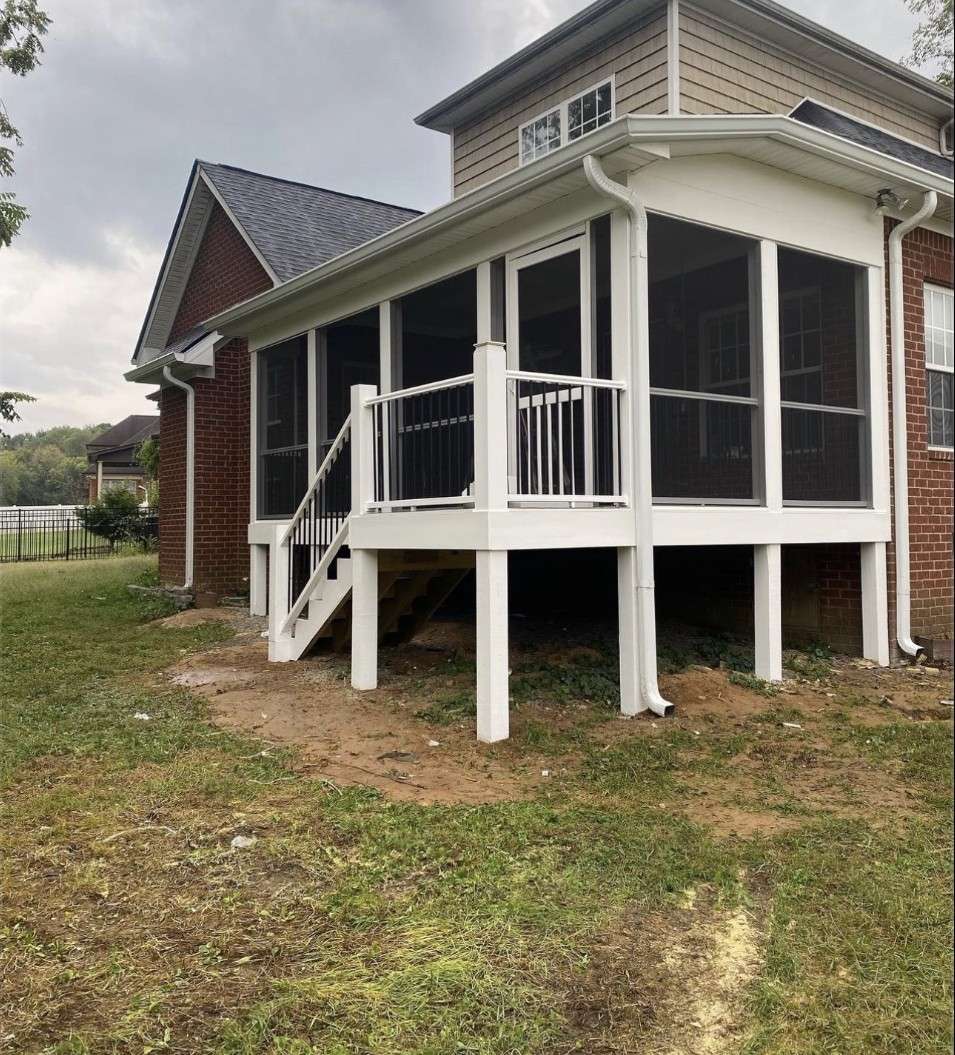
Height changes the job too. Some Spring Hill homes sit on lots that fall away toward the back, which puts the door well above grade. A deck at that height needs taller posts with proper bracing and a longer run of stairs, often with a landing. Any deck builder you talk to should be able to explain how the frame will be braced and where the stairs will come down before you sign anything.
HOA review and permits for a Spring Hill deck
Many newer Spring Hill neighborhoods require architectural approval before a deck goes up. Committees often care most about placement and railing style, and some want stain or board color to match the trim. Brixworth and Wades Grove each have their own covenants, so work from the documents for your lot, not a neighbor's. Submit early with a simple drawing. HOA approval is separate from a building permit, and many decks need both.
Inside city limits, permits generally go through the City of Spring Hill, even though the city crosses from Maury County into Williamson County. Attached decks and raised decks usually need a permit and inspections as the work goes along. Rules change, so confirm with the codes office for your address. The guide to deck permits in Tennessee explains how the process tends to work and why skipping it can cause trouble when you sell.
Planning a deck for a busy family yard
With so many young families in town, safety details matter on a lot of decks. Railings need tight baluster spacing so small children cannot slip through, and vertical balusters give a climber less to step on than horizontal ones. Stairs should have a solid handrail and treads that do not get slick in the rain. A gate at the top of the stairs keeps toddlers from wandering down and the dog from coming up. Details like these are much harder to add after the deck is done.
Think about the space under and around the deck as well. A low deck on a flat lot can trap leaves and moisture underneath, while a taller one leaves room for storage or a shady spot for the dog. If a fence is coming later, plan where it meets the deck so the posts line up. The Spring Hill fence page covers the fence side of that plan.
Spring Hill deck questions
Do I need a permit to build a deck in Spring Hill?
Most attached decks and decks raised off the ground need a building permit, and inside city limits that usually means the City of Spring Hill codes office. Low freestanding platforms are sometimes treated differently, but do not assume yours is exempt. Call with your address and a rough description of the deck. If your home is outside city limits, the county usually handles it.
Will my HOA need to approve a new deck?
In most newer Spring Hill subdivisions, yes. Check your covenants and architectural guidelines, which usually spell out what needs review. Expect to submit a drawing that shows the size and location of the deck on the lot, plus the material and color. Committees sometimes meet only on a set schedule, so leave time. Nobody should start building until the approval is in writing.
Is it worth replacing the small deck the builder put on my house?
Often, yes. An addition has to tie into the old frame, and framing sized for a small platform was not meant to carry more. A new layout can be sized for a table and a grill, with stairs where you actually walk. Check whether any existing footings are sound and in a useful spot, but expect to need new ones. Get HOA approval for the new design first.
What decking holds up best in full sun?
No board is immune to Tennessee sun. Wood needs regular cleaning and a fresh coat of stain or sealer to slow graying and cracking. Composite usually holds its color better and needs less upkeep, but darker colors get hot underfoot on an open lot. On Spring Hill yards with young trees, a lighter color and a plan for shade matter about as much as the material itself.
Can a deck go in a yard that slopes toward a drainage swale?
Usually, yes, as long as the deck does not block the path water takes across the lot. Footings should stay out of the low spot where water collects, and nothing should dam the swale. Many Spring Hill subdivisions have drainage easements along lot lines, and the HOA or the city may limit what goes in them. Your plat shows where those easements are, so keep it handy while you plan.