Sizing a deck for the way you use your Shelbyville yard
Before anyone talks about boards, it helps to know what the deck is for. On a small lot near North Main, it might hold a grill and a couple of chairs, and the real job is fitting it between the back door and the fence line. Out in the county it might be a wide spot to watch the horses at the end of the day. Those are very different decks, and they should be framed and priced differently.
Notice where the afternoon sun lands and which door you walk out of most. If you host family during the Walking Horse Celebration each year, you may want more room for chairs than you use the rest of the summer. A deck that is too big for a narrow yard eats the grass you meant to keep. One that is too small gets outgrown the first time everyone comes over.
Deck footings in Shelbyville limestone and clay
Every deck rests on footings, and in Shelbyville the digging is where surprises show up. A footing hole can hit a shelf of limestone before it reaches the depth on the plan. There are honest ways to handle that. Sometimes the layout shifts a little to find better ground. Other times the rock gets drilled, or the footing is designed to bear on the rock itself. Which one fits depends on the deck and on what the inspector will accept.
Clay causes a different kind of trouble. It holds water after a storm and pulls back from concrete as it dries out. Wood posts left sitting in soggy ground rot faster, even when they are rated for ground contact. A post that stands on a footing above grade, with the soil shaped to drain away, tends to last longer. On a low deck, leave enough open space underneath for air to move, or the framing stays damp.
Raised decks on sloped lots and river ground
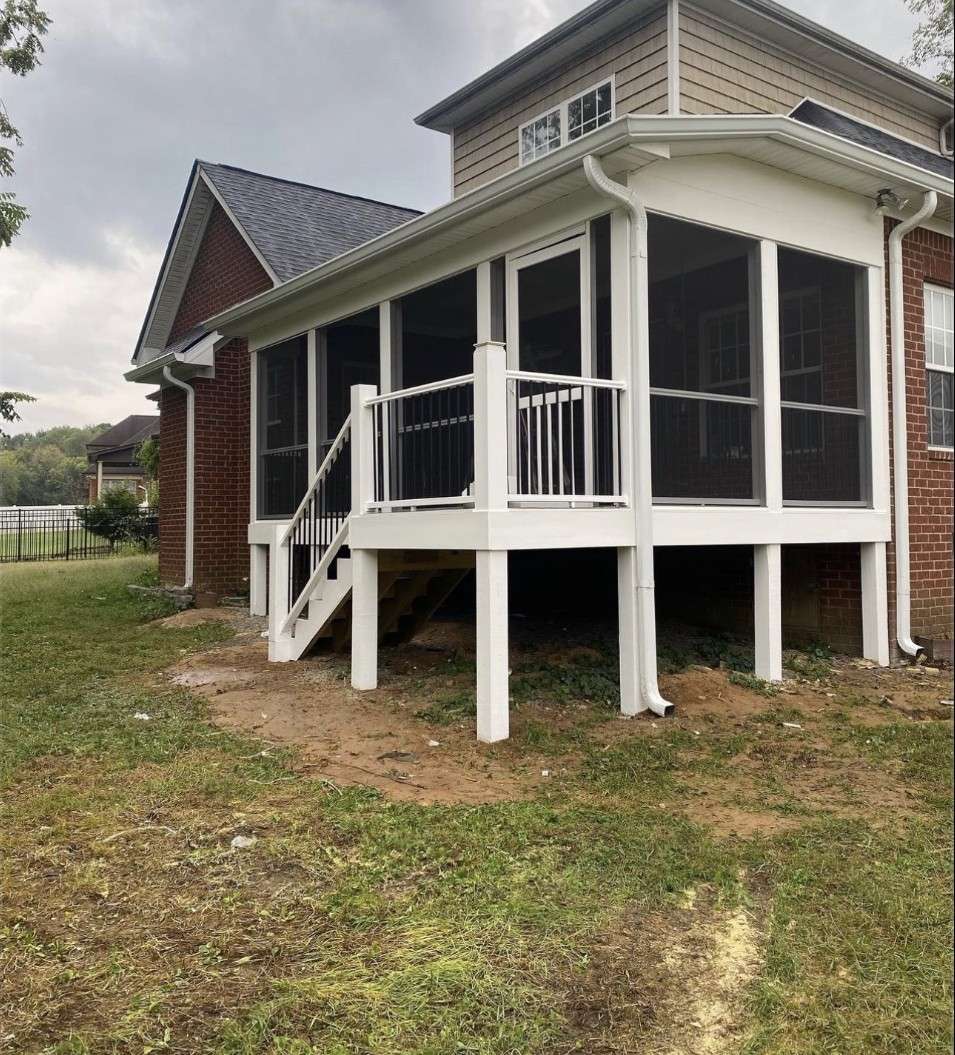
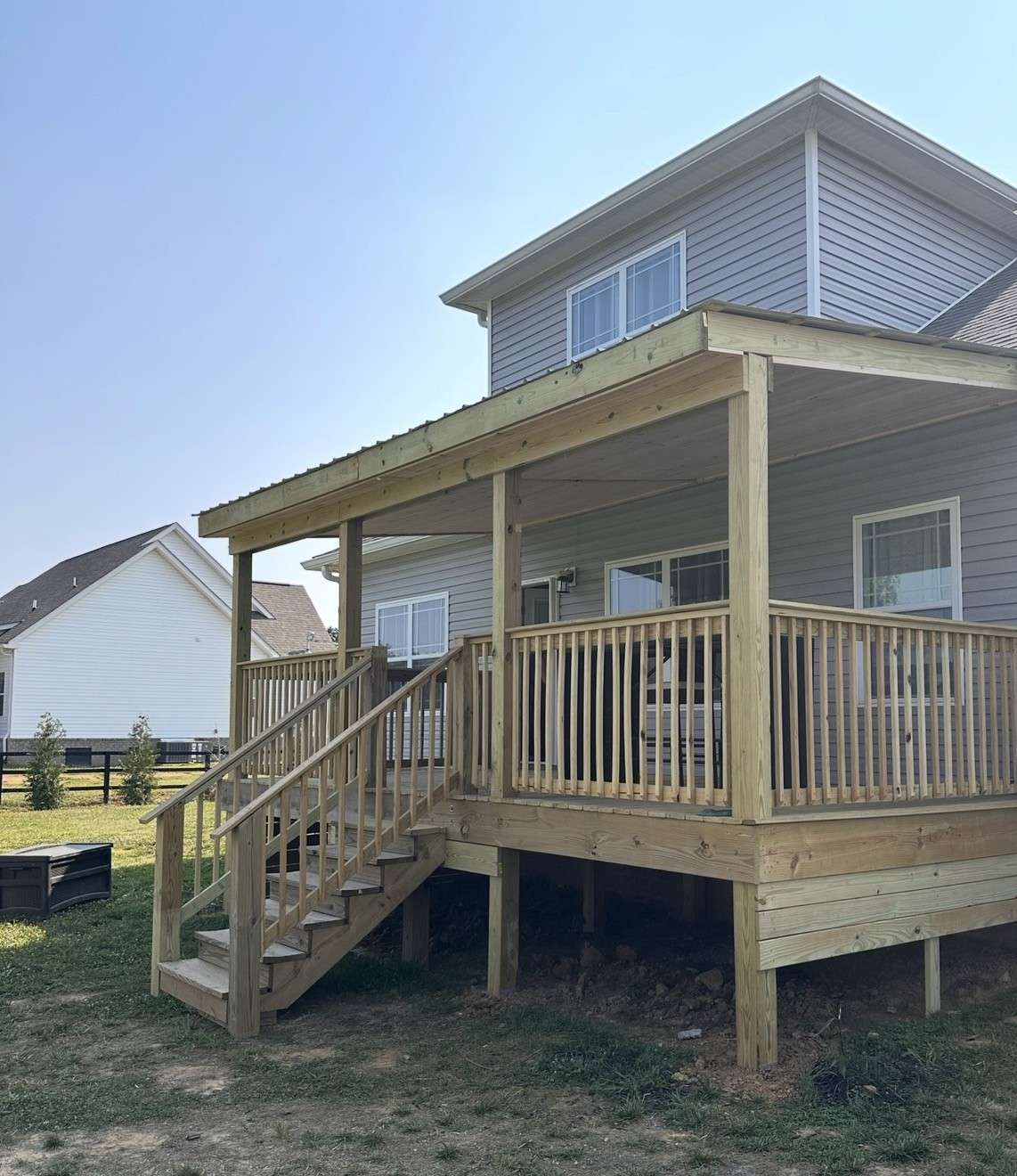
A Shelbyville house that sits higher in front than in back, with the yard falling toward a creek or the Duck River, usually calls for a raised deck off the main floor. The far end may stand on tall posts. Those need diagonal bracing so the deck does not sway when people move around on it. Stairs should come down on firm, level ground rather than at the bottom of a wet swale.
Ground close to the river raises its own questions in Shelbyville. Some of it is in a mapped flood zone, and building there can mean extra review from the city or Bedford County. Outside a flood zone, a swale that stays muddy after rain is still a poor place for a footing. If you have watched where water collects in your yard, tell your builder, because that should decide footing placement more than anything on a drawing.
Freestanding decks for farmhouses and older homes
If your home is an older farmhouse out Wartrace Road or elsewhere in Bedford County, attaching a deck takes care. The ledger board that carries one side of an attached deck has to bolt into solid framing. Some older houses do not have that framing where you would expect it. Siding can hide rot, and an old brick or stone foundation may not be a sound place to fasten one.
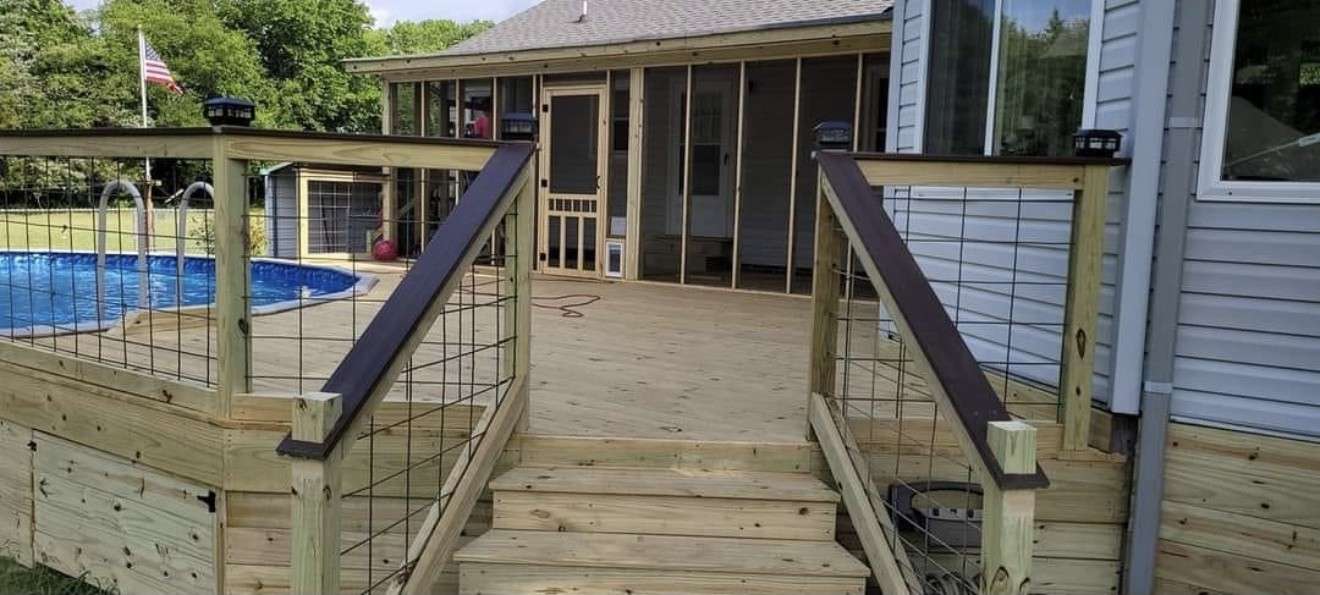
When the house cannot carry a ledger safely, a freestanding deck is usually the better answer. It stands on its own posts and beams beside the house and does not lean on the old framing at all. Open acreage around Shelbyville brings another concern, which is sun. With no shade trees nearby, decking takes the full heat of the afternoon. Our guide on wood vs composite decking covers how each material handles Tennessee sun.
Permits and HOA review for a Shelbyville deck
Raised and attached decks often need a permit, and who issues it depends on your address. City residents usually deal with the City of Shelbyville codes office. Outside city limits, check with Bedford County, since its rules do not always match the city's. Inspections commonly happen when the footing holes are dug and again once the framing is up, before boards hide it. The Tennessee deck permit guide explains the general process.
In the newer subdivisions around town, read your covenants before anything else. Some HOAs want a drawing and a stain color before they sign off, and a few restrict where on the lot a deck can go. Get approval in writing. Starting before approval is the quickest way to end up tearing out boards you already paid for.
Questions to ask any deck builder in Shelbyville
Whoever you hire, find out how they plan to handle rock if a footing hole hits it, and whether that work is in the price or added later. Ask who pulls the permit and who meets the inspector. Stairs and railing should be spelled out in the bid, along with hauling off an old deck if you have one. A deck builder who answers those plainly is easier to work with. When one bid comes in far below the rest, a missing piece is often the reason.
When you are ready, send your address and a short description through the estimate form. Say whether the deck attaches to the house and how much the yard slopes. Anything you know about rock or wet ground helps too. If you also need a fence, the Shelbyville fence page covers what changes on that side of the job.
Shelbyville deck questions
Should I repair my old deck or replace it?
It depends on what is failing. Faded or splintered boards are surface wear, and new boards over sound framing can fix that. Soft joists, a ledger pulling away from the house, or posts rotting at the ground line point to structural trouble. In Shelbyville clay, check the posts first, because wet soil at the base is where rot usually starts. Once the structure is failing, a new deck is usually the safer choice.
Does a small ground level deck in Shelbyville need a permit?
Sometimes not, but do not assume. Rules for low decks that stand free of the house can differ between the City of Shelbyville and Bedford County, and codes get updated over time. A short call to the office that covers your address settles it. If you live in an HOA neighborhood, you likely need their approval even when no permit is required, so check with both before you build.
Is a freestanding deck as sturdy as one attached to the house?
It can be, when it is built right. A freestanding deck carries its load on its own posts and beams instead of hanging one side off the house. That means an extra row of posts along the house side and bracing to keep it from racking. On older farmhouses around Shelbyville, it is often the safer choice. It also avoids cutting into siding that may be hiding old damage.
What should I know before adding a deck to a new build in Shelbyville?
Newer lots often have fill dirt that was pushed in during grading, and fill can keep settling for a while. Deck footings need to reach firm native soil rather than stop in loose fill. Watch how the builder graded the yard to drain, since a deck should not block that path. Check your plat for drainage or utility easements along the back line, and get HOA approval before work begins.
Which decking holds up best in Shelbyville humidity?
Under most decks, the framing is pressure treated pine no matter what goes on top. For the surface, pressure treated boards cost less up front but need regular cleaning and a fresh coat of stain or sealer. Composite skips the staining, though it still grows mildew in shade and darker colors get hot in full sun. Decks near the river or under big trees stay damp longer, so plan on washing either kind each spring.