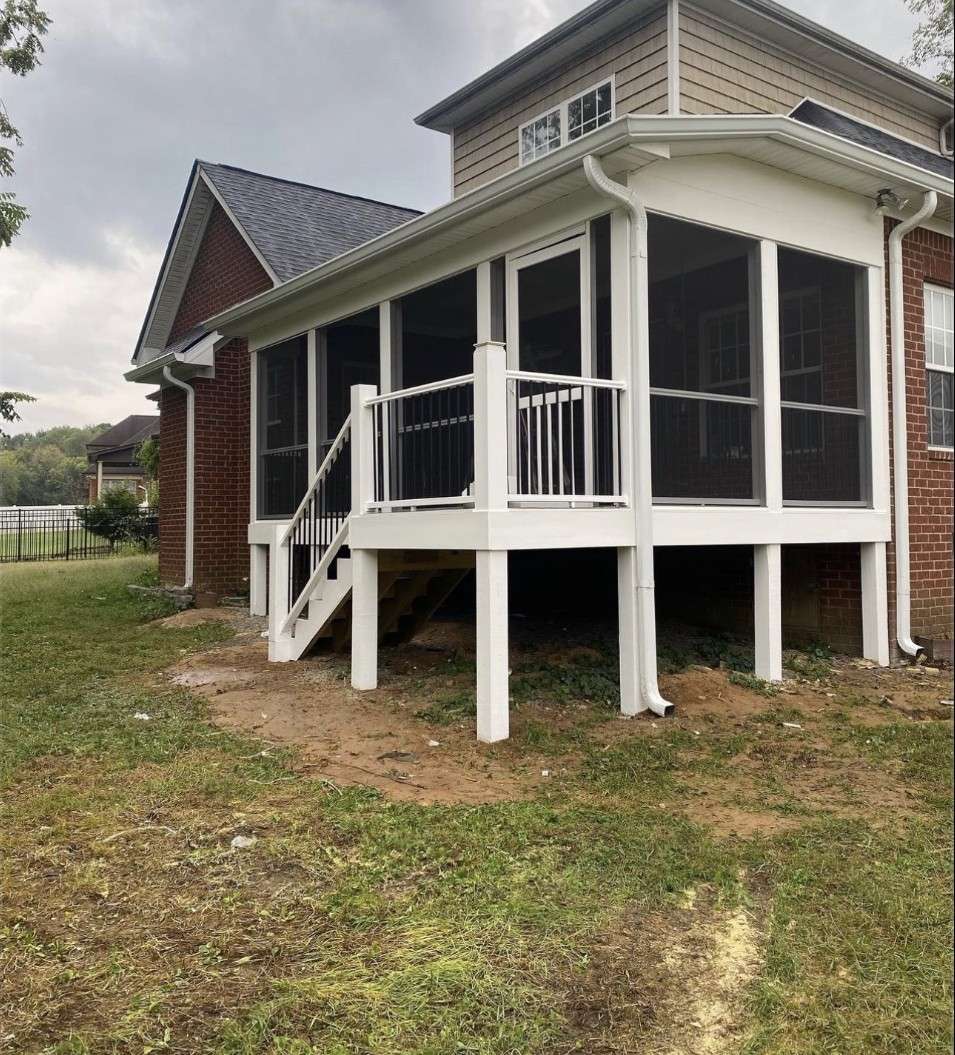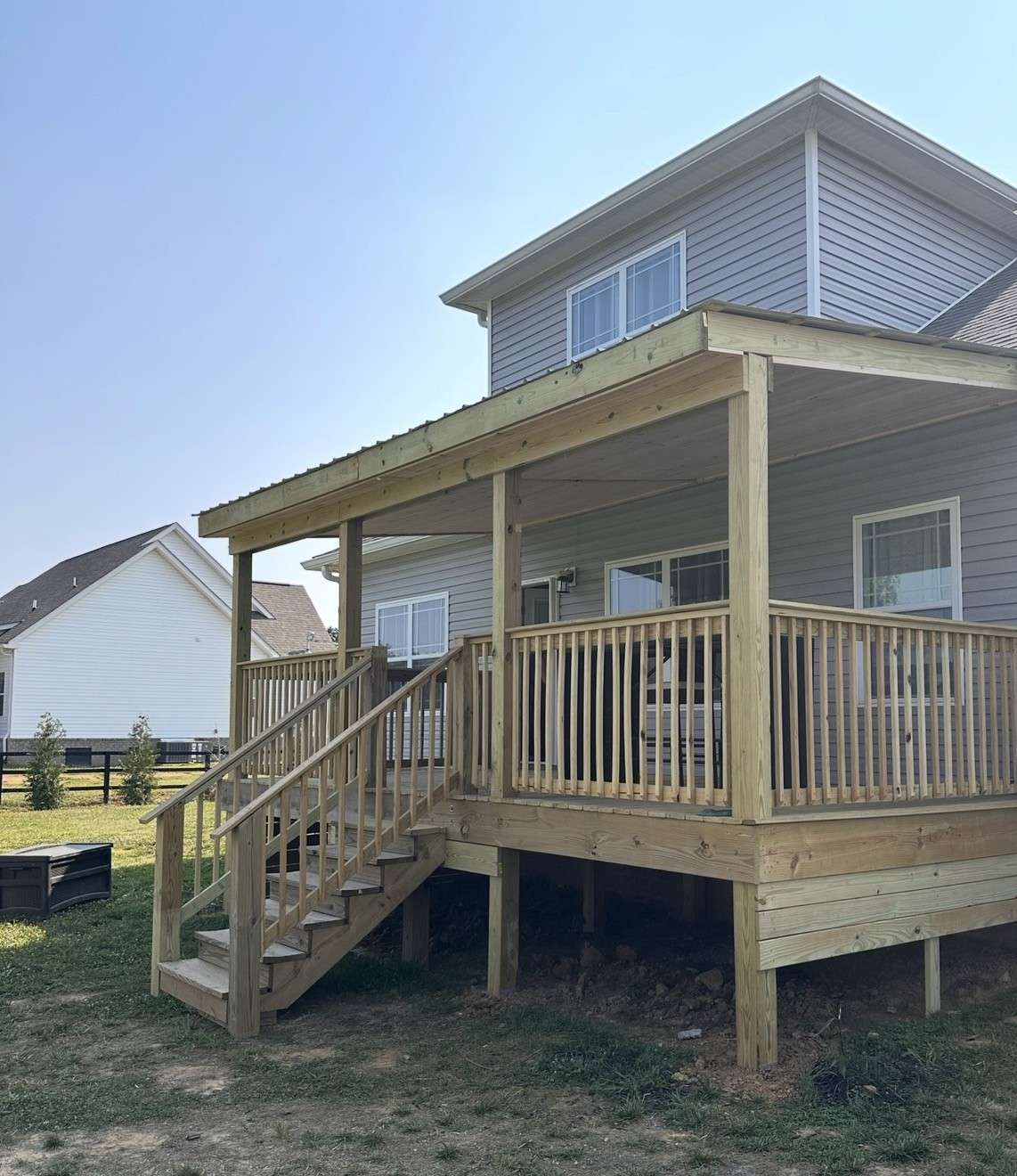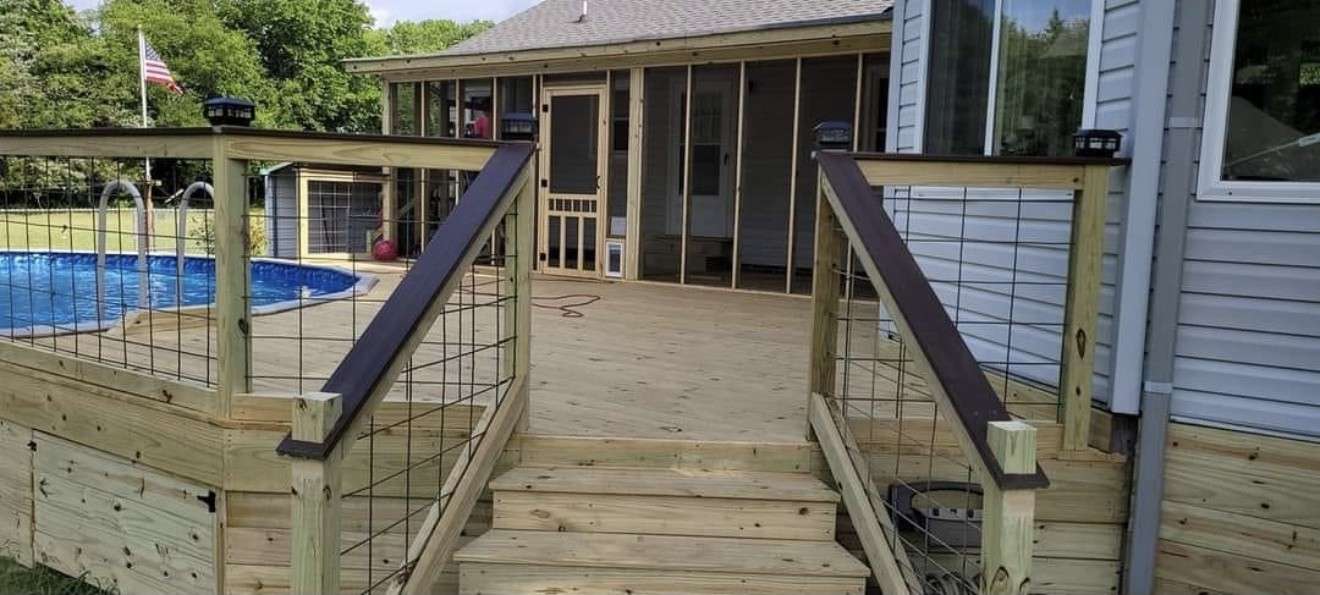
Replacing an older deck in Goodlettsville
Surface wear is easy to spot. Gray, splintered boards and flaking stain look bad, but they do not mean the deck is unsafe. The trouble that matters sits lower. Push a screwdriver into the posts right at the ground and into the joists near the house. If it sinks in, the wood is rotting. The ledger, which is the board fastened to the house that carries one side of the deck, deserves a close look for dark streaks or soft spots. Stairs that flex are another warning. On many older decks the ledger was nailed on without flashing, which lets water sit behind it for years.
If the framing is sound, new boards and railings on the old frame can make sense. On many Goodlettsville decks this age, though, the frame and footings are the real problem, and a full replacement is the safer call. Our guide on signs your deck is done goes through the checks in more detail. When you collect bids, ask each deck builder whether tearing out the old deck and hauling it off are included, since that part of the work is easy to leave out of a price.
Low decks on ranch houses
Many ranch homes in Goodlettsville sit only a few steps above the yard, so the deck behind them is usually low. Low decks are simpler to frame, and whether they need a railing depends on the height and local rules. The catch is what happens underneath. When the joists sit close to the dirt, air barely moves under there and the wood stays damp. Framing that close to the ground should be lumber rated for ground contact. The soil below should also slope away from the house so water does not pond under the boards.
Some older ranch houses in Goodlettsville also have a small concrete patio or stoop at the back door. It is tempting to set deck posts right on that slab, but a patio slab was rarely poured to carry that kind of load. The usual answer is to frame around it or take it out and put proper footings in the ground. On lots that fall away from the back of the house, a ranch can have a walkout basement below. Then the deck sits a full story up, which calls for heavier posts and a real staircase.
Footings in Goodlettsville rock and clay
Every deck post sits on a footing, and the footing has to reach below the depth where the ground freezes in winter. In Goodlettsville that often means digging through clay and, in some yards, running into limestone before the hole is deep enough. When that happens, the fix might be drilling into the rock or shifting the footing a little and adjusting the frame to match. What works depends on how much rock there is and what the inspector accepts. Clay brings its own issue. It swells when wet and shrinks when dry, so footings need to bear on firm, undisturbed soil rather than loose fill. Ask how a bid handles rock before you sign, because it is one of the few costs nobody can see in advance.
Decks for newer Goodlettsville houses
On a newer Goodlettsville build, the house is sound but the yard has not settled in. The ground right against the foundation is backfill, so footings near the house have to go past it to reach firm soil. The ledger connection needs flashing tied into the house wrap so water sheds away from the rim, which often means pulling back some siding and putting it back cleanly. If your neighborhood has an HOA, the architectural committee will likely want a simple drawing and a note on the board color. Get that approval in writing before work is scheduled.
Permits when the county line runs through town
A deck that is attached to the house or raised off the ground usually needs a permit. Here the first job is figuring out whose permit it is. Inside city limits, that is the City of Goodlettsville codes office. Outside those limits, a house with a Goodlettsville address might fall under Metro Nashville, or under the county or a neighboring city on the Sumner side. Each office has its own forms and inspection steps. A permitted deck also protects you later, since buyers and their inspectors often ask about decks when a house goes on the market. Our Tennessee deck permit guide covers the general process, but confirm the details with the office that handles your address.
Choosing boards for shaded and sunny yards
Pressure treated pine is one of the most common deck boards around Middle Tennessee. It costs less up front and takes stain well, but it needs cleaning and sealing every so often to keep from cracking and turning gray. Composite boards cost more at the start and need less upkeep, though they can get hot underfoot in full afternoon sun. On an established Goodlettsville lot with big trees overhead, shade is the bigger concern. Wood under heavy shade stays damp and can grow mildew, and composite can too, so plan on a regular wash either way. Our comparison of wood and composite decking goes deeper.
Goodlettsville deck questions
Do I need a permit to replace my deck in Goodlettsville?
In most cases, yes. Replacing a deck usually means new footings and a new frame, and codes offices tend to treat that as new construction rather than a repair. Which office you apply to depends on where your lot falls relative to city limits and the county line. Call the right one with your address and a rough sketch of the deck, and ask what they need to see before work starts.
Can I keep my old deck frame and just replace the boards?
Sometimes. If the joists and posts are solid and the ledger is properly fastened and flashed, new boards and railings on the old frame can be a fair choice. Many older decks in Goodlettsville fail that test, though. Putting new boards on a frame with only a few years left means paying for boards twice. Have the frame checked from below, or with a few boards pulled, before you decide.
What happens to the old deck when it comes down?
The old boards and framing have to go somewhere, and so do the concrete footings. Some builders include tear out and hauling in the price, and some list it separately or leave it to you. Old pressure treated lumber should not be burned, so it usually goes to a landfill that accepts it. Ask every bidder to spell out removal in writing, including whether old footings get pulled or cut down below the soil.
My Goodlettsville yard slopes away from the house. What changes?
It comes up on plenty of Goodlettsville lots, whether you live near Rivergate or off Long Hollow Pike. The deck gets taller on the low side, which means longer posts and more bracing. If the drop is steep, stairs take up more room than people expect, so think about where they will land in the yard. A sloped lot can also be a chance to add a landing partway down instead of one long run of steps. Footings on a slope need to sit in firm ground, not in soil that could wash out.
What should a written deck bid include?
A good bid names the deck size and the materials for the boards and railings. It should explain how the frame attaches to the house and who pulls the permit. Look for a line about rock, since some Goodlettsville yards hit limestone when the footings are dug. If one deck builder comes in far below the rest, check what the bid leaves out before you assume it is the better deal.