Freestanding decks on Manchester acreage
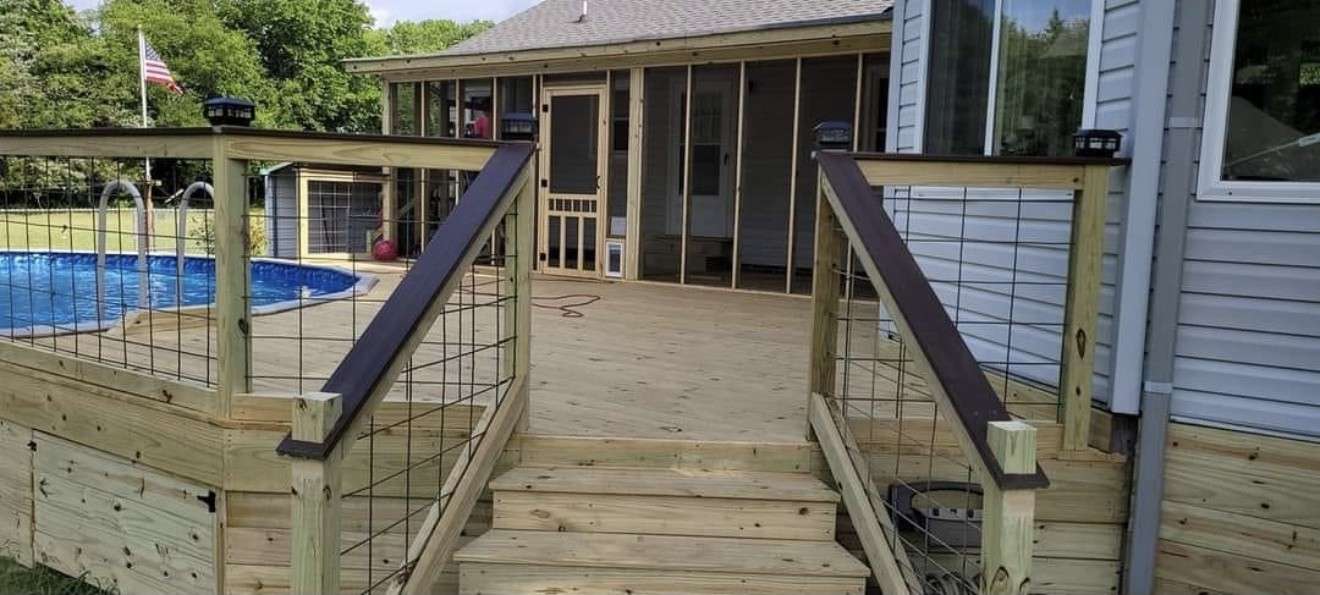
A freestanding deck carries its own weight on posts and footings, with no connection to the house. On a big Manchester lot, that opens up choices. You can put the deck where the shade falls late in the day, or down the slope where you can see the pasture or the pond. Some owners set one near a fire pit or garden and keep only a small landing by the back door.
Freestanding framing has needs of its own. With no house wall to lean on, the structure needs bracing so it does not sway when people walk across it. It also needs a clear way back to the house, whether that is a gravel walk or a low boardwalk. Think about lighting before the boards go down. A deck out in the yard gets dark fast, and running power to it is far easier to plan early than to add later.
Attaching a deck to a brick or older house
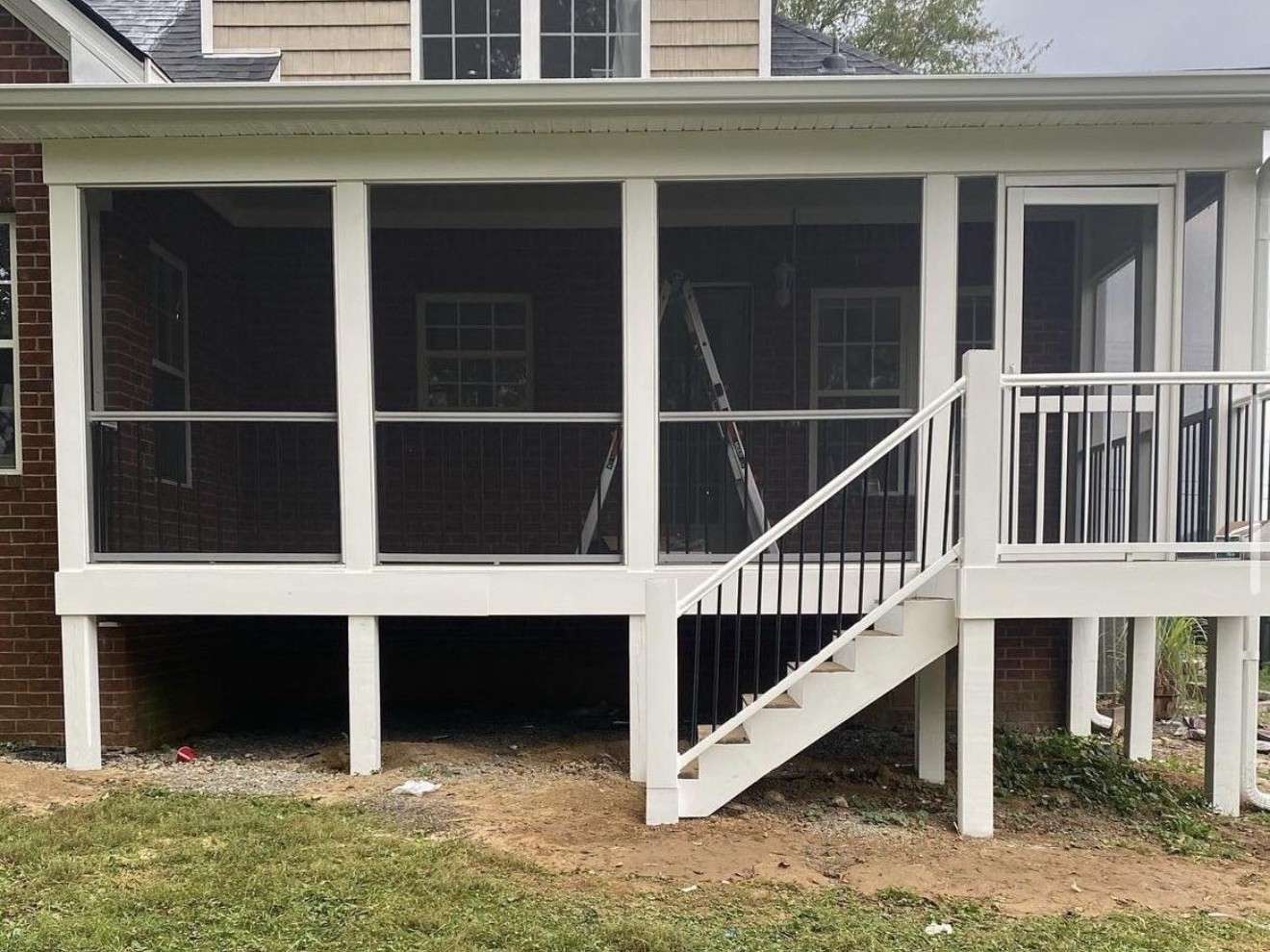
On smaller Manchester lots closer to downtown and off Murfreesboro Highway, the deck usually attaches to the house. The key piece is the ledger, the board bolted to the house framing that carries one side of the deck. It has to connect to solid framing, not just brick veneer or siding. On a brick house, the simpler answer is often a deck on its own row of posts right beside the wall. It looks attached, but it carries its own load.
Older homes need a closer look before a ledger goes on. A careful deck builder checks the rim board for rot and plans flashing so water sheds away from the wall instead of soaking into it. Door height matters too. The deck surface normally sits a little below the threshold so rain does not run inside. If an old deck is coming off, the wall behind it often shows how well the last one was flashed.
Digging footings through Manchester chert
Manchester sits on the Highland Rim, and many yards here carry chert, a hard flinty rock, mixed through the soil, often with limestone below it. When a footing hole hits rock, there are a couple of honest options. Sometimes the post can move over a little and the framing adjusts around it. Other times the hole needs a rock bit or a breaker to reach solid bearing. What you should not accept is a footing that stops short on loose fill because the digging got hard.
Rock also moves the price, which is why a bid put together from photos alone can come up short. It is fair to ask any builder how they handle rock and whether that work is in the number or billed later. Get the answer in writing. A clear answer before the job starts beats a low bid that grows once the digging begins.
Shade and damp ground by the Duck and Little Duck
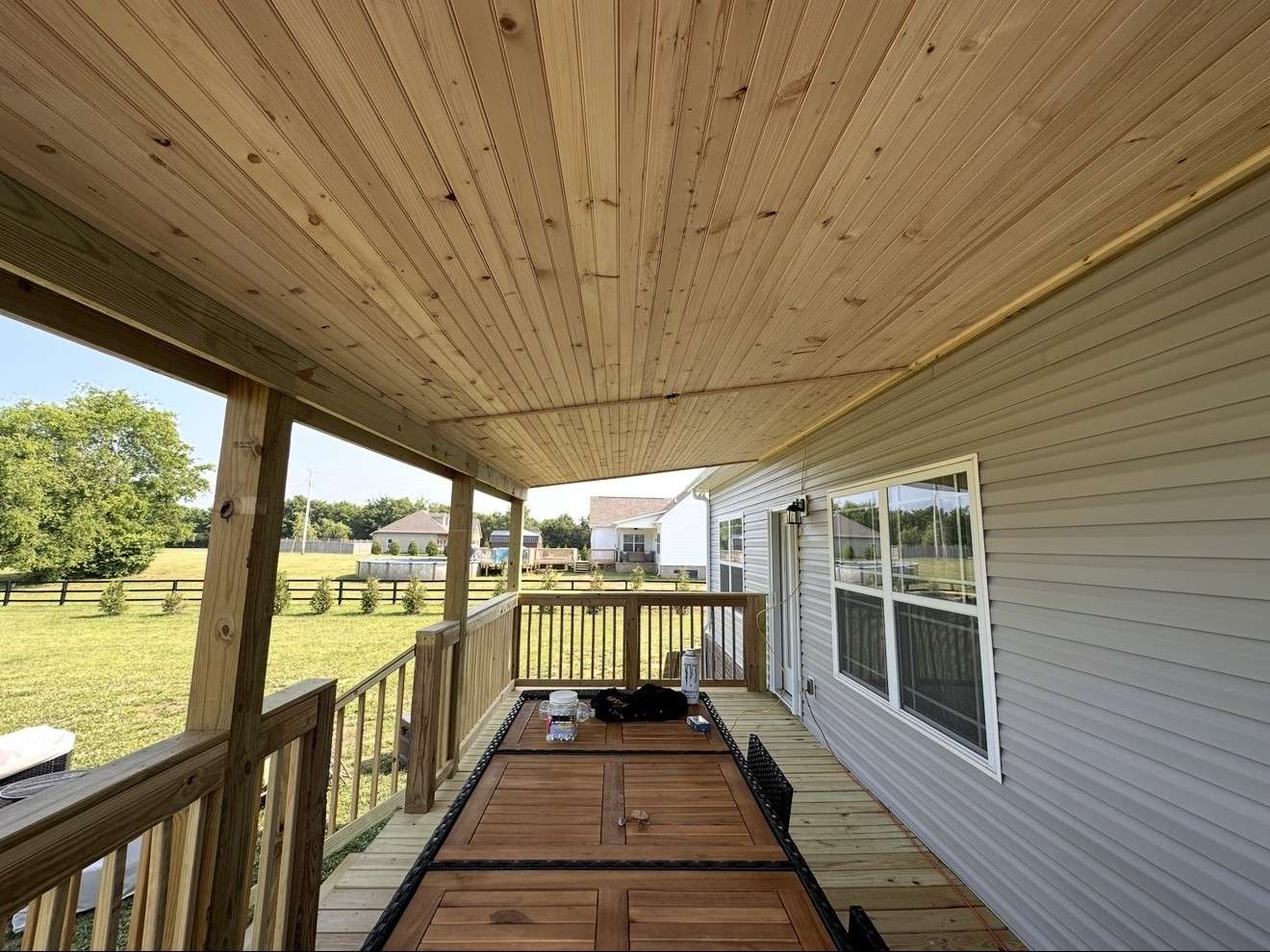
Manchester homes near Old Stone Fort and along the rivers often have big trees and ground that stays damp. That makes for a pleasant place to sit, but it is hard on a deck. Boards under heavy shade dry out slowly after rain, and mildew shows up sooner. Leaves pile into the gaps between boards and hold water against the wood. If your deck will sit under big trees, keep the underside open so air can move, and plan on cleaning it more often than one out in full sun.
Low ground near the water raises two more questions. First, is any part of the lot in a mapped flood zone? That can change what the codes office allows and how the deck has to be anchored. Second, how wet does the soil stay through the winter? Posts in wet ground need lumber rated for ground contact, and footings should hold the wood up out of standing water. A deck near the river should be planned for high water, not a dry afternoon in July.
Picking boards for full sun or deep shade
On open acreage outside Manchester with no trees, a deck takes sun most of the day. Pressure treated pine handles that well if you keep it sealed, though it will gray and develop small surface cracks as it ages. Composite boards skip the staining but can get hot underfoot in a Tennessee summer, darker colors most of all. If you plan to walk out there barefoot, stand on a sample in the afternoon sun before you choose.
Shaded decks by the river in Manchester flip the problem. Heat is rarely the issue there, but moisture is. Composite resists rot, yet mildew can still grow on its surface. Wood needs cleaning and sealing on a steady schedule. Our wood vs composite decking guide compares the two in more detail.
Deck permits inside and outside Manchester city limits
In most places, a deck that attaches to a house or stands well off the ground needs a permit and inspections. If your home is inside Manchester city limits, that goes through the city. Out in the county, check with Coffee County instead, since the process may not match. Requirements change over time, so call the office that covers your address before work is scheduled. Our deck permit guide explains the general steps in Tennessee.
If you live in one of the newer Manchester subdivisions with covenants, the HOA will likely want to see plans before you build, and that approval is separate from the permit. Ask what they need to see in the submission. Before any footing gets dug, call Tennessee 811 so buried utility lines are marked.
Manchester deck questions
Is a freestanding deck more expensive than an attached one?
Not always. A freestanding deck usually needs an extra row of posts and footings, since no house wall carries one side, and it needs bracing. On the other hand, you skip the ledger and flashing work, which can take real labor on an older house. For a Manchester home with brick veneer, freestanding is often the cleaner choice anyway. Any deck builder you talk to should be able to price it both ways for your spot.
Can a deck go on the slope down toward the river?
Usually, yes. A slope means taller posts on the low side, and taller posts need more bracing. Stairs get longer too, and on a steep bank they may need a landing partway down. If the low side sits near the water, check the flood map before you settle on the location. It is also worth watching where runoff goes in a hard storm, because you do not want water cutting away soil around the footings.
How do I keep a shaded deck near the Duck River from getting slick?
Mildew and wet leaves are what make a shaded deck slick. Sweep leaves off before they mat down, especially in the fall. Clean the boards with a deck cleaner at least once a year, and more often if you see a green film. Trimming a few low branches lets in sun and air, which helps the boards dry. On wood, a fresh coat of sealer after cleaning keeps water from soaking in.
When is it time to replace an old deck instead of fixing it?
Surface wear like gray boards or loose nails can usually be fixed. Structural trouble is different. Soft framing, a ledger with rot behind it, and posts sitting in wet soil are signs the deck may be done. Posts buried straight in the dirt tend to rot at the ground line, especially on damp Manchester lots near the rivers. Our guide to repair or replace goes through the warning signs one by one.
What should I have ready before I call a deck builder?
Start with how you plan to use the deck. A grill and a small table need far less room than a crowd on the Fourth of July. Take photos of the spot and the wall of the house if the deck will attach. Know whether you are inside Manchester city limits, and have your survey handy if you can find it. If you are in an HOA, grab a copy of the rules too.