Building a deck on a McMinnville slope
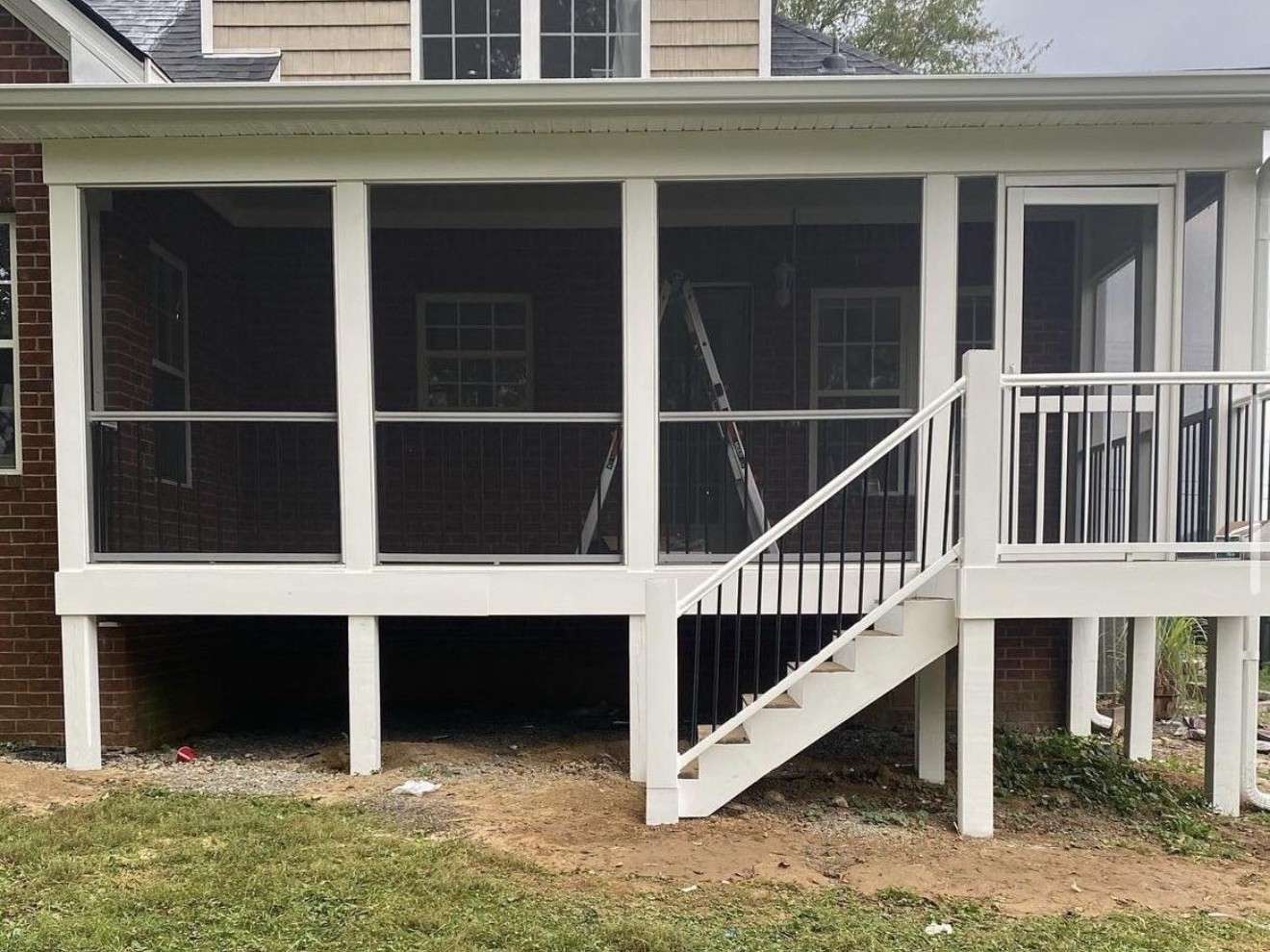
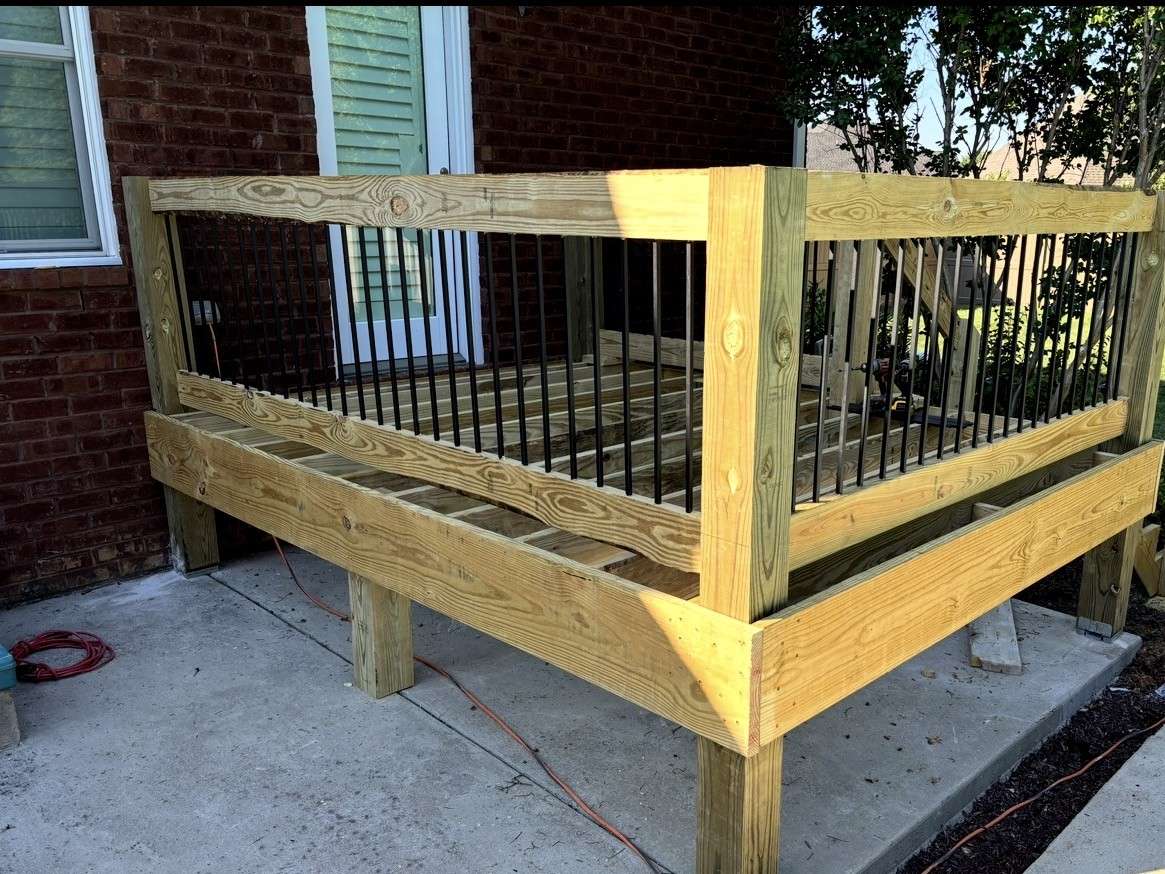
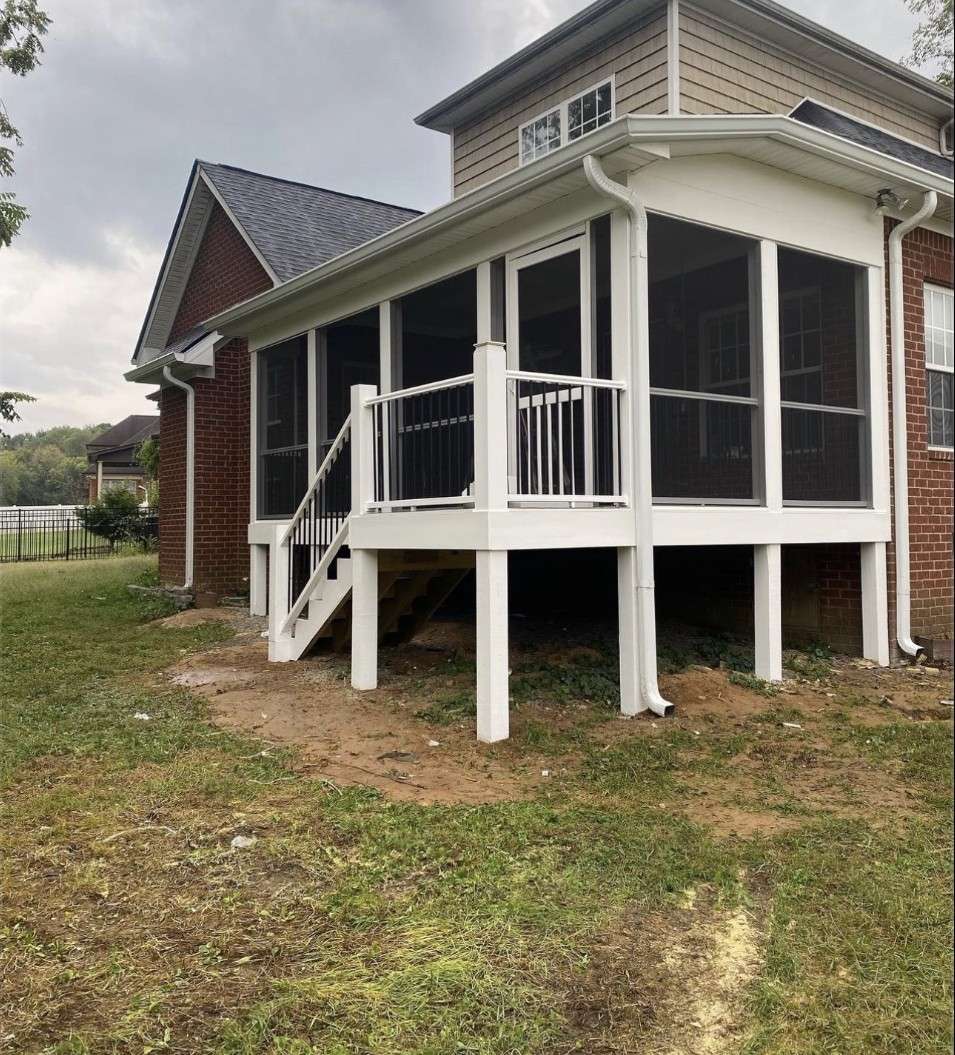
On rolling lots, one corner of a deck can sit a step off the grass while the far corner is well over your head. The low side needs taller posts, and taller posts need bracing so the frame stays stiff when people walk across it. Stairs get longer as the drop grows, and a long flight eats up yard. Where the stairs land matters, too. You want them on firm, fairly level ground and out of the path where roof water runs.
Some McMinnville houses on sloped lots have a walkout basement. A deck off the main floor can leave real space underneath if the framing is planned for it. Some owners want room for the mower down there. Others would rather close it in with lattice or leave it open for air. Decide early, since it changes where the posts go and how the underside gets finished.
Footings in McMinnville rock and clay
Every deck footing has to reach firm soil, and local code sets the minimum depth. Around McMinnville, an auger often runs into chert in the clay or a shelf of limestone before it gets there. When that happens, the rock gets broken out or the footing shifts a little. In some cases the inspector may accept a footing that bears directly on solid rock. Any of those takes longer than digging in plain dirt, so ask how a bid handles rock.
Clay causes a different problem. It holds water after rain, so a wood post buried in bare clay can stay wet for long stretches. In a dry summer the same clay shrinks and cracks. Wood posts last longer on concrete footings with the soil sloped away from them. Parts of Warren County also sit on limestone with caves and sinkholes. If a low, bowl shaped spot in your yard seems to be settling, keep the deck clear of it and mention it early.
Decks in a McMinnville yard full of plants
McMinnville is known as the Nursery Capital of the World, and a lot of the yards here look the part. A deck often goes in right next to beds someone spent years building. The crew needs somewhere to stack lumber and a path to carry it in, and neither should run through your best plants. Tell us what can take some foot traffic and what can't. Moving a shrub in the fall is easier than replacing it after it gets trampled.
Big trees need a closer look. A deck built around an oak or a maple can be a nice spot, but footings dug close to the trunk can damage the roots that hold the tree up. Leave room for the trunk to grow, and span over big roots instead of cutting through them. Heavy shade also keeps boards damp longer, and damp boards grow mildew and moss. That should factor into what you build with.
Deck materials for shade, sun, and humidity
Pressure treated pine is a common deck material, and it holds up when it's kept clean and sealed. Cedar has a warmer look and turns gray if you leave it alone. Composite costs more at the start but doesn't need stain. In a shady McMinnville backyard, any of them can grow mildew in humid summers, so plan to wash the deck whatever you choose. Our guide to wood vs composite decking compares them in more detail.
Open lots are the other extreme. A deck that faces west with no trees takes the full afternoon sun, and darker composite boards can get hot enough to notice through bare feet. Wood usually stays cooler, but sun dries it out and opens cracks along the grain if the finish is let go. Think about how you'll actually use the deck on a July evening. Shade over part of it can matter more than the board you pick.
Deck permits in McMinnville and Warren County
If you're inside city limits, the McMinnville codes office is where to ask about a deck permit. Outside city limits, check with Warren County about what applies to your address. A raised deck attached to the house is the type most likely to need a permit and inspections of the footings and framing. Rules and fees change, so confirm before you finalize plans. Our guide to deck permits in Tennessee explains how the process usually goes.
HOA approval is a separate step from any permit, and in a subdivision with covenants you'll usually need both. Houses near Downtown McMinnville tend to be older and sit closer together, so ask the city how close a deck can sit to your lot lines before you settle on a size. A simple sketch that shows where the deck sits relative to your lot lines helps each of these conversations go faster.
What to ask a deck builder in McMinnville
Any deck builder you talk to should be able to explain how they'll handle rock at the footings and whether the price assumes easy digging. You also want to know how the ledger board will attach to your house and how it will be flashed so water doesn't get behind it. Find out who pulls the permit. On a sloped lot, have them show you where the stairs will land. Plain answers to those questions tell you more than the lowest number does.
When you request an estimate for a McMinnville deck, include a few photos of the back of the house and the yard from different angles. Mention rock you've already hit and any spot where water sits after a storm. The better the picture we have up front, the closer the estimate will be to the job itself.
McMinnville deck questions
How high can a deck be on a steep McMinnville lot?
The drop from your door to the grass decides most of it. A tall deck needs heavier posts, more bracing, and a longer stair, and local code sets when guards are required and how they're built. On steep lots, a design with a landing partway down often works better than one long flight. It breaks up the climb and gives the stairs a place to turn toward the yard.
Will rock in my McMinnville yard make a deck cost more?
It can. If the footings hit chert or a limestone ledge, digging takes longer and may need a different tool, and that time shows up in the price. Rock almost never means the deck can't be built. If you ran into rock when you dug a garden bed or planted a tree, that's a good hint about what's under the deck spot, so tell us when you ask for an estimate.
Can a deck be built around a big tree?
Usually, with planning. The deck needs an open gap around the trunk so the tree can keep growing and swaying, and the footings should stay out of the thick roots near its base. If it's a McMinnville shade tree you really want to keep, it's worth having an arborist check it first. Expect more leaves and sap to clean off a deck that sits under a canopy.
Do I need a permit for a deck in McMinnville?
Many decks do, raised decks attached to the house most of all. Inside city limits, ask the city codes office. Outside them, ask Warren County what applies to your property. A subdivision with an HOA will likely want to approve the plans too, and that approval is its own step. Rules change from time to time, so confirm before building, not after.
Should I repair my old deck or replace it?
That depends on the frame more than the boards. Worn boards and a loose railing can often be fixed. Rot where the deck meets the house, posts sitting in wet clay, or a frame that bounces are signs the structure is near its end. Our guide on signs your deck is done walks through what to check before you decide.