Deer fencing for McMinnville gardens
A deer can clear a fence that most people would call tall. That's why a standard privacy fence around the backyard doesn't always save the tomatoes. For a garden in McMinnville, start with two questions: what are you keeping out, and how much ground does it need to cover? A tall enclosure around just the garden often costs less than raising the fence around the whole lot, and it puts the height only where you need it.
Deer fences are usually wire on wood posts. Wire can go tall without catching much wind or blocking the view of the yard. Some growers add a second, shorter fence a short way inside the first, since deer tend to avoid jumping into a tight space. Gates matter as much as the line itself. One that sags or gets left open lets the deer right back in, so spring hinges or a good latch are worth it.
Fence installation on rolling ground
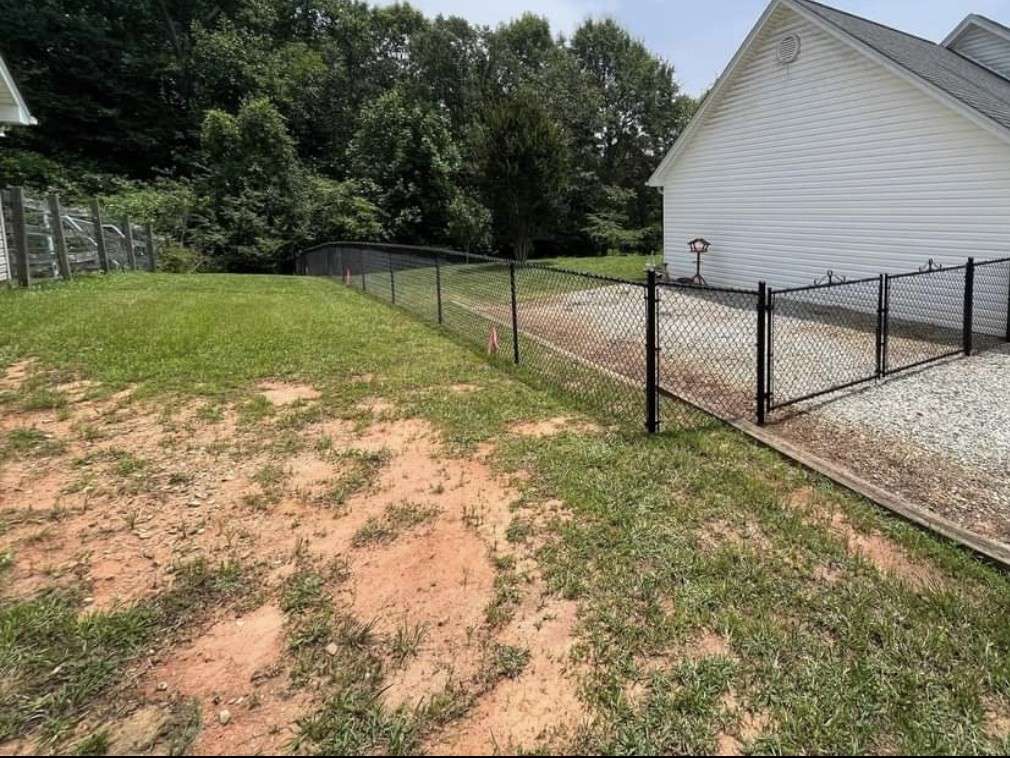
Most McMinnville lots have some slope, and a fence can follow it in one of two ways. Stepped sections stay level and drop down like stairs, which looks tidy but leaves a triangle gap under each step. Racked sections tilt with the grade and keep the bottom close to the dirt. If you're fencing in a dog or keeping out deer, those gaps are the weak spot, so racking or trimming the bottom to the grade is usually the better choice.
Dips are trickier than steady slopes. Where a line crosses a swale that carries runoff, a solid bottom board acts like a dam and collects leaves and silt until water goes around it. Leave a gap there, or put a gate or removable section in the low spot. Our guide on how to fence a sloped yard covers post spacing and gate placement on hills.
Setting posts in McMinnville clay and rock
Most of the work in a fence is in the posts. Around McMinnville, a post hole will often hit chert or a limestone shelf partway down. When that happens, the crew can break through it or shift the post a little along the line, and which one makes sense depends on how much rock turns up. On a long run with rock all the way, that extra digging adds real time. It's often the thing that makes one quote here higher than another.
McMinnville clay is hard on wood posts in its own way. It stays wet after rain, and a post that sits in a soggy pocket tends to rot right at the ground line. Setting posts in concrete with the top crowned to shed water helps, and so does gravel at the bottom of the hole for drainage. Gate posts take the most strain of any post on the line, so they need deeper holes and more care than the rest.
Privacy fences in town and out on bigger lots
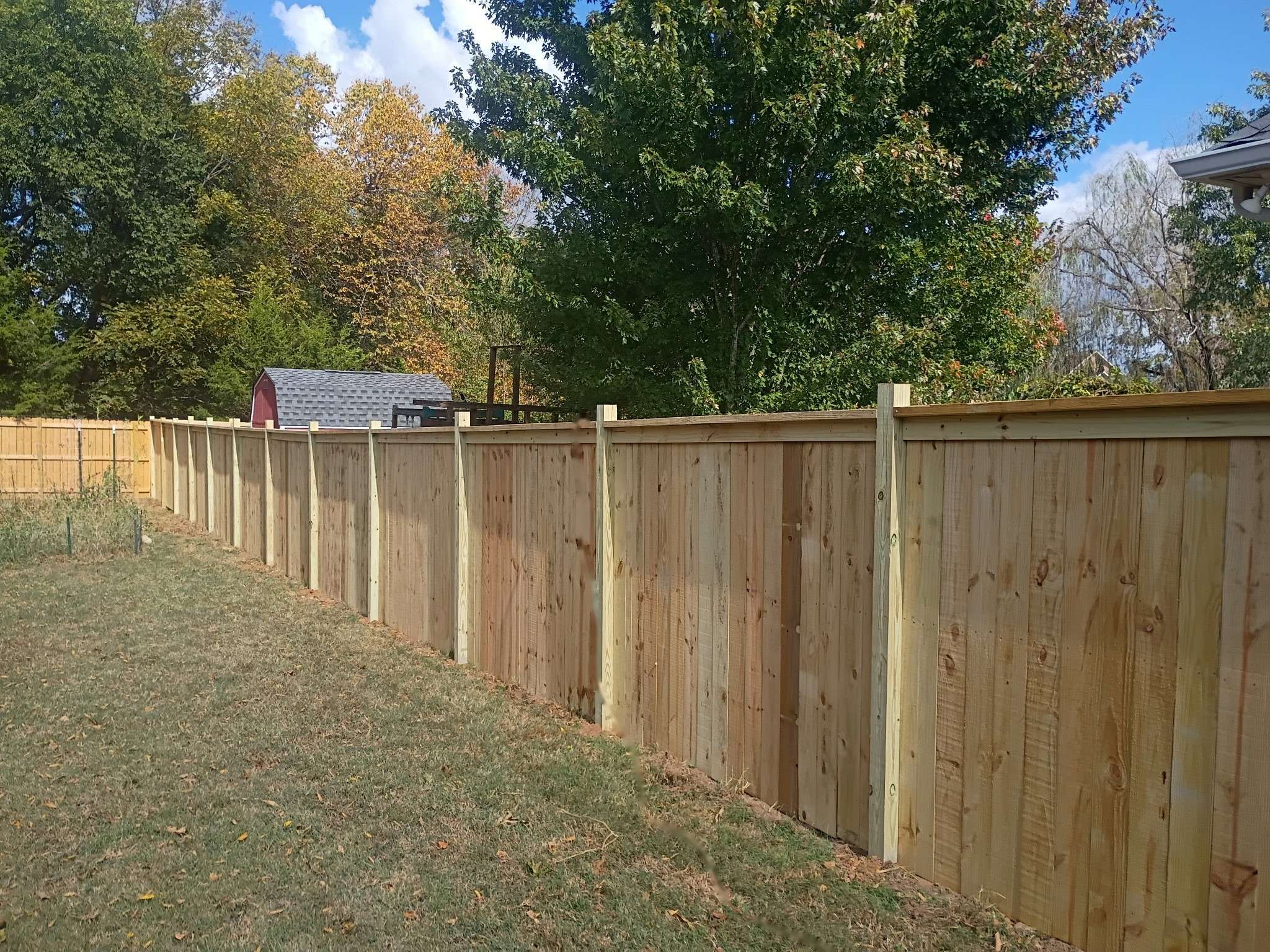
Near Downtown McMinnville, lots tend to be smaller and houses sit closer together. A privacy fence there is often about blocking a view into the yard or a neighbor's floodlight. Board on board and shadowbox styles are good picks because they look finished from both sides. Rules for a fence along the street can differ from rules for a backyard, so ask the city before you pick a style.
Out past the edge of McMinnville, you may only need privacy on part of the property, like the patio side of the house or a stretch that faces the road. On open, rolling ground, a tall solid panel takes a lot of wind, so posts need to be set well and spaced close enough to carry the load. Our guide to privacy fence options compares the common styles and how each one handles weather.
Property lines and old fence rows on larger lots
If you're on a bigger piece of ground, say out along Old Smithville Road or near Faulkner Springs, the corners may not have been checked in years. Old wire fence rows and tree lines don't always match the deed. Before a new line goes in, find the property pins or get a survey, and talk with the neighbor if the work will sit close to the boundary. Our guide on fences and property lines in Tennessee goes through the steps.
Call Tennessee 811 before anyone digs, so public utility lines get marked. What 811 usually won't mark are private lines. A water line run out to a barn or drip irrigation feeding a garden won't show up, so walk the route with whoever installed those and flag what you know. In a McMinnville yard with a big garden, that check is worth the time.
Choosing a fence company in McMinnville
A good fence company asks what the fence is for before it talks about boards. Keeping deer out calls for a different build than keeping a dog in, and a privacy screen along the road is a different job again. A quote that doesn't account for rock and slope isn't a real number yet. Ask how posts will be set in rocky spots and how the bottom will follow the low places on your line.
Permits are often simpler for fences than for decks, but the rules vary by address. Inside McMinnville city limits, the city can tell you what applies. Outside them, Warren County is the place to check. Some newer subdivisions have HOA covenants on style and height that need approval before work starts. Once you know what's allowed, the estimate form on this page asks for the basics about your yard.
McMinnville fence questions
How tall should a deer fence be in McMinnville?
Taller than a typical backyard fence, and taller than most people expect. There isn't one height that fits every garden, and local rules may limit fence height in some spots, so check before you plan. Wire on wood posts is the usual way to get that height without building a heavy solid wall. Fencing just the garden, not the whole yard, keeps the tall section short and easier to pay for.
Do I need a permit to put up a fence in McMinnville?
It depends on your address. Inside city limits, the codes office can tell you whether a permit is needed and what rules apply near streets and lot lines. Outside city limits, ask Warren County. If your subdivision has an HOA, get its approval in writing too. Rules can change, so confirm them for your property before fence installation starts.
Can a privacy fence go on a hill without gaps underneath?
Yes. Racked sections follow the slope and keep the bottom close to the ground, while stepped sections leave triangles that have to be filled. On uneven stretches, the bottom boards can be cut to follow the grade. The exception is where water runs across the line. A small gap there is better than a fence that blocks runoff and ends up leaning.
Should I tear out an old farm fence before building a new one?
Usually, yes. Old wire fences on McMinnville acreage often have trees grown right through them and posts that have rotted off at the ground. The old line may not match your survey either. Building just inside it skips some work, but it leaves a strip you can't easily mow and a fence nobody maintains. Clearing it first also gives the new posts a clean, open path.
What wood is best for a fence in McMinnville?
Pressure treated pine is the common choice and lasts well when the posts are set right. Cedar costs more and has a warmer look, and it tends to move less as it dries. In shady yards under big trees, both can grow mildew, so plan on washing the fence now and then. Posts matter more than pickets, so ask what the posts will be and how they'll be set.