Raised decks on sloped Cookeville lots
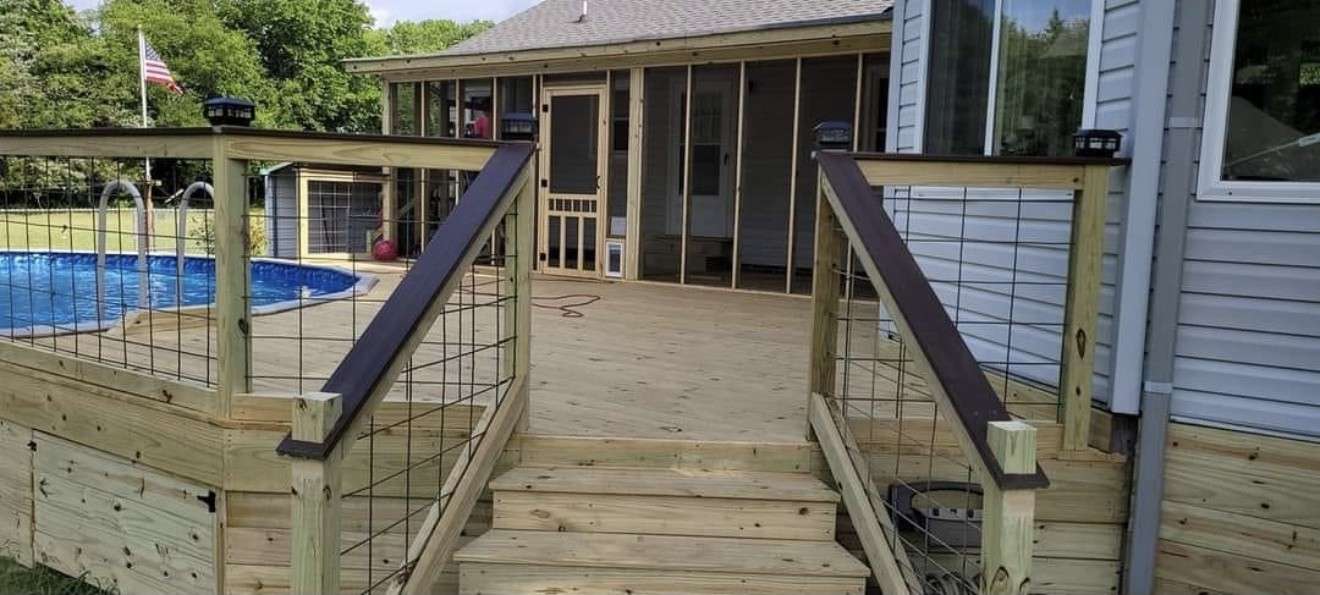
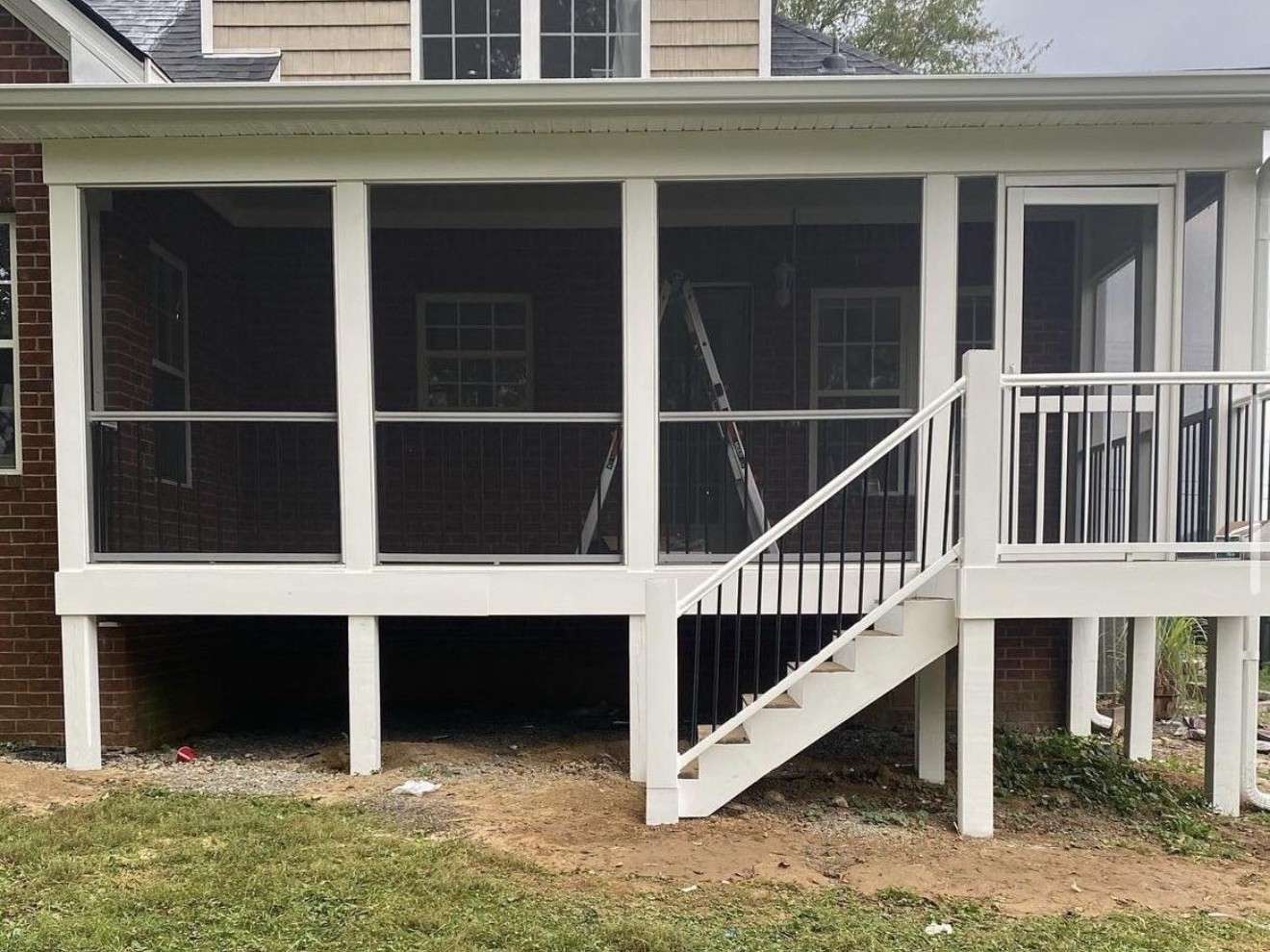
When a lot drops away behind the house, a deck off the kitchen can end up a full story above the yard. That happens often in Cookeville, and it is fine, but it changes the build. Tall posts need bracing so the deck feels solid underfoot instead of swaying. The connection to the house deserves extra attention too. The stairs get longer, and on a hill they may need a landing partway down so they meet the ground at a sensible spot.
A walkout basement is the other common setup. You might want a deck at the main floor and a patio or open space under it. If you plan to use the area below, decide that early. Post spacing and headroom are much easier to settle on paper than after the frame is up. Rain also falls through deck boards onto whatever sits below. A good deck builder will ask how you want to use both levels before drawing anything.
Footings in Cookeville's rocky ground
Cookeville sits on the Highland Rim, west of the plateau's edge, and many yards have rock and stiff clay not far under the grass. Some footing holes go in clean. Others hit a limestone ledge, and the plan has to adjust. Footings generally need to reach below the frost depth the local code sets. When a hole reaches solid rock first, the footing detail may change, and it is worth confirming the approach with the inspector before the concrete goes in.
The clay in many Cookeville yards causes a different problem. It holds water after a wet spell and can stay soft around footings on the low side of the yard, which is exactly where a raised deck's tallest posts tend to land. On a hillside, keeping downspouts and runoff away from those footings matters more than it would on flat ground. If you already see water pooling where the deck would go, mention it early so the layout and drainage can plan around it.
Rental decks near Tennessee Tech
Rental houses are common around Tennessee Tech, and a rental deck takes more wear than most. Tenants drag grills and chairs across the boards, and a group of friends leaning on the railing puts real load on it. Cookeville landlords usually want a deck that asks very little of them between leases. That points toward simple framing and railings with solid connections. It also favors boards that will not need stain every other summer.
An older deck on a rental deserves a close look before the next lease begins. Walk it and look for soft boards and railing posts that wiggle. Then check where the deck meets the house, since rot or rust at that connection is one of the most serious problems a deck can have. Our guide on how to tell when a deck is done explains the difference between surface wear and structural problems. If replacement makes sense, the gap between tenants is usually the easiest time.
Adding a deck to a newer house
Many newer houses on the edges of Cookeville come with little more than a small landing at the back door, and many owners want a real deck there. New construction yards have quirks. Soil backfilled against a new foundation can keep settling for a while, so footings should reach undisturbed ground instead of resting in loose fill. The builder also graded the lot to move water away, and the deck layout should work with that grading instead of blocking it.
HOAs are common in these Cookeville subdivisions, and the architectural committee may want to see plans before any deck goes up. Expect to show the size and location on the lot, and possibly the railing style and stain color. That review is separate from the permit. It can also take longer than people expect, so send it in early and wait for written approval before work begins.
Wood or composite for a Cookeville deck
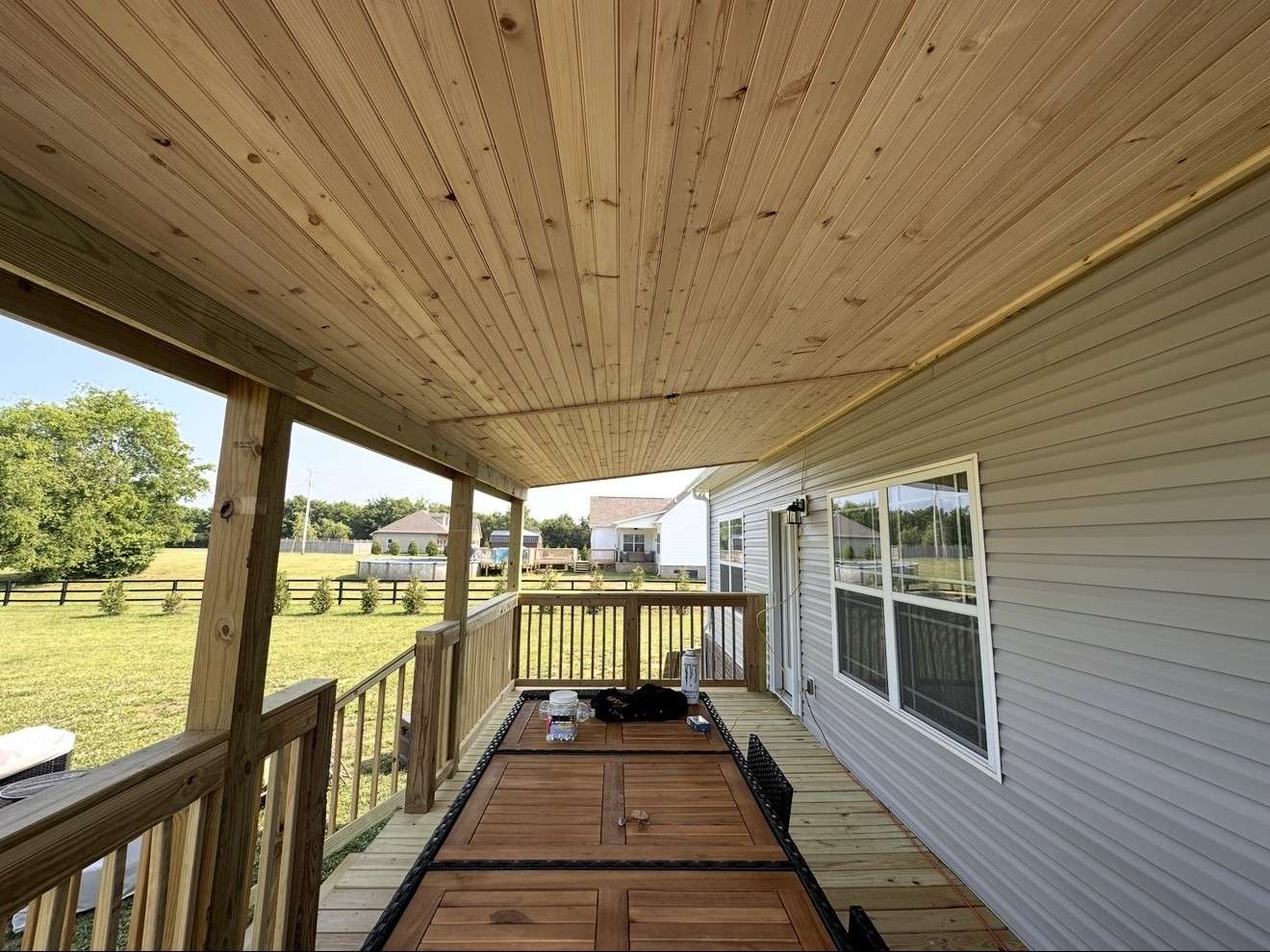
On many Cookeville lots, trees and hillsides keep the deck in shade for part of the day. Shade plus humidity slows drying after rain and invites mildew, especially on a deck facing north. Pressure treated pine is the usual starting point, and it holds up well when it is cleaned and sealed on a regular schedule. Composite boards cost more up front and still need washing, but they skip the staining. In strong afternoon sun, darker composite can get hot underfoot.
There is no single right answer. A rental owner who never wants to stain may lean toward composite. Someone who likes the look of real wood and does not mind some upkeep may be happier with pine or cedar. Our comparison of wood and composite decking goes deeper on how each one ages in Tennessee weather.
Permits and inspections for Cookeville decks
A deck attached to the house, or one standing well off the ground, generally needs a permit and inspections. Which office issues it depends on your address. Inside city limits, start with the City of Cookeville. Algood is its own city, and land outside both is in unincorporated Putnam County. Requirements can differ from one to the next, so confirm with the right office before you build. Our deck permit guide explains how the process usually works.
A permit pays off later, too. When you sell, a buyer may ask whether the deck was permitted, and a missing record can raise questions that slow a closing. If you are hiring a deck builder, ask who pulls the permit and who schedules each inspection, and get the answer in writing.
Cookeville deck questions
Is a deck on a steep Cookeville backyard much harder to build?
It is more work than a deck on flat ground, but it is ordinary work. The extra effort goes into taller posts with bracing, and into stairs that run farther to reach the ground. Access matters too. If lumber has to be carried down a hill by hand because no truck can get close, that adds time. The best way to know is to have someone walk the slope with you and decide where the deck and stairs should go.
Does a low deck in Cookeville still need a permit?
Sometimes it does not, but do not assume. Codes often treat a low, freestanding deck differently from one attached to the house, and the line between them varies by office. Algood, the City of Cookeville, and Putnam County may not draw that line in the same place. A short call to the codes office for your address settles it. If you live under an HOA, you will likely need its approval either way.
Can a deck be replaced at a rental near Tennessee Tech while tenants live there?
Usually, with some planning. The back door may be off limits for part of the job, and tenants need a safe way in and out while the old deck is gone. Give notice in writing and agree on which days work will happen. A second exit helps. Many owners find it simpler to schedule the work between leases, when the house is empty and nobody is waiting on the back steps.
What should I ask a Cookeville deck builder before signing?
Start with rock, and find out how they will handle footing holes that hit it, since that can happen here and affects the price. Confirm who pulls the permit. When you look at what the price covers, check whether stairs and removal of an old deck are included. Get the layout in a drawing, even a simple one, so you both agree on size and height. It is also fair to ask how they will protect a sloped yard while materials go in.
How long will a deck last in Putnam County weather?
Care and construction matter more than the weather alone. Humid summers and shady lots are hard on wood that is never cleaned or sealed. Posts that stay dry outlast ones sitting in wet clay. A well built deck that gets washed and resealed on schedule, with loose fasteners tightened when you notice them, can serve you for many years. Composite boards need less upkeep, but the frame underneath is usually still wood.