Why so many Brentwood decks sit high off the ground
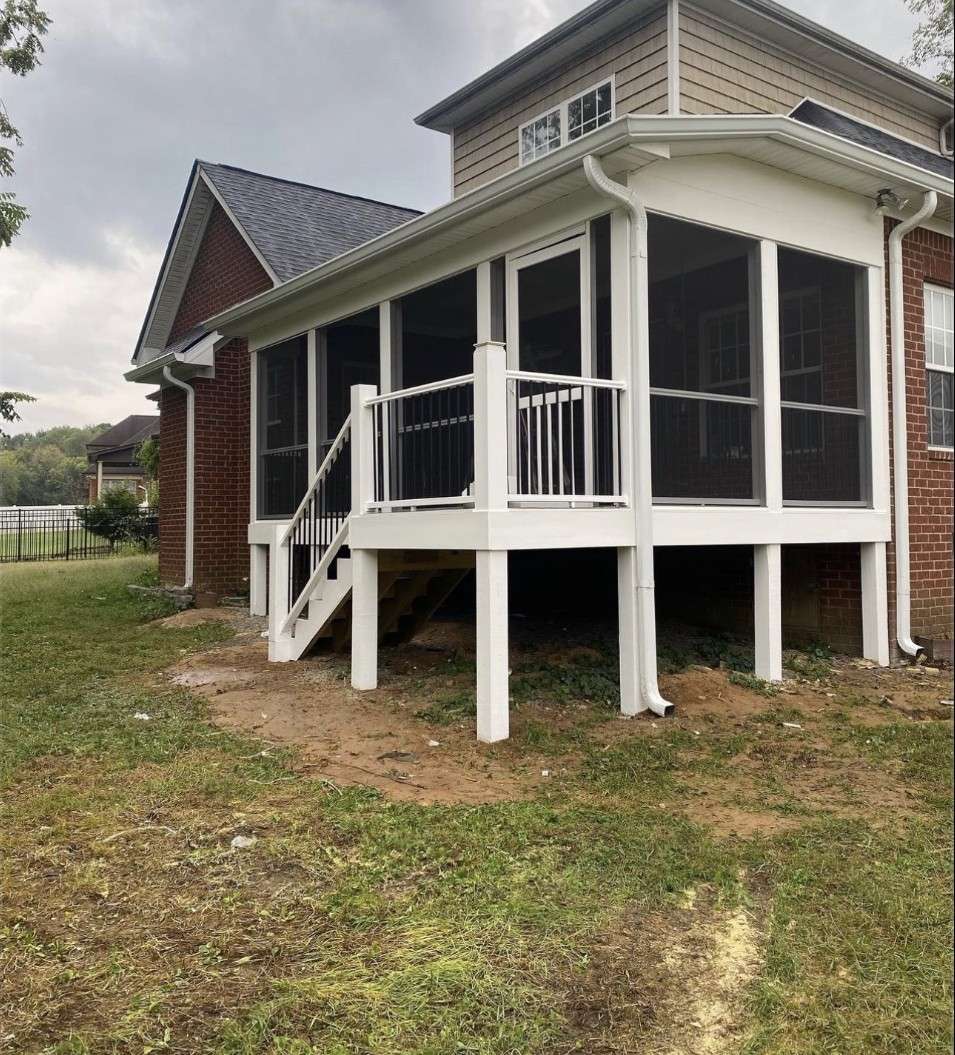
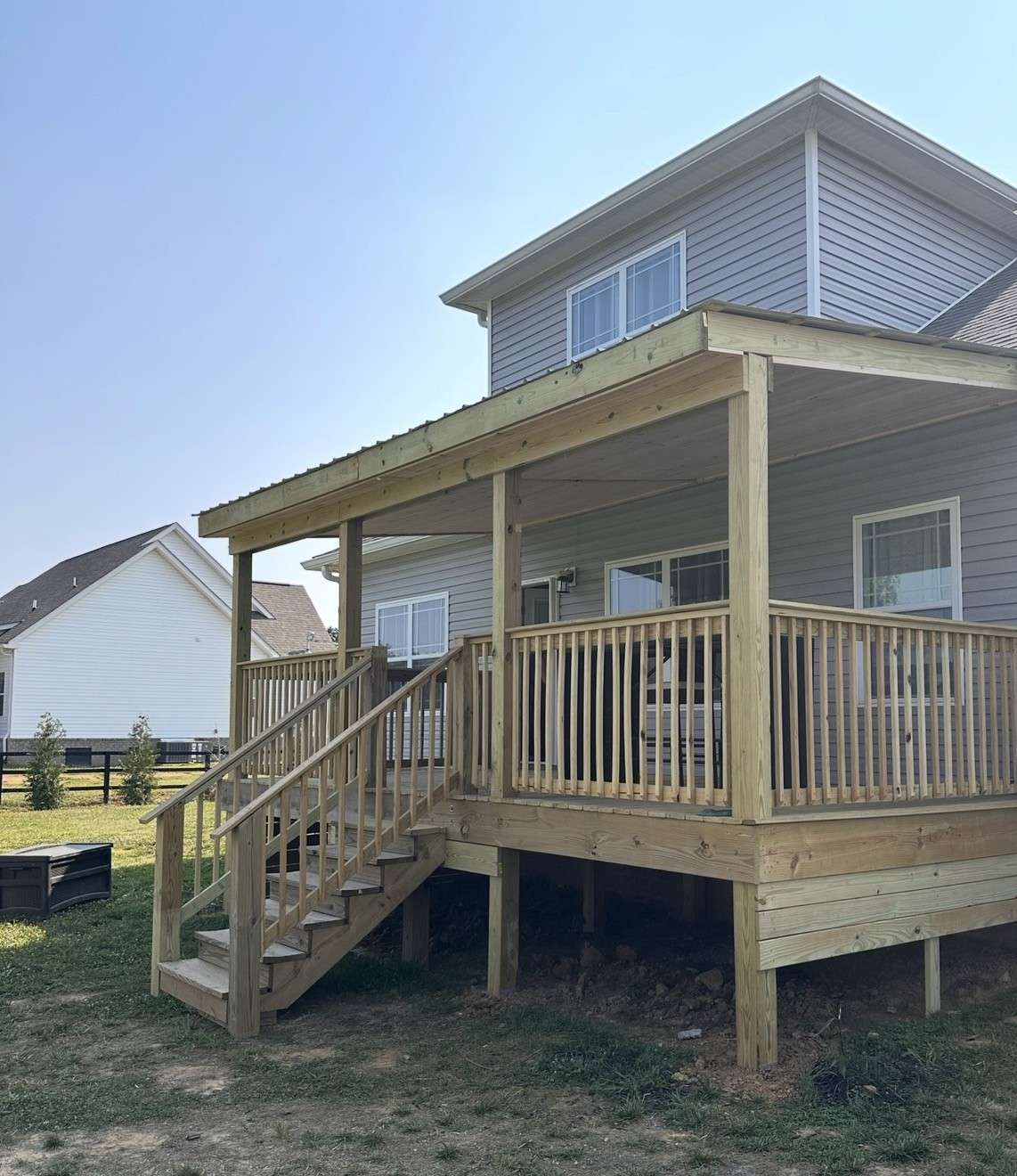
Sloped lots put the yard well below the main floor at the back of the house. A deck built off the kitchen ends up tall, sometimes tall enough to walk under. Height brings its own list of needs. Posts get longer and need bracing so the frame does not rock when people move around. The ledger, where the deck meets the house, has to be flashed so water cannot get behind it and rot the rim joist. Guards and stair rails matter more when a fall would be serious.
Stairs are the part owners tend to underestimate. A long run of steps from a raised deck takes up real yard space, and on a Brentwood hillside the bottom step can land on ground that keeps falling away. Adding a landing partway down often makes the stairs easier to use. Sometimes the better answer is a smaller upper deck with steps down to a second level or a patio at the walkout. Those choices are easier to sort out on paper than after the framing is up.
Footings in limestone and clay
Much of Middle Tennessee sits on limestone, and around Brentwood it can turn up close to the surface in hilly yards. It is common for the auger to stop short in one hole and run clean in the hole beside it. When that happens, the footing is designed for what is actually there instead of forced. The clay above the rock brings a different problem. It holds water and swells when wet, then shrinks in a dry late summer, so footings need to reach stable soil and posts should never stand in a puddle.
Some lots near the Little Harpeth River or the creeks that feed it stay wet for a while after heavy rain. If your yard has a low spot where water gathers, keep posts out of it and make sure the ground under the deck drains away from the house. It is also worth checking whether any part of the lot is in a mapped floodplain, since that can bring extra review from whichever office issues your permit.
Choosing deck boards for a shaded Brentwood yard
Wooded lots are part of why people buy in Brentwood, but trees are hard on a deck. Shade keeps boards damp longer after rain, and damp wood grows mildew and moss faster. Leaves collect in the gaps between boards and hold moisture against the joists. On a pressure treated pine deck, that means cleaning and sealing on a regular schedule. Cedar has some natural resistance to decay but still needs attention in deep shade.
Many owners with shaded lots look at composite decking because it does not need stain, though it still needs washing to keep mildew off the surface. Composite can get hot underfoot in full afternoon sun, which matters less under a tree canopy. Our comparison of wood and composite decking goes deeper on upkeep and looks. Whatever goes on top, the framing underneath is usually pressure treated lumber, so keeping it dry still matters.
Finish details that matter on a Brentwood deck
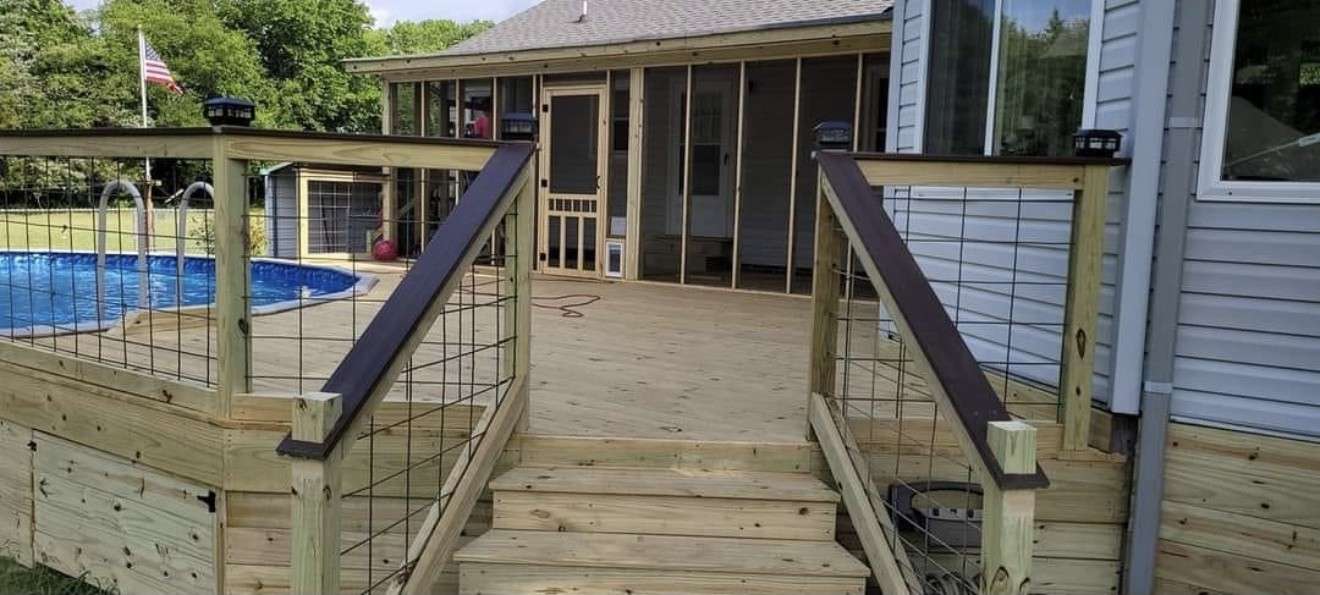
Brentwood homeowners tend to expect a deck that looks like it came with the house. That comes down to details. Fascia boards can cover the rim joists and give the frame a clean face. Hidden fasteners keep screw heads off the walking surface. Railing matters most on a raised deck, because you look through it every time you sit down. Slim metal balusters or a thinner top rail can keep a view into the woods open, where a heavy wood railing would block it.
The space under a tall deck needs a plan too. Left open, it collects leaves and slowly turns into storage. Skirting made of boards or lattice closes it off but should leave gaps for air so the framing can dry. If you want that area as a covered patio outside a walkout basement, the drainage between the deck boards has to be decided before the decking goes down. Deciding early costs less than retrofitting later.
Permits and HOA review for a Brentwood deck
A raised or attached deck will usually need a building permit, with inspections along the way. Requirements vary, so check with the codes office that covers your address. That is not always the city. Some homes with a Brentwood mailing address are across the line in Davidson County, which has its own codes office and process. Our deck permit guide explains in general terms how permits and inspections work in Tennessee.
HOA approval is its own step, and in many Brentwood subdivisions it comes before the permit. Committees in neighborhoods such as Annandale or Governors Club may ask where the deck sits on the lot and what color it will be. A clear drawing with the footprint marked and a short material list makes the review simpler. Build that approval time into your plans, especially if you want the deck finished before a certain season.
What to ask any deck builder before you sign
Whoever you hire, ask how they plan to handle the slope and footings on your lot in particular. A good deck builder should be able to show you where the posts go and explain how the ledger is attached and flashed. Find out who pulls the permit and who handles the HOA submission. It also helps to know what happens if a footing hole hits rock. Clear answers to those questions tell you more than a low number on a page. When you are ready, send your details through our estimate form.
Brentwood deck questions
Do I need a permit to build a deck in Brentwood?
Most likely, if the deck is attached to the house or raised off the ground. Requirements vary, so confirm with the codes office that serves your address before work begins. Homes inside Brentwood city limits go through the city, while some homes with a Brentwood mailing address sit in Davidson County and go through a different office. If you have an HOA, its approval is a separate step.
Can a deck go off the main floor when my yard drops a full story?
Yes, and on sloped Brentwood lots that situation is common. A tall deck needs heavier planning than one near the ground. Expect larger posts, bracing to keep the frame from swaying, and a carefully flashed ledger. Stairs will run long, so a landing or a lower level partway down is often worth it. Inspectors may also look more closely at a deck that stands this high.
Is composite or wood better for a shaded Brentwood deck?
Both can work. Under heavy shade, wood stays damp longer and needs more frequent cleaning and sealing to hold off mildew and rot. Composite skips the staining, which is why many owners on wooded lots lean toward it, but it still needs a wash now and then. If part of the deck gets strong afternoon sun, keep in mind that composite runs warmer than wood. Budget and how much upkeep you want usually decide it.
What happens if footing holes hit rock?
It is common in the hills around Brentwood. Sometimes the hole can go deeper with a rock bit or other equipment. Other times the footing is adjusted to bear on the rock itself, which can be a strong base when the rock is sound. The right approach depends on the plans and what your inspector will accept. Your deck builder should explain how they will handle rock before the job starts, since it can change the schedule and the cost.
Can I replace an old Brentwood deck with a bigger one?
Often, yes, but a bigger footprint raises new questions. Your HOA may want to review the new size and placement even though a deck was already there. The codes office will likely treat it as new work, so old footings and the old ledger may not be reusable. It is also a good time to check the siding and rim board behind the old ledger for rot, since that damage tends to hide until the old deck comes off.