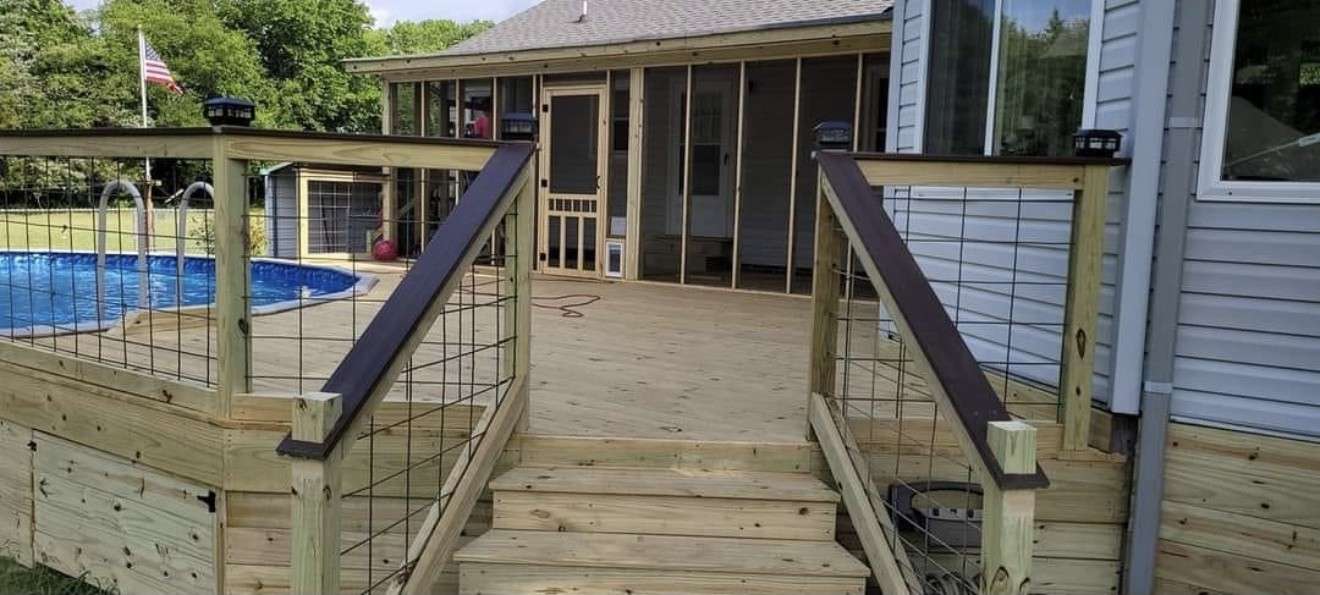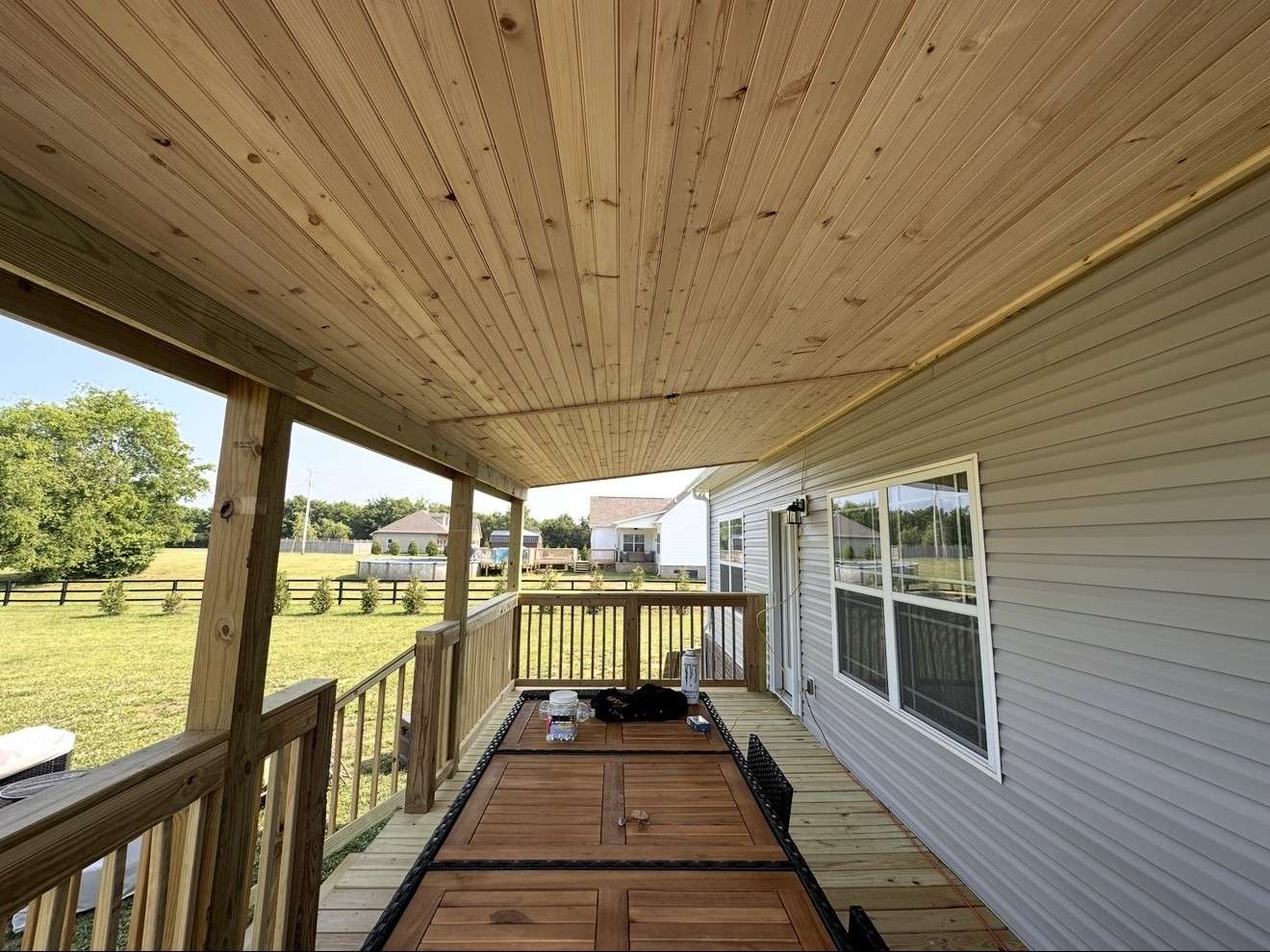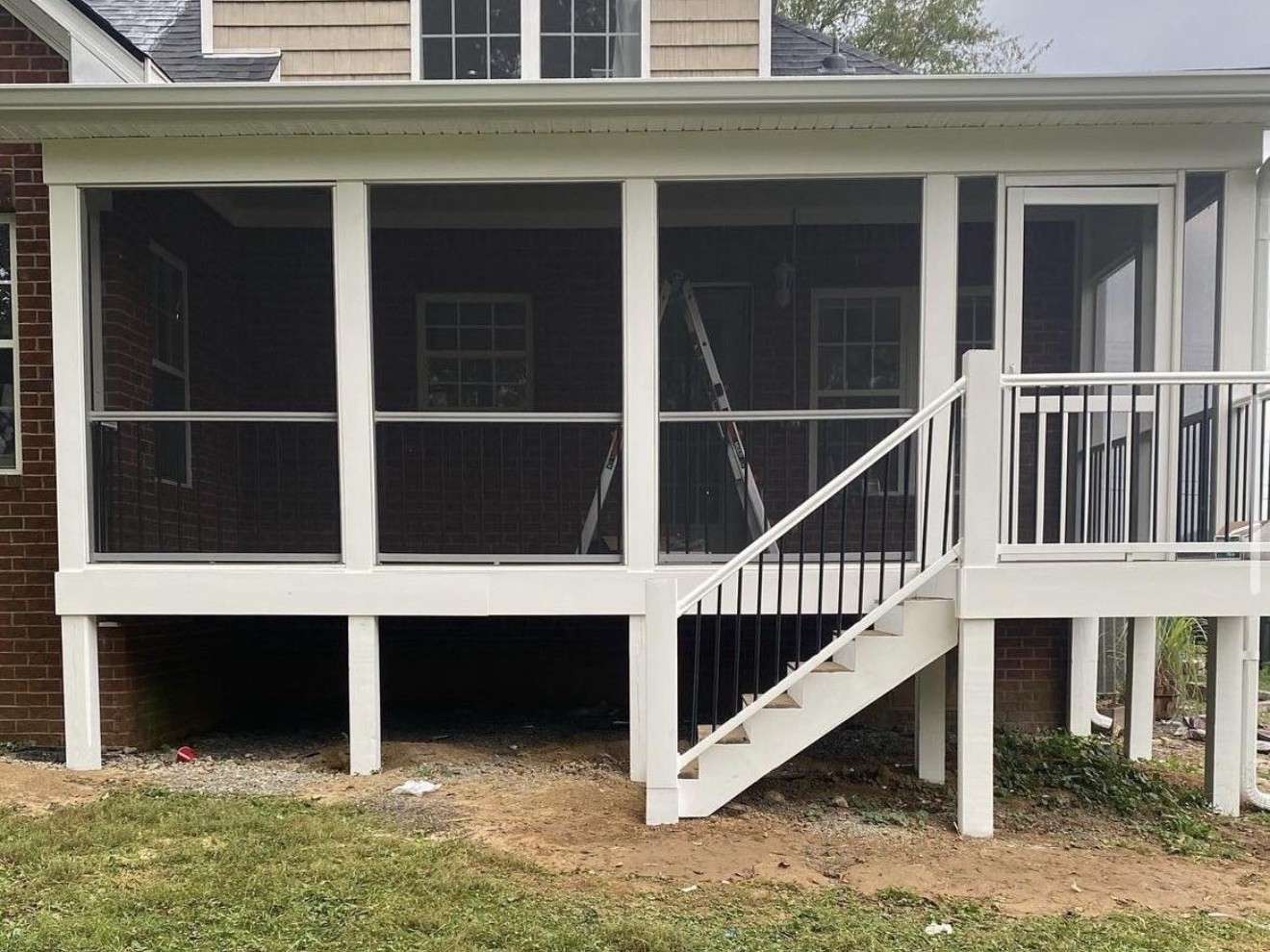
Replacing decks on older Franklin homes
Some older houses in Downtown Franklin have a back deck that was added long after the house was built, and it may have been patched more than once. When soft boards and loose rails keep coming back, replacing the deck usually makes more sense than another round of fixes. On an old house, the hard part is often where the deck meets the wall. Old brick or wood siding does not always offer a sound place to attach a ledger board, so a freestanding deck on its own posts can be the better plan.
Inside the historic district, the look matters as much as the structure. A deck that is hard to see from the street may draw less attention in review than one on a side yard facing a busy corner, but only the city can tell you what applies. Railing style and stair placement can come up, along with how the deck lines up with the windows and doors of the house. Bring photos of the house and yard to your first conversation with the planning staff. It saves a round of back and forth.
Deck rules in Westhaven, Berry Farms, and newer subdivisions
Westhaven and Berry Farms each have their own design standards, and many other Franklin subdivisions have an HOA with an architectural committee. These groups often care about where a deck sits and how high it stands above the yard. Some also set railing colors. Where homes are close together, a raised deck can look straight into the yard next door, so a lower design or some screening may help with approval. Committee approval does not replace the city permit. You need both, and the committee usually comes first.
Slopes, walkout basements, and rock under Franklin decks
Plenty of Franklin homes, especially in the hillier western parts of town, have a walkout basement or a back door set well above the grass. A deck in that spot needs taller posts with proper bracing, plus a stair that lands somewhere sensible. The space underneath deserves a plan too. It can hold the mower and garden tools or a couple of chairs in the shade, or it can be closed in with skirting so it looks finished. When you ask for an estimate, say how you plan to use the deck, since that shapes the height and the stair.
Rock is the other thing to plan for. In many Franklin yards there is limestone not far below the grass, and a footing hole that starts easy can stop partway down. When that happens, the footing plan may need to change, and the inspector may want to see it. Clay soil is common here as well. It holds water after rain and shifts as it dries, which is one reason footings need to go below the frost line and bear on firm ground. Ask how rock will be handled, and whether it changes the price, before the job starts.
Decks near the Harpeth River and its creeks
Franklin yards that back up to the Harpeth River or one of the creeks running into it bring their own questions. Part of the lot may sit in a mapped flood zone, and building there can come with extra city review or limits on what goes where. Soil near the water is often soft and stays damp, so footings have to reach solid bearing, and any lumber close to the dirt should be rated for ground contact. A low deck that sits in standing water after every storm will not last. Sometimes the better answer is a freestanding deck on the drier, higher part of the yard.
Choosing deck boards for Franklin weather
Middle Tennessee summers run hot and humid, and many Franklin yards sit under big shade trees. That mix matters when you pick decking. Pressure treated pine costs less up front but needs regular cleaning and sealing, and it can check and twist as it dries out. Composite boards skip the staining, though they can get hot in full afternoon sun and still need washing where leaves and pollen collect. A shaded deck of any material tends to grow mildew. Our comparison of wood and composite decking goes through how each one ages in Tennessee.
Permits and inspections for a Franklin deck
Most decks that attach to the house or sit well off the ground need a building permit, with inspections along the way. Inside city limits, that runs through the City of Franklin. Outside them, including much of the country around Leipers Fork, Williamson County is usually the office that handles it. Historic review and HOA approval are separate steps, and they come first. It is worth asking any deck builder you talk to who pulls the permit and how inspections get scheduled. Our deck permit guide covers the general process, but confirm the details with your codes office.
Franklin deck questions
Do I need a permit to build a deck in Franklin?
Most likely, if the deck attaches to the house or stands more than a little off the ground. Inside city limits, the City of Franklin issues building permits and handles inspections. If your address is in unincorporated Williamson County, the county codes office handles it instead. A small, low, freestanding platform may be treated differently, but rules vary, so ask before you build rather than after. An unpermitted deck can cause trouble when you go to sell.
Will the historic district let me add a deck to my house downtown?
It may, but no one can promise that ahead of the review. Exterior changes inside the historic district usually need design review before the city will issue a permit, and that review looks at how the new work fits the house. Start with a call to the City of Franklin planning office and have photos of the house ready. Getting their input early is easier than reworking a finished plan after it comes back with questions.
What does a Westhaven or Berry Farms committee usually want to see for a deck?
Each community sets its own requirements, so get the current guidelines from your HOA first. Committees commonly ask for a site plan showing where the deck goes on the lot. They also tend to want drawings with the height and stair location, plus the colors for decking and railing. Some look at how the deck affects the view from neighboring homes. A complete package the first time usually moves faster than one that gets sent back.
What should I ask a deck builder in Franklin before signing?
Start with who handles the permit and any historic or HOA submission, and get that in writing. Then find out how footings will be dug if the crew hits rock, and whether that changes the price. It also helps to know what lumber is being quoted for the framing, not just the boards on top. For an older home, ask whether the deck will attach to the house or stand on its own. Clear answers to those questions make quotes easier to line up.
How close to my property line can a deck go in Franklin?
There is no single answer for the whole city. Setbacks from side and rear lines come from the zoning on your lot, and planned communities like Westhaven sometimes add limits of their own. Tight lots make this a real question. Check your plat or survey, then confirm with the codes office before the design is final. A deck that crosses a setback line can hold up a permit, and it can come back up when you sell the house.