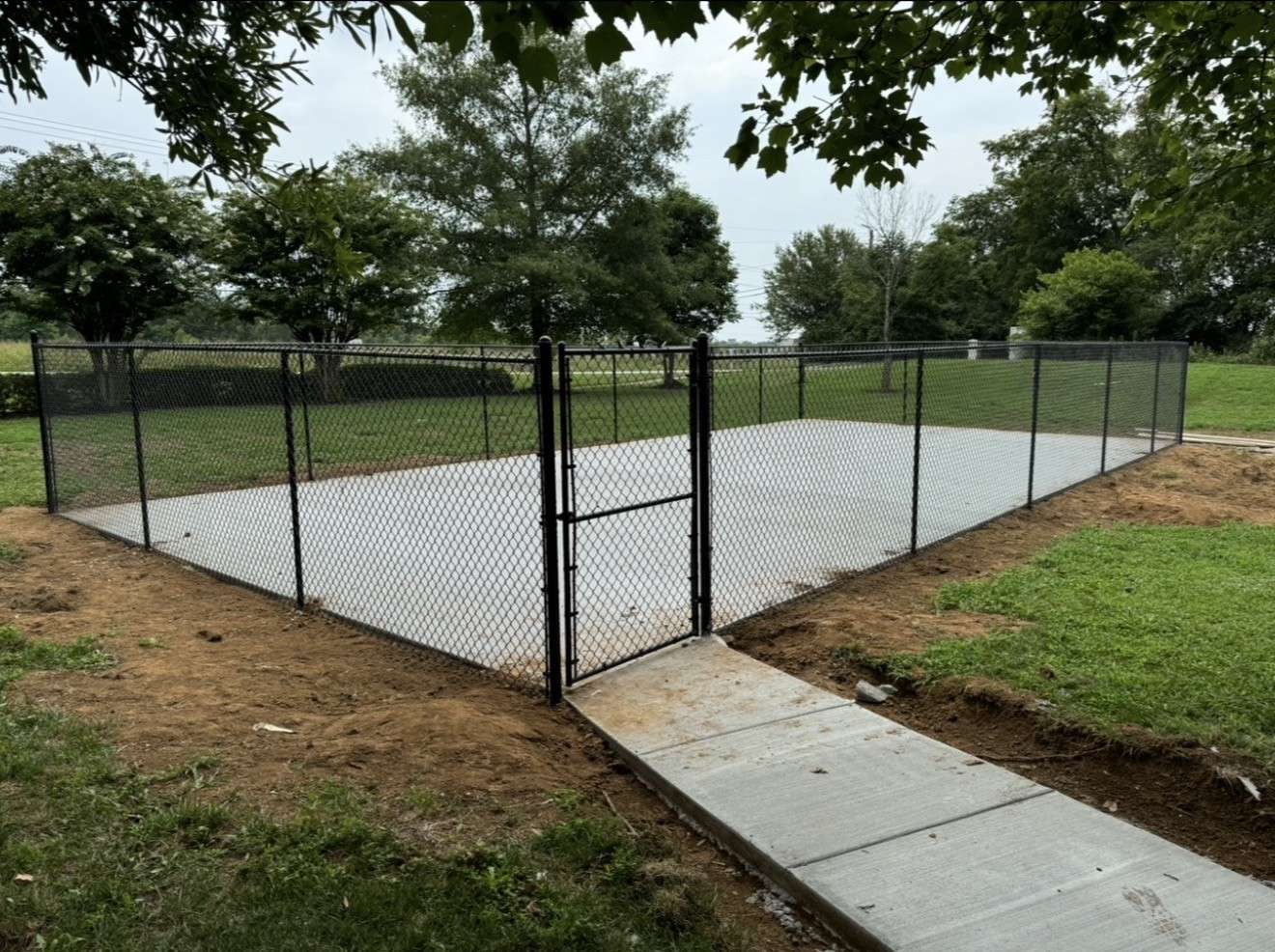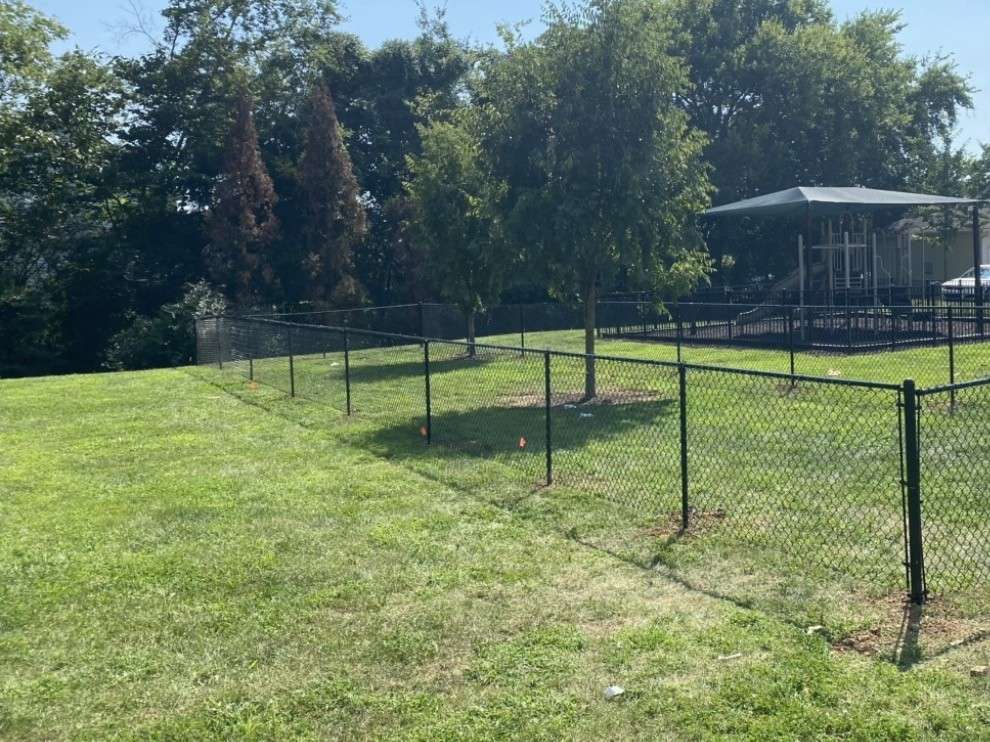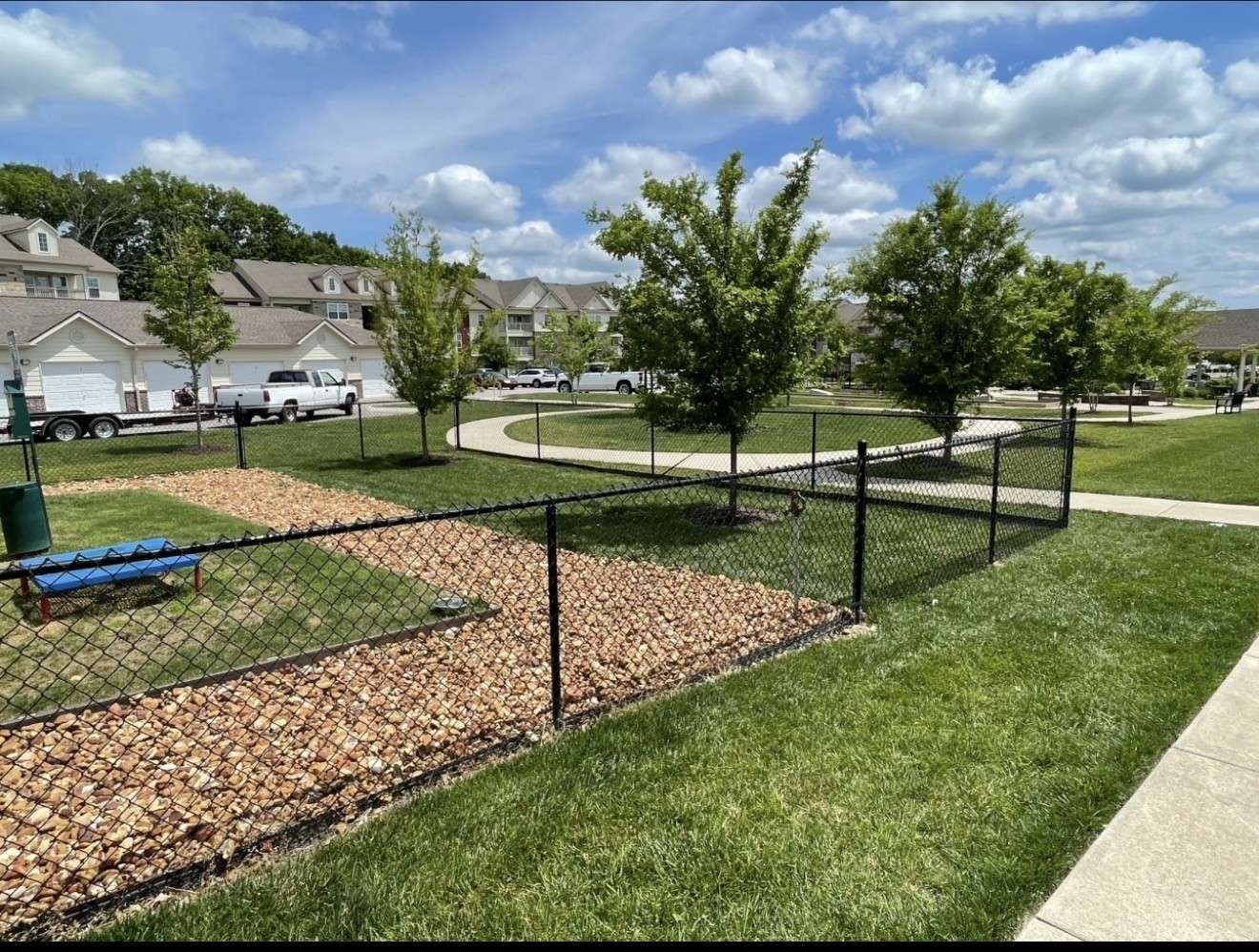
Stepped and racked fences on Brentwood slopes
There are two ways to run a fence down a hill. A stepped fence keeps each panel level and drops it at every post, like a staircase. It looks tidy and suits board on board or horizontal styles, but it leaves triangle shaped gaps under the low end of each panel. A racked fence tilts the panels to follow the ground, so the bottom stays close to the grass. Racking suits a steady slope, while stepping handles sharp changes in grade better. Some panel styles, including many vinyl panels, can only rack a little.
On a Brentwood lot with a dog, those gaps under a stepped fence matter. A small dog can slip through one, and a bigger dog may dig at any gap it can reach. Closing them takes a bottom board cut to the grade. Gates need extra thought on a slope as well. A gate that swings downhill clears the ground, while one swinging uphill may drag. Our guide on how to fence a sloped yard goes into post spacing and drainage too.
Wooded lot lines and rocky post holes
Many Brentwood backyards end at a tree line, and the property line often runs right through it. A fence can jog around a large trunk, but it should never be nailed or screwed to a tree. Roots near the surface make post holes harder to place, and cutting big roots can hurt the tree. Before clearing a path, ask whether your HOA or the city has rules about removing larger trees. Along a shaded wooded line, a wood fence will stay damp longer and need more upkeep.
Limestone lies under much of the Brentwood area, sometimes just below the roots. Rock can turn up in some post holes and not others along the same line. That slows the work and can mean shifting a post slightly or drilling. The clay above the rock holds water around the base of a post, so the concrete should be shaped to shed water away from the wood. Before fence installation starts, someone has to call Tennessee 811 so buried utility lines get marked. State law requires that call before digging.
Deciding how much of a big lot to fence
On a larger Brentwood lot, fencing the whole boundary can mean a long run through woods and over steep ground nobody uses. Many owners fence the flatter part of the yard near the house instead and leave the back section open. That shortens the run and keeps the fence where you can see it and look after it. It still gives a dog or kids a safe space. The fence can tie into the corners of the house or into a deck, so plan those connections with any deck work you have coming.
Think about gates before you settle the layout. If you mow the lower yard, you will want a gate wide enough for a riding mower, plus one near the driveway or trash cans for daily use. Where you can, put gates on the flattest stretch of the fence line so they swing freely. If there is a pool, barrier rules are stricter than for a regular yard fence, so confirm them with the codes office before you choose a design.
Privacy fence styles that fit Brentwood HOA rules
A privacy fence makes the most sense where a neighbor's house or a road sits close behind you. In a Brentwood subdivision, the committee will likely care about style as much as height. Many covenants require the finished side to face out, and some limit color to natural tones or an approved stain. Board on board and shadowbox styles give solid screening and look finished from both sides. Our privacy fence options guide compares these styles in more detail.
Get the covenants and any written fence standards before you pick a style. Some neighborhoods allow taller fences in the backyard and only lower ones toward the front of the house, while others limit solid fences in certain spots. Send the committee a drawing of the fence line along with the material and stain color. Start early if you want the fence up by a certain date, since many committees meet on a set schedule.
Finding the property line on a Brentwood lot
On wooded lots, an old fence or a tree line is not a reliable guide to where your property ends. A survey or pinned corners should come first, especially on the long, irregular lines that bigger lots often have. Many owners set the fence slightly inside the line so they can maintain both sides without stepping onto a neighbor's land. Talk with the neighbor anyway before the posts go in. Our guide to fences and property lines in Tennessee covers surveys and neighbor conversations.
Permit rules for fences vary. Check with whichever office issues permits for your street, which may be the city of Brentwood or, for some Brentwood addresses, an office in Davidson County. Look at your plat for easements as well. Utility and drainage easements often run along rear lot lines, and a fence built across one may have to come out if a utility needs access.
Choosing a fence company for a Brentwood yard
Whether you live in Concord Crossing or on a street with no HOA at all, get estimates that describe the same fence so you can compare them fairly. Each one should name the style and material and list every gate with its width. It should also explain how the posts are set and how the fence handles the slope. Ask each fence company how they plan to deal with rock and whether hauling away an old fence is included. Clear written answers matter more than the lowest number. When you are ready, send us the details through the estimate form, along with a few photos of the slope.
Brentwood fence questions
Do I need a permit for a fence in Brentwood?
It depends on where you live and what you are building. Rules can differ between the city of Brentwood and Davidson County, where some Brentwood addresses sit, and pool barriers usually carry their own requirements. Ask the office that handles building permits for your address before any work starts. If you live in a subdivision, HOA approval is a separate step, and its rules on style and height may be tighter than the city's.
How does a privacy fence go up on a steep Brentwood backyard?
On a steep yard the panels are usually stepped, so each section stays level and drops at the post. That leaves gaps at the low corners, which a bottom board cut to the grade can close. On a gentler, even slope, racked panels that follow the ground often look cleaner. Post spacing and gate placement both change on a hill, so the layout should be marked on site instead of planned from a plat alone.
Can a fence go around trees on my Brentwood property line?
Yes. The fence can jog around a trunk or stop short with a return, and posts can shift to miss the biggest roots. Attaching boards to a tree is a bad idea, since the trunk keeps growing and pushes the fence out of line. If the tree sits right on the line, talk with your neighbor first, because it may be partly theirs.
What kind of fence works for dogs on a large Brentwood lot?
For most dogs, a solid fence tall enough that they cannot easily see over it works well, as long as the bottom stays close to the ground. Stepped sections on a slope need their gaps closed. Dogs that dig may need wire buried along the base. Gates should close and latch on their own. Fencing a smaller area near the house is often more practical than the full boundary, and it is easier to walk and check.
Which side of the fence should face my neighbor?
In many Brentwood subdivisions the covenants require the finished side to face out, toward the neighbor or the street. Even where no rule says so, it is the usual courtesy. Board on board and shadowbox styles sidestep the question because they look finished from both sides. Check your HOA documents before choosing, since a committee can send a submission back if the wrong side faces out.