Replacing an old deck in Columbia
On older houses in and around downtown Columbia, the deck has often aged worse than the house itself. Many were built before today's rules for how a deck attaches to a house, and that connection is where they tend to fail. Look for dark, soft wood along the house side and posts sitting right in the dirt. Nails where you would expect bolts are another bad sign. When more than one of these shows up, you are usually looking at a replacement, not a repair.
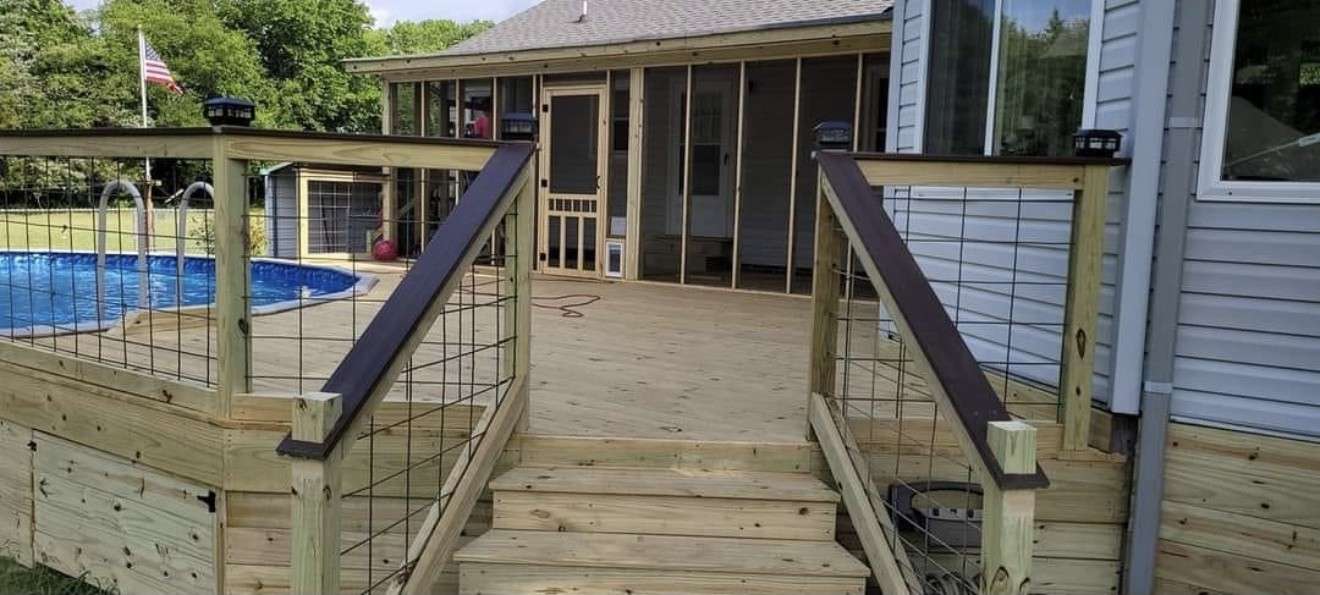
Tearing out the old deck also gives you a clean start. Many older decks were sized around a small back door and a grill, and people want more room now. You can move the stairs to a better spot or add a lower level that steps down toward the yard. Hauling off the old lumber is part of the job, so ask any deck builder you talk to whether removal is in their price. Our guide on signs your deck is done covers the warning signs in more detail.
How a new deck meets an older house
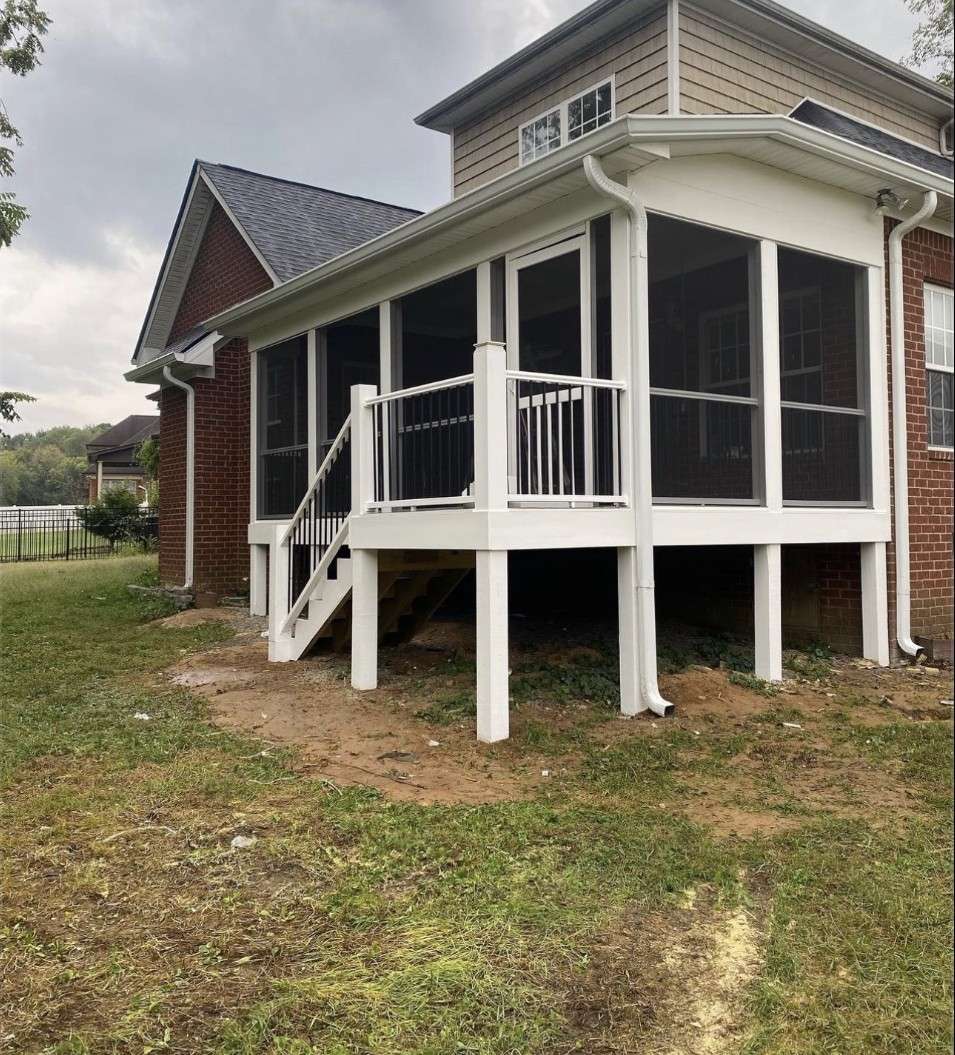
Older Columbia homes come with details that shape the plan. Many older houses around town have brick veneer, and a deck ledger should not be fastened to it, so those decks usually get their own beam and posts along the house side instead. On houses with wood or fiber cement siding, the siding comes off where the ledger goes so it can be bolted to the framing and flashed properly. Many older houses sit over a crawlspace, so the back door can be well above the yard. That means more steps and a railing, and it is worth thinking early about where those stairs land.
Footings in Columbia clay and rock
In Columbia, footings are often the slowest part of a deck job. The clay here is dense and holds water. Below it, limestone can show up at uneven depths, sometimes near the surface in one hole and nowhere in the next. A footing has to reach the depth your codes office requires, and it has to bear on solid ground. When a hole stops on rock, how that is handled is up to the inspector, so it pays to plan for it before digging starts.
Many builders now stand posts on top of the footings instead of burying them in the clay. Wood left in wet soil rots faster, even lumber rated for ground contact. A metal post base holds the wood up off the concrete so it can dry between rains. It is a small detail that helps posts last longer in this ground.
Decks for newer homes around Columbia
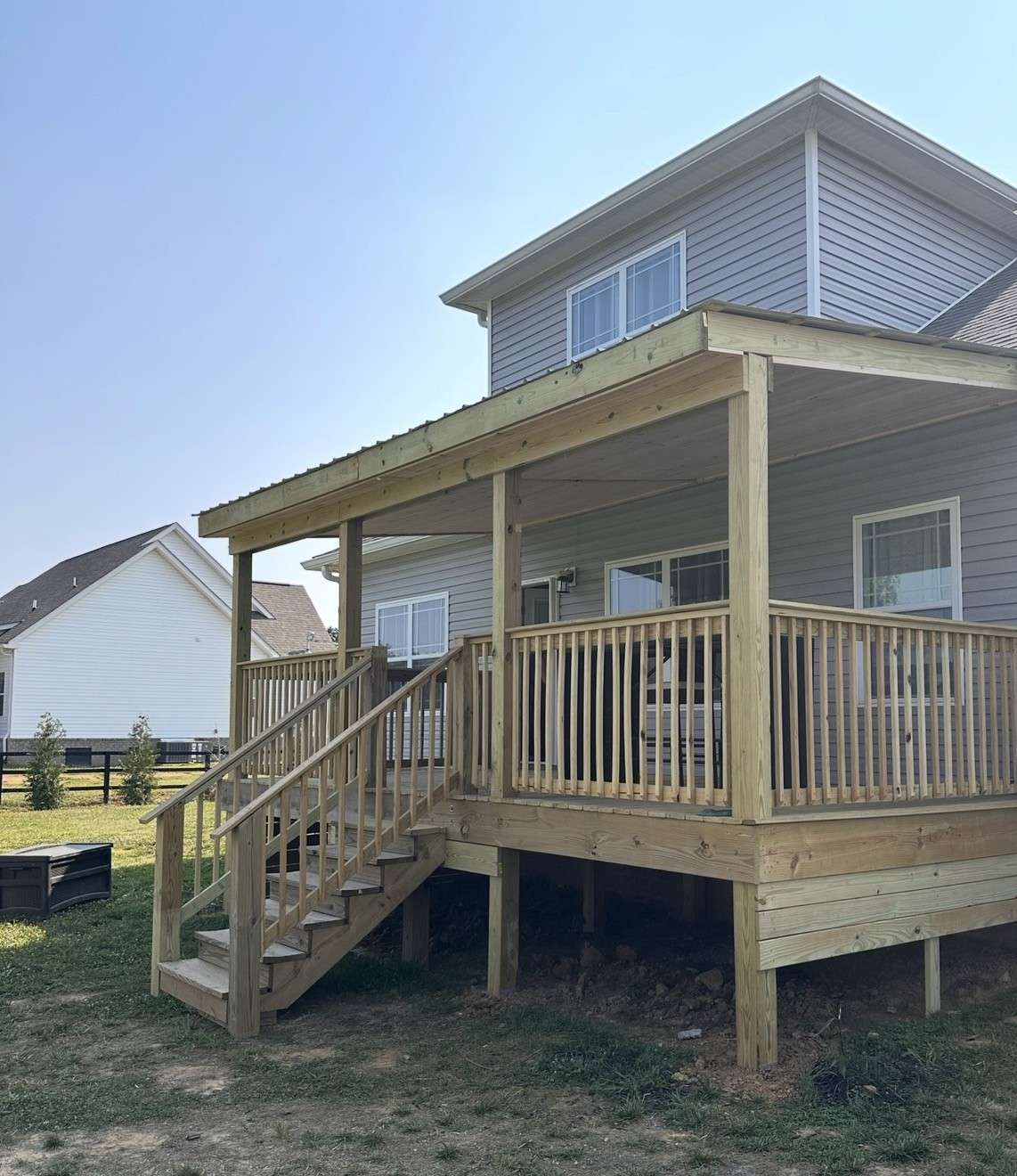
New houses on the edges of Columbia often come with a small concrete patio or just a door and a few steps. Many of those yards get full sun, since trees were often cleared when the lots were graded. That affects your choice of boards. Darker composite gets hot on a summer afternoon, and pressure treated pine left unstained dries out and checks faster with no shade. Our comparison of wood and composite decking lays out the tradeoffs. Think about where the shade will fall at the hour you plan to sit outside.
If you have an HOA, the deck will likely need approval before work starts. Committees in newer neighborhoods tend to ask about railing and stain colors and whether the deck can be seen from the street. Fill soil near the foundation of a new house can settle for a while after construction, so footings close to the house need to reach undisturbed ground. A careful deck builder keeps digging until the hole reaches firm, undisturbed soil.
Decks on river lots and sloped yards
Homes near the Duck River and on the hillier parts of Columbia often have a yard that falls away from the house. That can mean a deck well off the ground on the back side, with tall posts and cross bracing, plus stairs that may need a landing partway down. Plan the stairs early on these lots, because a long run of steps takes up a lot of yard. Lots in mapped flood areas can face added review, and soft ground near the water calls for footings that reach firmer soil. Check with the city, or Maury County outside the limits, before you settle on a size.
Permits, historic review, and getting a price
Most decks that attach to the house or stand well off the ground need a permit. In Columbia, the city handles that inside the limits, and Maury County usually covers homes outside them. If your house sits in one of the local historic districts, a rear deck may draw less review than a change to the front of the house, but do not assume. Call first. Our guide to deck permits in Tennessee explains how the process usually works.
When you ask for an estimate, a few details help. Tell us whether an old deck has to come off first and how high the door sits above the yard. Mention it if you already know about rock or soft ground. Side yards on older lots can be narrow, so let us know if a fence or a detached garage limits access to the back. You can request a deck estimate right on this page.
Columbia deck questions
Can the footings from my old deck be reused?
Usually not. Footings under older decks around Columbia were often small and shallow, and some posts were simply set in the ground. They may not meet what the inspector expects today, and they rarely line up with a new layout anyway. New footings are a small part of the job and the hardest part to fix later. If the old ones happen to be sound and in the right place, that is a bonus, but plan on new ones.
Does a deck behind a house in a Columbia historic district need approval?
It might. Historic review usually focuses on what people can see from the street, so a deck tucked behind the house often gets less attention than a change to the front of the house. Corner lots and wide side yards change that, because the deck may be visible. The city can tell you whether your project needs design review. Ask before you settle on materials or a railing style, since those are the details a review is likely to look at.
What decking holds up best in a Columbia summer?
Pressure treated pine is the most common choice and costs the least up front, but it needs cleaning and a fresh coat of stain every few years. Cedar looks warmer and weighs less, with similar upkeep. Composite boards resist rot and skip the staining, though darker colors get hot in full sun. On a new lot with no shade yet, that heat matters more than most people expect.
My Columbia yard drops off toward the river. Can it still have a deck?
In most cases, yes. A sloped yard means taller posts and more bracing, with footings set down into firm soil below the soft layer near the surface. If the lot is near the Duck River, find out whether it sits in a mapped flood area, because that can add a review step. The upside is that a raised deck on a slope often gets the best view on the property.
How much does a new deck cost in Columbia?
It depends mostly on the deck you want and the yard it goes in. Size and height move the price most. The board material and railing style come next. Tearing out an old deck adds cost, and so does rock in the footing holes, which turns up often around Columbia. When you compare bids, check that each one includes removal and the same stairs and railing, so you are comparing the same deck.