Privacy fences in newer Columbia subdivisions
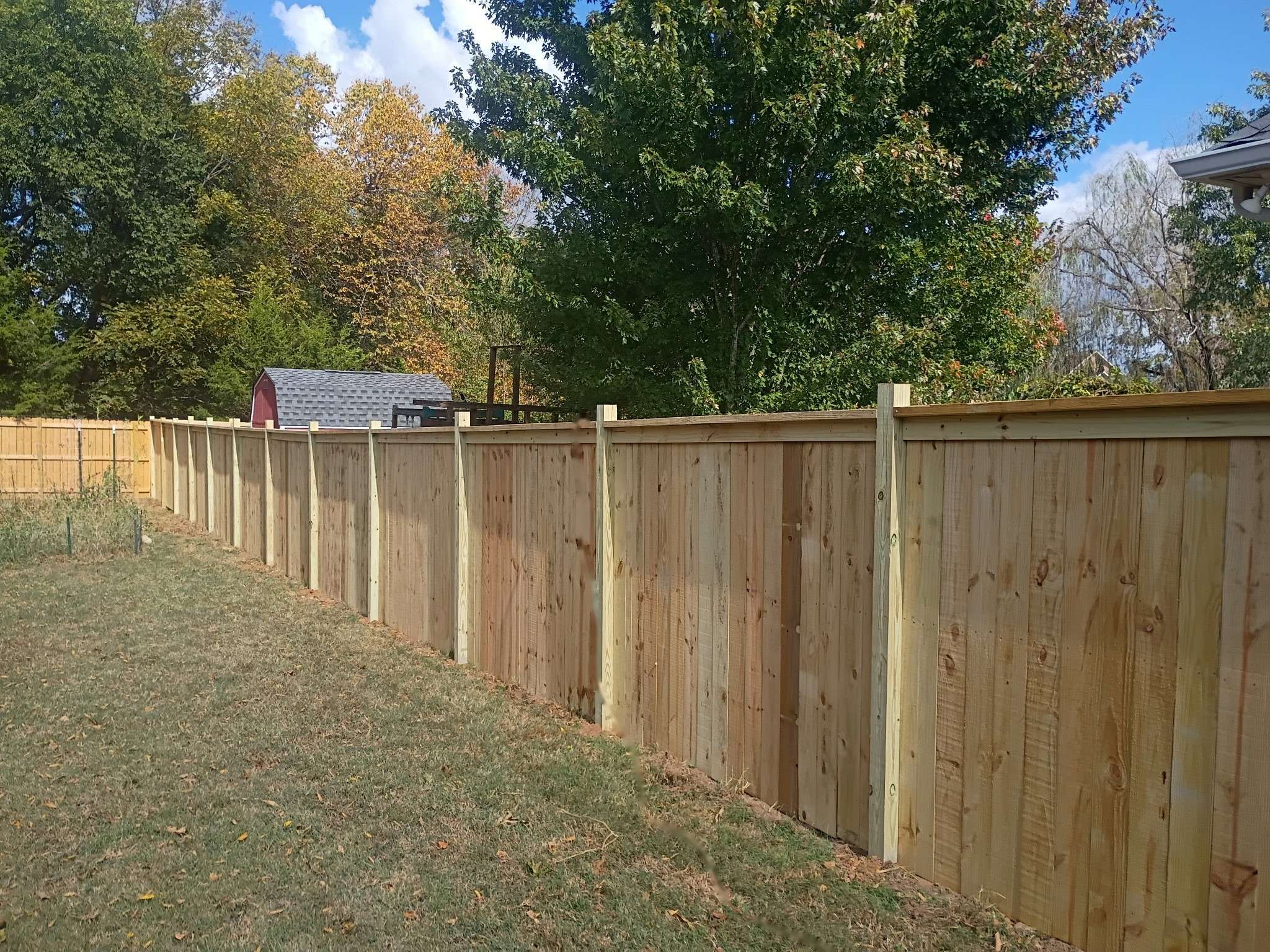
In the newer neighborhoods around Columbia, a privacy fence is often the first project after closing. Before anything else, read your HOA covenants. Many spell out the allowed styles and stain colors and how far toward the street a fence can come. Some want the finished side facing out. Send the request with a simple drawing of the fence line and a photo of the style, and wait for written approval before any posts go in.
New lots in Columbia bring a couple of site issues. Many have a utility easement along the back line, and what you can build inside it is often limited. If a neighbor already has a fence on the shared line, you may be able to tie into it with their permission, or run your own line just inside yours. Bare clay yards also settle, so posts set soon after grading need to reach past the loose fill. Our guide to privacy fence options compares the common styles.
Fencing older lots near downtown Columbia
On established lots near downtown and along West Seventh, the property line is not always where the old fence says it is. Corner pins get buried or pulled over the decades. Before new fence installation on an older Columbia lot, find the pins or get a survey. A survey usually costs less than moving a fence later. Our guide to fences and property lines walks through how to handle it, including talking with the neighbor before work starts.
Big trees are the other issue on older lots. Mature trees near the line can have roots that fill the post holes, and cutting a large root can hurt the tree. It is usually better to shift a post or change the spacing than to cut through a big root. If your house is in a historic district, a fence in the front or side yard may need design review before it goes up. The city can tell you whether your lot falls inside one.
Setting posts in Maury County clay and rock
A fence is only as straight as its posts, and the ground in Columbia makes posts the hardest part of the job. Clay swells when it is wet and shrinks when it dries, and over time that movement can push a shallow post out of line. Limestone is the other surprise. An auger can run clean for a few holes and then stop cold on rock, and that hole has to be drilled out or shifted a little. Before any of it, call Tennessee 811 so buried lines get marked.
A few habits help posts last in this ground. The hole goes deep enough for the fence height and the wind it will catch. Gravel at the bottom lets water drain instead of sitting against the wood. Concrete, if used, is shaped so water runs away from the post at the top. Gate posts carry the most strain, so they usually get deeper, wider holes. Ask any fence company how they set posts in clay before you hire them.
Fences near the Duck River and low ground
If your Columbia yard is near the Duck River or backs up to a creek that rises, a solid privacy fence can act like a wall when water moves through. It catches debris, and the moving water pushes against it. Some owners in these spots choose a style with open spacing low down, or they leave the flood path open and fence around it. Lots in mapped flood areas may need extra review before building anything, so ask the city first. Soft ground near water also calls for deeper posts at gates and corners.
Larger lots outside the Columbia city limits
Plenty of homes around Columbia sit on larger lots out in the county. On land like that, many people do not fence the whole property. Instead they fence a yard around the house for the dogs and the kids, with a gate wide enough for a mower. Long open runs catch more wind, which is one more reason to set posts well. Outside the city limits, Maury County rules usually apply instead of the city's, and deed restrictions can matter too.
What goes into a fence price
Length drives most of the cost, and height and style come next. Gates add more than people expect, because each one needs heavy posts and hardware. Tearing out an old fence adds time, and so does hitting rock in the post holes, which is common around Columbia. When you ask for an estimate, tell us roughly how much yard you want enclosed and how many gates you need. Mention any HOA rules you already know about. You can start a fence estimate on this page.
Columbia fence questions
Do I need a survey before fence installation in Columbia?
Not always, but it is the safest start on an older lot. If you can find the metal pins at each corner and they match your plat, that may be enough. When the pins are missing or the old fence wanders, a survey settles it. Most owners keep the fence just inside their own line, and fixing a mistake later means pulling posts. Your HOA may also ask for a plot plan showing the fence line.
How tall can a privacy fence be in Columbia?
That depends on where the fence goes and who sets the rules. City zoning usually limits fence height, with lower limits in front yards than in back. Many HOAs are stricter than the city and spell out a height in their covenants. Historic districts can add their own design rules on top. Check with the City of Columbia codes office, or Maury County if you live outside the city, before you order materials.
Does a fence near downtown Columbia need historic approval?
It can. If your house is inside one of the local historic districts, a new fence that shows from the street may need design review before it goes up. Style and material both tend to matter. A fence hidden in the back yard is less likely to draw review, but corner lots are harder to hide. The city can tell you whether your address falls in a district and what the review involves.
Can a fence cross the drainage swale behind my Columbia house?
Sometimes, but it should not block the water. Swales in newer subdivisions often carry storm runoff from several yards, and a solid fence across one can back water up into your yard or your neighbor's. The usual answer is a gap at the bottom where the swale runs, or a short open section there. Some HOAs and easements limit what can be built in the swale at all, so check your plat and covenants first.
We just built in Columbia and are putting in a new yard. Should the fence go in first?
Usually, yes. Fence posts and panels take room to install, and a crew working along the line can crush new beds and shrubs. Setting the fence first also shows you where the beds should go. The exception is regrading. If the yard still needs dirt work or a drainage fix, get that done before the posts go in, because moving the ground later can leave posts too shallow or gaps under the boards.