Privacy fences in Franklin planned communities
Westhaven and Berry Farms both have design standards that cover fences, and so do many HOAs around Cool Springs. Those rules commonly set the style and color, and sometimes how far back from the front of the house a fence has to start. Some limit solid privacy fences to certain parts of the yard or allow only a few approved styles. Houses in these neighborhoods often sit close together, so a fence line can affect a neighbor's view as much as yours. Read your community guidelines before you settle on a look.
Approval usually takes a drawing of the fence line on your plat along with the height and material. Many committees also want a photo of the style you have in mind. The committee reviews it, and you wait for a written answer before any posts go in. Build first and you risk being told to take it down. Our guide to HOA approval covers how to put a submission together. When you reach out, tell us your neighborhood so the quote matches its rules.
Fences in the Downtown Franklin historic district
On the older streets downtown, a fence is part of how the house looks from the sidewalk, and the historic district reviews changes to the outside of a property. That tends to matter most for front and side yard fences that face the street. Style and height can both come up, and so can material. A backyard fence behind the house may be a simpler conversation, but check with the City of Franklin planning office before assuming anything. Many Downtown Franklin lots are narrow, with mature trees near the lines, so posts sometimes have to be placed around big roots.
Rolling ground and rock along a Franklin fence line
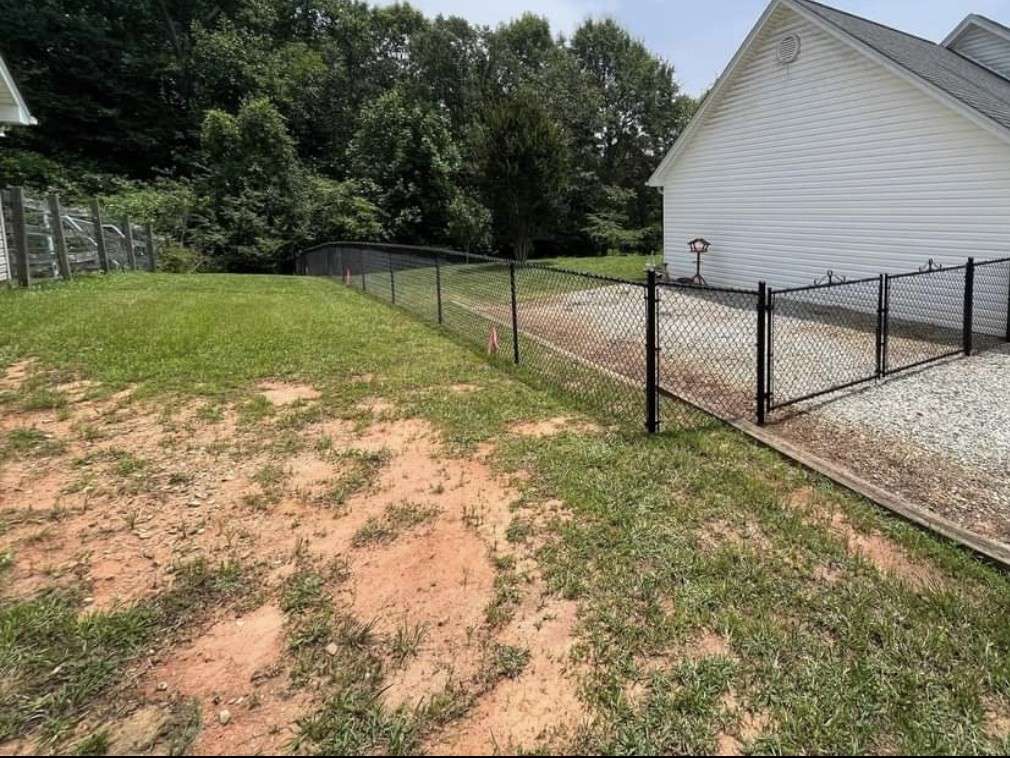
Plenty of Franklin backyards slope, some gently and some hard. On a grade, fence panels can either step down in level sections or rack to follow the ground. Stepping keeps the top line neat but leaves triangle gaps at the bottom, which matters if you have a small dog. Racking follows the ground more closely and suits a steady, even slope. Our guide to fencing a sloped yard explains the tradeoffs in more detail, and the right choice depends on your lot and what the fence needs to hold in.
Limestone is the other thing to plan for. It often lies a short way below the surface in Williamson County, and a post hole can hit rock before it reaches full depth. When that happens, the crew may need to break or drill the rock, or shift the post a little along the line. Neither is unusual, but both take time. Clay soil is common here too, and it holds water after heavy rain. Crowning the concrete at the top of each post hole helps shed that water away from the wood.
Fencing near the Harpeth River and low ground
If your Franklin yard runs down toward the Harpeth or one of its creeks, the low end of the lot may flood now and then or sit in a mapped flood zone. Check with the city, or the county if you are outside city limits, before you plan fencing there, since rules for flood areas can be stricter. A solid privacy fence across a drainage path can act like a dam, catching debris and pushing water where you do not want it. Open styles such as wire or spaced pickets let water pass through. Posts in wet ground also rot faster, so lumber rated for burial and good drainage around each post matter more here.
Long fence runs out toward Leipers Fork
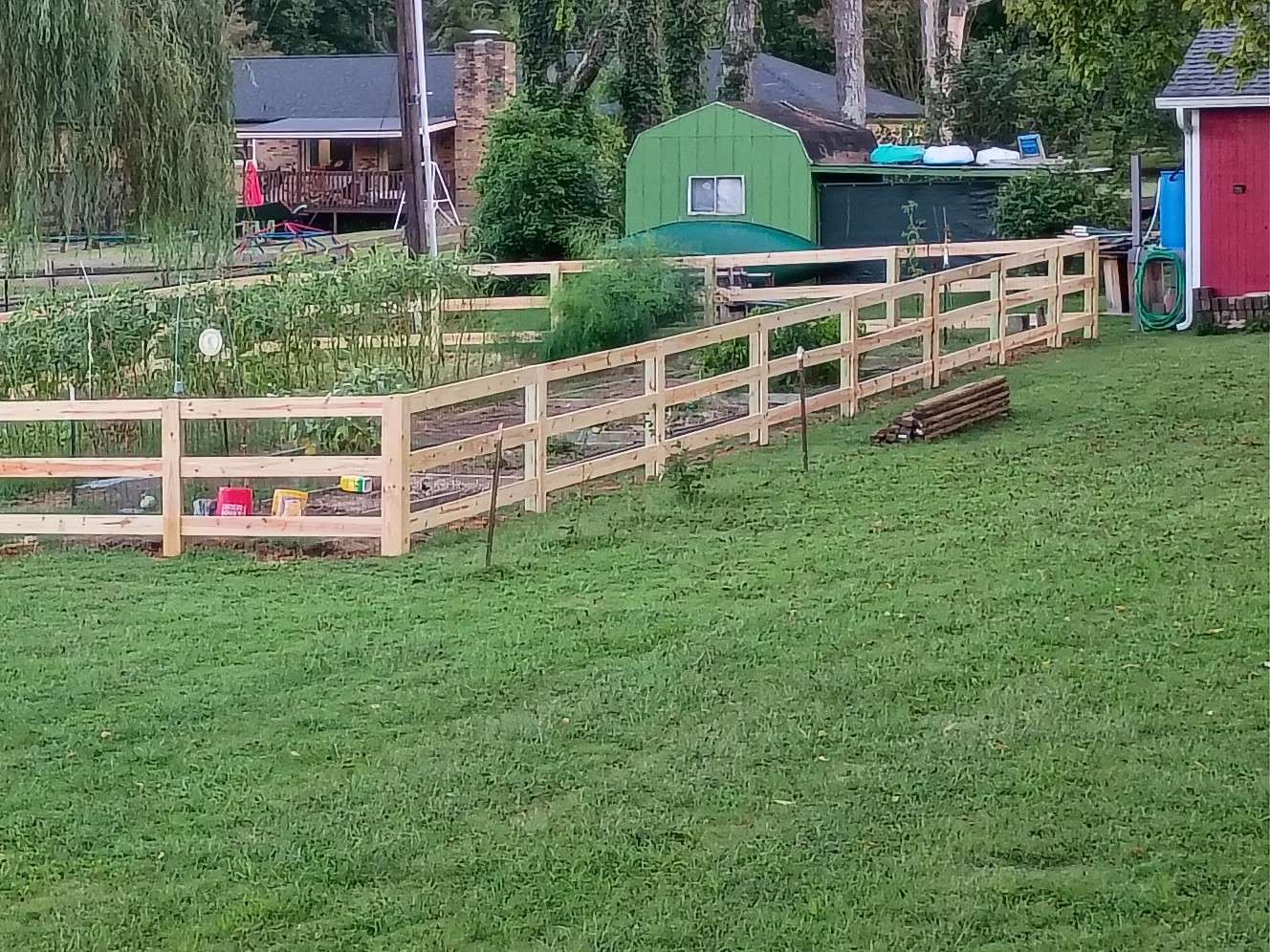
Southwest of town, around Leipers Fork, many properties are measured in acres instead of lots. Fence work there is less about blocking a view and more about marking a boundary or keeping animals where they belong. Some owners also want deer kept out of a garden. Long runs over hills need strong corner and brace posts, and gates should open wide enough for whatever you drive through them. Much of this area is outside Franklin city limits, so county rules usually apply. When you call, describe what the fence needs to hold in and how equipment gets on and off the land.
Property lines, neighbors, and Tennessee 811
Before any fence installation, you want to know exactly where your line is. In newer Franklin subdivisions, the corner pins may still be in the ground, but older lots downtown and rural tracts may need a survey. Talk with your neighbor before the posts go in, especially on tight lots where the fence will sit close to their yard. Tennessee law requires contacting 811 so buried utilities get marked before anyone digs. Our property line guide covers which side of the fence faces out and other common questions.
Franklin fence questions
Do I need a permit for a fence in Franklin?
It depends on where you are and what you are building. Some residential fences inside city limits may not need a building permit while others do, and lots in the historic district or a flood zone can add review. In unincorporated Williamson County, the county sets its own rules. The simplest path is to call the city or county codes office with your address and a sketch of the fence line. HOA approval is a separate step either way.
How tall can a privacy fence be in Franklin?
There is no single answer. Height limits depend on the zoning of your lot and whether the fence sits in front of the house or behind it. HOA rules are often stricter than the city's. Corner lots can have extra limits near the street so drivers can see around them. Check the city or county code and your community guidelines, then build to whichever is lower. Your fence company should confirm this before ordering materials.
How long does fence installation take in Franklin?
The building part is often the shortest piece. What stretches the schedule in Franklin is everything before it. HOA review, historic review downtown, a survey when the pins are missing, and the 811 marking can each add time. Rock in the post holes can slow the dig as well. Starting the approval steps early is the best way to keep the whole project moving.
What kind of fence keeps a dog in on a sloped Franklin yard?
A fence tall enough that your dog cannot clear it, with the bottom kept close to the ground along the whole run. On a slope, racked panels or a bottom board cut to follow the grade help close the gaps that level sections leave behind. Dogs that dig may need wire buried along the base. Gates should swing shut and latch on their own, since a gate left open is a common way dogs get out.
What should I ask before hiring someone for a fence in Franklin?
Find out who handles the HOA or historic submission and who places the 811 request. Ask how posts are set and what happens if the crew hits rock. Get the lumber spelled out for the posts as well as the pickets, since posts decide how long a fence stands. It also helps to know which side will face out and how the gates are hung and latched. Written answers let you compare quotes fairly.