What Spring Hill HOAs usually ask of a fence
Most newer subdivisions in Spring Hill have written rules for fences. The rules usually cover height and style, and many also list approved materials or stain colors. It is common to require the finished side to face out toward the neighbors and the street. Some covenants keep fences behind the front corners of the house. A few only allow an open style, such as ornamental metal, on lots that back up to common space.
Get the covenants for your lot before you settle on a design. Campbell Station has its own, and so does nearly every newer subdivision in town. The architectural committee has the final say, and a fence built without approval may have to come down. Committees typically ask for the fence line drawn on your plat, plus the style and color. Any fence company you hire should see the approval letter before the first post hole is dug.
Fencing for kids and dogs in Spring Hill yards
Keeping the dog home is a big reason many Spring Hill families look into a fence. What works depends on the dog. Jumpers need height. Climbers use the horizontal rails as a ladder, and an HOA rule that puts the finished side out leaves those rails facing your yard, so pick the style with the dog in mind. Diggers are the hardest to stop, and the soft topsoil spread over many new construction yards does not slow them down much. A fence for small children follows similar rules, with extra attention on gates.
Closing the gap at the bottom matters as much as height. On uneven ground, boards should follow the grade closely so no low spots open up between posts. Gates are the weak point in most dog fences. A self closing hinge and a latch that catches every time keep a gate from being left open by a kid in a hurry. Our guide to the best fence for dogs goes further.
Property lines, easements, and 811 on newer lots
Newer Spring Hill lots usually come with a recorded plat, and some homeowners also got a survey at closing. That is a good start, but corner pins sometimes get buried or knocked loose during construction and landscaping. If there is any doubt about the line, locating the pins or ordering a new survey usually costs less than moving a fence. Talk with the neighbor as well, especially if they already have a fence you might tie into.
The plat also shows easements. Drainage easements along rear and side lot lines are common in subdivisions here, and a fence across a swale can back water up into your yard or a neighbor's. Utility easements matter too, since a utility may need access and a fence inside one could have to come down. Before any digging, buried lines get marked through Tennessee 811. Our guide on fences and property lines in Tennessee covers the rest.
Setting posts in clay, rock, and fill
Posts carry the whole fence. In a newer Spring Hill yard, an auger may pass through a thin layer of topsoil, then compacted clay, and sometimes buried rock or construction debris left from grading. Limestone is common under the soil in this part of Tennessee, and hitting it can slow a job down or call for heavier tools. Near the house, loose backfill may need a deeper hole to reach firm ground.
Water is the other thing that ruins posts. Clay holds moisture, and a wood post in a wet hole can rot at the ground line while the pickets still look fine. Posts rated for ground contact, set in concrete with the top shaped to shed water, tend to last longer. It is one reason some cedar fences are built on pressure treated posts: the pickets can be cedar, but the part in the ground needs the ground contact rating.
Privacy fence styles that fit a Spring Hill subdivision
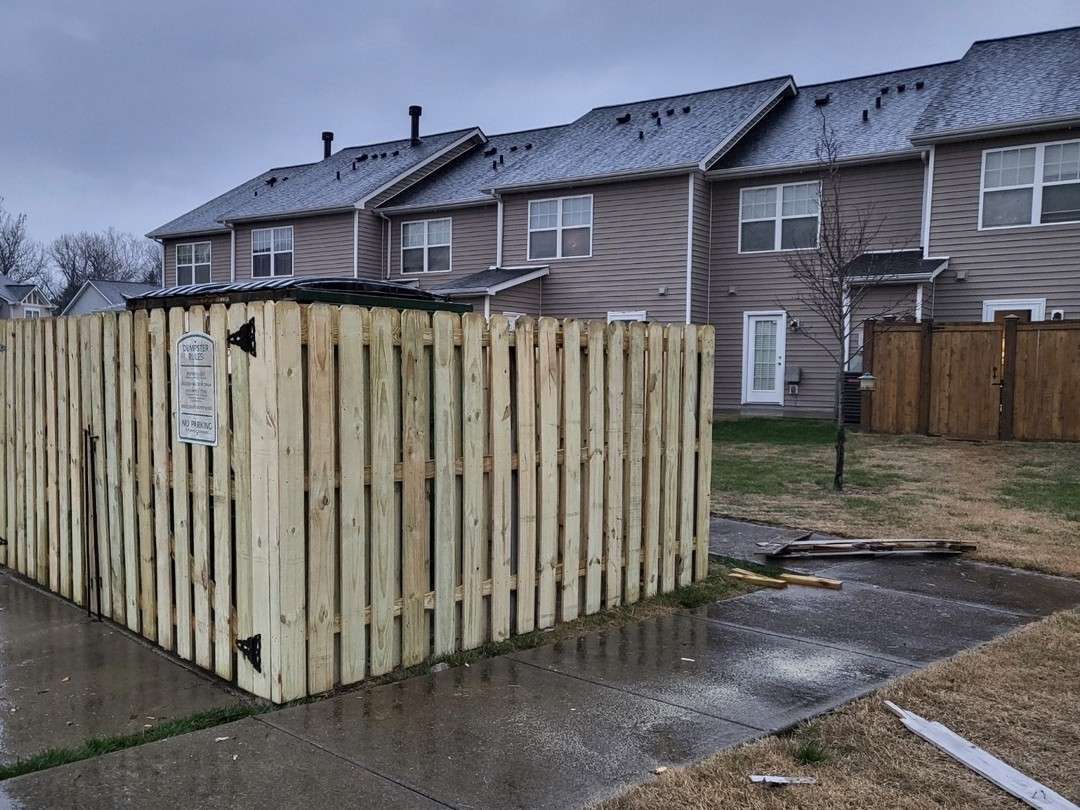
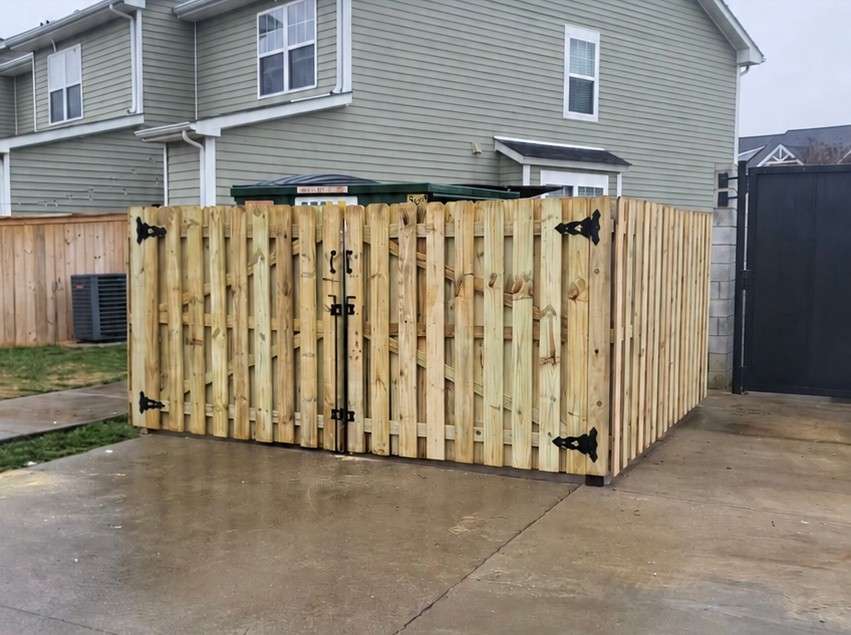
With houses this close together, a privacy fence is often the first choice for a Spring Hill backyard. Board on board gives full coverage because the boards overlap. Shadowbox alternates boards on each side of the rails, so it looks the same from both sides, and the small gaps between boards let wind through while blocking a straight view. Horizontal slat designs show up in some newer neighborhoods, though not every HOA allows them. Our privacy fence options guide compares them side by side.
Material comes down to budget and upkeep. Pressure treated pine is the common choice, and it takes stain well once it has dried out. Cedar costs more but usually stays straighter as it weathers. Vinyl needs very little upkeep, and some HOAs allow it while others do not. Whatever you pick, check the approved list first so the fence installation is not held up waiting on a second review.
Gates, slopes, and where the fence meets the deck
Plan gates around how you use the yard. A mower gate should be wide enough for your mower with some room to spare, and it helps to put one on the side where you keep the trash cans. Some Spring Hill lots slope gently toward a swale at the back, and the fence has to follow that grade. Stepped panels leave a triangle gap under each step, which matters with a small dog. Racked panels tilt to follow the ground and keep the bottom closer to it.
If you have a deck or plan to add one, think about how the two meet. A fence that ends at a deck post, or a gate at the bottom of the deck stairs, has to be laid out with the deck in mind. Putting both on one drawing makes the HOA request cleaner as well. Our page on hiring a deck builder in Spring Hill covers the deck side of the plan.
Spring Hill fence questions
Do I need a permit for a fence in Spring Hill?
It depends on where you live and what you are building. Some Tennessee cities require a fence permit, while others only expect you to follow zoning rules on height and placement. Call the City of Spring Hill codes office with your address before work starts, or the county if you live outside city limits. HOA approval is a separate step either way, and it is often the stricter one.
How tall can a privacy fence be in a Spring Hill subdivision?
There is no single answer. City zoning may limit fence height, and many HOAs add their own rules, often allowing less height near the street than in the backyard. Whichever rule is stricter is the one you have to follow. Check your covenants and ask the codes office before choosing panels, since height is usually the first thing a committee looks at on a privacy fence request.
Can I tie my new fence into my neighbor's existing fence?
Sometimes. Tying in saves a run of posts, but it needs the neighbor's permission, and the two fences should be close in height and style or the HOA may object. The shared posts also belong to someone, which matters when one side needs work later. A common alternative is to set your own posts just inside your line so each fence stands on its own.
How do I keep a small dog from squeezing under the fence?
Keep the bottom close to the ground along the whole run. On a sloped or lumpy yard, that takes some grading and posts set to follow the ground. A rot resistant board along the bottom closes most small gaps, and a buried wire apron helps with diggers. Check the space under each gate too, since gates are a common escape route for small dogs.
Should the finished side of my fence face in or out?
Many Spring Hill HOAs require the finished side to face out, toward neighbors and the street, which leaves the posts and rails on your side. Even where it is not required, facing the good side out is the more neighborly choice. If you want a clean look from both sides, a shadowbox style solves that, since the boards alternate on each side of the rails.